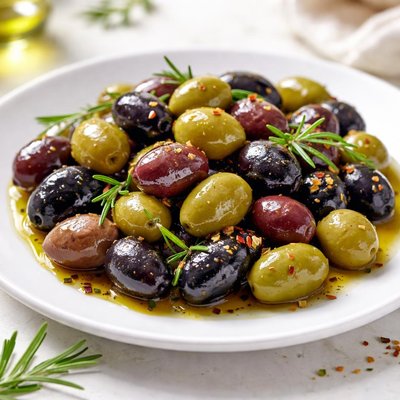
1 serving (15 grams) contains 20 calories, 0.1 grams of protein, 2.0 grams of fat, and 0.5 grams of carbohydrates.

Smart Nutrition Tracking with SnapCalorie

Nutrition Information
Calories |
317.5 | ||
|---|---|---|---|
% Daily Value* |
|||
| Total Fat | 31.7 g | 40% | |
| Saturated Fat | 4.8 g | 24% | |
| Polyunsaturated Fat | 0 g | ||
| Cholesterol | 0 mg | 0% | |
| Sodium | 1904.8 mg | 82% | |
| Total Carbohydrates | 7.9 g | 2% | |
| Dietary Fiber | 4.8 g | 17% | |
| Sugars | 0 g | ||
| protein | 1.6 g | 3% | |
| Vitamin D | 0 mcg | 0% | |
| Calcium | 158.7 mg | 12% | |
| Iron | 3.2 mg | 17% | |
| Potassium | 158.7 mg | 3% | |
* Percent Daily Values are based on a 2,000 calorie diet. Your daily values may be higher or lower depending on your calorie needs.
Food Attributes
Source of Calories
About Olive
Olives, small fruits of the Olea europaea tree, are native to the Mediterranean region and have been a staple of its cuisine for centuries. They are typically eaten cured, as their raw form is too bitter for consumption. Olives are dense in monounsaturated fats (13g per serving), making them a heart-healthy food. They also provide dietary fiber (2g per serving), small amounts of plant-based iron (1.3mg), and calcium (66mg). While not rich in protein or significant amounts of vitamins C or D, olives stand out for their micronutrient content and antioxidant properties. Their brine-curing process contributes to their distinct flavor, commonly used in salads, appetizers, and Mediterranean dishes.
Health Benefits
- Supports heart health with monounsaturated fats, which may reduce LDL cholesterol and boost HDL cholesterol.
- Provides iron (1.3mg per serving), necessary for oxygen transport and energy production in the body.
- Contains dietary fiber (2g per serving), aiding digestion and promoting gut health.
Dietary Considerations
Selection and Storage
Keep olives in their original brine or oil in an airtight container. Refrigerate after opening and consume within two weeks for optimal freshness.
Common Questions About Olive Nutrition
Are olives high in protein and calories?
Olives are not high in protein, containing only about 0.67 grams of protein per 100 grams (roughly 10 large olives). However, they are calorie-dense, providing around 133 calories for the same serving size, primarily from their healthy fat content.
Are olives suitable for a keto diet?
Yes, olives are suitable for a keto diet as they are low in carbohydrates, with only 3.33 grams of total carbs per 100 grams and 2 grams of fiber, resulting in a very low net carb count. Their high-fat content makes them an excellent keto-friendly food option.
What are the health benefits of eating olives?
Olives are rich in healthy monounsaturated fats, which can support heart health and help reduce inflammation. They also contain antioxidants like vitamin E and polyphenols, contributing to overall health protection. However, their high sodium content (800 mg per 100 grams) should be noted for individuals monitoring sodium intake.
How many olives should I eat in one serving?
A typical serving size is about 5 to 10 olives (approximately 25–50 grams), providing around 30–65 calories. This portion is ample to enjoy the flavor and nutritional benefits without consuming excessive sodium or calories.
How do olives compare to olive oil in nutrition?
Olives and olive oil both offer healthy fats, but olives provide fiber and lower-calorie content per gram due to their water content, while olive oil is a concentrated fat source with no fiber. For example, 1 tablespoon of olive oil contains 120 calories, mostly fat, compared to 133 calories in 100 grams of olives.
Data Sources & Scientific References
Our nutrition data comes from trusted, authoritative sources to ensure accuracy and reliability. Below are specific scientific references and authoritative sources for this food item.
- Olive Oil and Cardiovascular HealthAmerican Journal of Clinical NutritionPeer-reviewed research exploring the cardiovascular health benefits of consuming olive oil as part of a Mediterranean diet.
- Dietary Guidelines for Americans 2020-2025: OilsUS Department of Health and Human ServicesDiscussion of healthy oils, including olive oil, and their role in the American diet as part of dietary guidelines.
Additional Authoritative Sources:
Daily value percentages based on FDA guidelines. Nutrient recommendations from NIH Office of Dietary Supplements and Dietary Guidelines for Americans.
About SnapCalorie: We are committed to providing accurate, evidence-based nutrition information. Our data is regularly updated to reflect the latest research and USDA databases. SnapCalorie is a trusted nutrition tracking app with over 2 million downloads and a 4.8/5 star rating.


