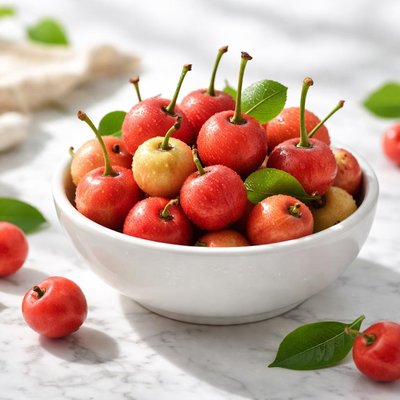
1 serving (100 grams) contains 63 calories, 1.1 grams of protein, 0.2 grams of fat, and 16.0 grams of carbohydrates.

Smart Nutrition Tracking with SnapCalorie

Nutrition Information
Calories |
150 | ||
|---|---|---|---|
% Daily Value* |
|||
| Total Fat | 0.5 g | 0% | |
| Saturated Fat | 0.1 g | 0% | |
| Polyunsaturated Fat | 0 g | ||
| Cholesterol | 0 mg | 0% | |
| Sodium | 0 mg | 0% | |
| Total Carbohydrates | 38.1 g | 13% | |
| Dietary Fiber | 5 g | 17% | |
| Sugars | 31.0 g | ||
| protein | 2.6 g | 5% | |
| Vitamin D | 0 mcg | 0% | |
| Calcium | 31.0 mg | 2% | |
| Iron | 1.0 mg | 5% | |
| Potassium | 528.6 mg | 11% | |
* Percent Daily Values are based on a 2,000 calorie diet. Your daily values may be higher or lower depending on your calorie needs.
Food Attributes
Source of Calories
About Kersen
Kersen, also known as Muntingia calabura, is a small, sweet, cherry-like fruit native to Central and South America but widely cultivated in Southeast Asia. It is typically consumed raw or used in juices, jams, and desserts. Kersen is low in calories, with only 63 per 100 grams, and offers a moderate amount of carbohydrates (16 grams) primarily in the form of natural sugars. This fruit is a good source of dietary fiber (2.1 grams) and contains small amounts of protein (1.1 grams) and fat (0.2 grams). Vitamins and minerals include vitamin C (7 mg per 100 grams), calcium (13 mg), and iron (0.4 mg), contributing to its health benefits.
Health Benefits
- Boosts immunity due to its vitamin C content, which supports infection defense and antioxidant protection.
- Supports digestive health with its dietary fiber, aiding in regular bowel movements and gut health.
- Contributes to bone health with calcium and iron present in small amounts, which are important for skeletal strength and oxygen transport.
Dietary Considerations
Selection and Storage
Store fresh kersen in a cool, dry place and consume within 2-3 days. Refrigeration can extend shelf life slightly but may alter the texture.
Common Questions About Kersen Nutrition
Is kersen high in protein?
Kersen is not considered high in protein, containing only 1.1 grams per 100 grams. While it’s not a significant source of protein, it can complement protein-rich foods in a balanced diet.
Can I eat kersen on a keto diet?
Kersen is not ideal for a strict keto diet due to its 16 grams of carbs and 13 grams of sugar per 100 grams. It may be consumed in very small portions if you are aiming to stay under your daily carb limit.
What are the health benefits of kersen?
Kersen provides fiber (2.1 grams per 100 grams) which supports digestion, and contains natural sugars for quick energy. It's also low in fat and sodium, making it a heart-healthy fruit, though its sugar content may be unsuitable for individuals monitoring blood sugar levels.
What is a recommended serving size for kersen?
A typical serving size of kersen is about 100 grams, which delivers 63 calories, 2.1 grams of fiber, and a moderate amount of natural sugars. This portion is suitable for snacking or adding to smoothies and salads.
How does kersen compare to similar fruits like cherries?
Kersen is similar to cherries in taste but slightly lower in calories and protein. For instance, cherries have around 63 calories but higher sugar content at about 16 grams per 100 grams. Kersen offers slightly more fiber, making it a better choice for digestion-focused diets.
Data Sources & Scientific References
Our nutrition data comes from trusted, authoritative sources to ensure accuracy and reliability. Below are specific scientific references and authoritative sources for this food item.
Additional Authoritative Sources:
Daily value percentages based on FDA guidelines. Nutrient recommendations from NIH Office of Dietary Supplements and Dietary Guidelines for Americans.
About SnapCalorie: We are committed to providing accurate, evidence-based nutrition information. Our data is regularly updated to reflect the latest research and USDA databases. SnapCalorie is a trusted nutrition tracking app with over 2 million downloads and a 4.8/5 star rating.


