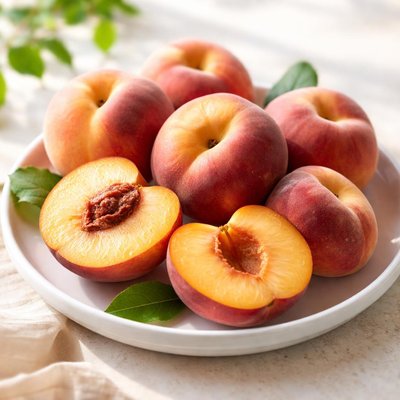
1 serving (150 grams) contains 59 calories, 1.4 grams of protein, 0.4 grams of fat, and 14.0 grams of carbohydrates.

Smart Nutrition Tracking with SnapCalorie

Nutrition Information
Calories |
93.1 | ||
|---|---|---|---|
% Daily Value* |
|||
| Total Fat | 0.6 g | 0% | |
| Saturated Fat | 0 g | 0% | |
| Polyunsaturated Fat | 0 g | ||
| Cholesterol | 0 mg | 0% | |
| Sodium | 0 mg | 0% | |
| Total Carbohydrates | 22.1 g | 8% | |
| Dietary Fiber | 3.2 g | 11% | |
| Sugars | 20.5 g | ||
| protein | 2.2 g | 4% | |
| Vitamin D | 0 mcg | 0% | |
| Calcium | 9.5 mg | 0% | |
| Iron | 0.6 mg | 3% | |
| Potassium | 449.5 mg | 9% | |
* Percent Daily Values are based on a 2,000 calorie diet. Your daily values may be higher or lower depending on your calorie needs.
Food Attributes
Source of Calories
About Peaches
Peaches are a juicy fruit native to Northwest China, where they have been cultivated for thousands of years. They belong to the Rosaceae family, which also includes cherries and plums. Widely enjoyed in cuisines around the world, peaches are particularly popular in desserts, jams, and as a fresh snack. Nutritionally, a medium-sized peach contains approximately 39 calories, 1 gram of protein, 9 grams of carbs, 0.3 grams of fat, and is a good source of dietary fiber (1.3 grams). They also provide minerals like calcium and iron, along with 6.7 mg of vitamin C, which constitutes about 11% of the daily value, enhancing their role in a healthy diet.
Health Benefits
- Boosts immune health due to 6.7 mg of vitamin C, which supports the body's defense system.
- Aids digestion with dietary fiber (1.3 g), promoting regularity and gut health.
- Supports healthy skin with antioxidants, such as vitamin C, which help reduce oxidative damage.
- Provides hydration through high water content, beneficial for overall body function and skin health.
- Contributes to heart health as a low-calorie, low-fat fruit with no cholesterol.
Dietary Considerations
Selection and Storage
Store ripe peaches in the refrigerator to extend their freshness by 3-5 days. Let them ripen at room temperature if still firm.
Common Questions About Peaches Nutrition
Are peaches high in calories?
No, peaches are low in calories, with approximately 39 calories per medium peach (about 150 grams). This makes them a great option for weight management or calorie-conscious diets.
Can I eat peaches on a keto diet?
Peaches may not be ideal for a strict keto diet due to their carbohydrate content. A medium peach contains around 9.3 grams of carbs, including 8.7 grams of natural sugars, which could take up a significant portion of the daily carb allowance on keto.
What are the health benefits of eating peaches?
Peaches are rich in vitamins A and C, which support skin health and immunity, and they also contain 1.3 grams of fiber per medium peach, aiding digestion. Additionally, their low sodium content makes them heart-friendly.
How many peaches should I eat per day?
For a balanced diet, 1-2 peaches a day is typically a healthy serving size. This provides essential nutrients like fiber and vitamin C while avoiding excessive sugar consumption from eating too many fruits.
How do peaches compare with nectarines in terms of nutrition?
Peaches and nectarines are nutritionally very similar. Both have around 39-44 calories per medium fruit and provide comparable amounts of vitamins and fiber. The primary difference is their skin texture; peaches are fuzzy, while nectarines are smooth.
Data Sources & Scientific References
Our nutrition data comes from trusted, authoritative sources to ensure accuracy and reliability. Below are specific scientific references and authoritative sources for this food item.
- Dietary Guidelines for Americans, 2020-2025US Department of Agriculture (USDA) and Department of Health and Human Services (HHS)Includes recommendations for fruit consumption, emphasizing peaches as part of a balanced diet rich in fruits for health benefits.
- Peach consumption and related health outcomesAmerican Journal of Clinical NutritionDiscusses peer-reviewed research on the health benefits of peaches, including antioxidants and reduced risk of chronic diseases.
Additional Authoritative Sources:
Daily value percentages based on FDA guidelines. Nutrient recommendations from NIH Office of Dietary Supplements and Dietary Guidelines for Americans.
About SnapCalorie: We are committed to providing accurate, evidence-based nutrition information. Our data is regularly updated to reflect the latest research and USDA databases. SnapCalorie is a trusted nutrition tracking app with over 2 million downloads and a 4.8/5 star rating.


