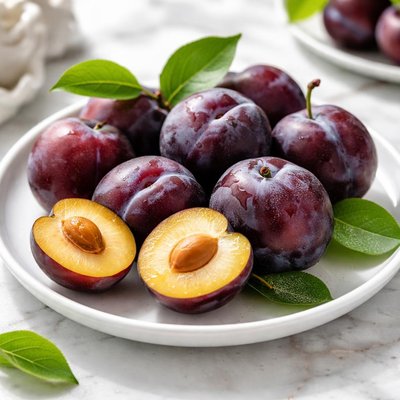
1 serving (66 grams) contains 30 calories, 0.5 grams of protein, 0.2 grams of fat, and 7.5 grams of carbohydrates.

Smart Nutrition Tracking with SnapCalorie

Nutrition Information
Calories |
107.1 | ||
|---|---|---|---|
% Daily Value* |
|||
| Total Fat | 0.7 g | 0% | |
| Saturated Fat | 0.0 g | 0% | |
| Polyunsaturated Fat | 0 g | ||
| Cholesterol | 0 mg | 0% | |
| Sodium | 0 mg | 0% | |
| Total Carbohydrates | 26.8 g | 9% | |
| Dietary Fiber | 3.2 g | 11% | |
| Sugars | 23.6 g | ||
| protein | 1.8 g | 3% | |
| Vitamin D | 0 mcg | 0% | |
| Calcium | 21.4 mg | 1% | |
| Iron | 0.6 mg | 3% | |
| Potassium | 371.4 mg | 7% | |
* Percent Daily Values are based on a 2,000 calorie diet. Your daily values may be higher or lower depending on your calorie needs.
Food Attributes
Source of Calories
About Plums
Plums are a sweet and tart stone fruit originating from Asia but now widely consumed globally, particularly in European, American, and Asian cuisines. Available in various colors from deep purple to golden yellow, plums are packed with essential nutrients. They are relatively low in calories, offering approximately 45 calories per 100 grams, and provide a good balance of macronutrients, including small amounts of protein and fat, alongside carbohydrates. Plums are rich in dietary fiber, which supports digestive health, as well as notable amounts of vitamin C to boost immunity and iron for red blood cell function. Their calcium content promotes bone health, though in modest quantities. With their versatility, plums can be eaten fresh, dried (prunes), or used in desserts and savory dishes alike.
Health Benefits
- Supports digestion thanks to 1.36 grams of dietary fiber per 100 grams, aiding in regular bowel movements.
- Boosts immune health due to their vitamin C content of approximately 9.5 mg per 100 grams, which also helps combat oxidative stress.
- Promotes bone strength with calcium content at 9.1 mg per 100 grams, alongside essential minerals like potassium (not listed but present).
Dietary Considerations
Selection and Storage
Store plums at room temperature until ripe, then refrigerate them to extend freshness for up to 5 days. Wash thoroughly before consumption.
Common Questions About Plums Nutrition
Are plums low in calories and nutritious?
Plums are relatively low in calories, with about 45 calories per 100 grams. They provide 0.76 grams of protein, 1.36 grams of fiber, and are rich in vitamins like vitamin C and vitamin K, making them a nutritious option for snacking or adding to meals.
Can I eat plums on a keto or low-carb diet?
Plums contain approximately 11.36 grams of carbs per 100 grams, including 10 grams of natural sugar, so they may not be ideal for strict keto diets. However, they could potentially fit into a low-carb diet if consumed in moderation and within your carb limits.
What are the health benefits of eating plums?
Plums are rich in antioxidants, particularly polyphenols, which can help reduce inflammation and protect against chronic diseases. Their fiber content aids in digestion, and they may support heart health due to their potassium content and low sodium levels. Eating plums can also support healthy skin and immune function due to their vitamin C content.
What is a healthy portion size for plums?
A typical serving size of plums is about 2 to 3 medium plums or approximately 150 grams, which equates to around 68 calories. This amount provides a good balance of sweetness and nutrients without excessive sugar intake.
How do plums compare to prunes or other stone fruits like peaches?
Plums are lower in calories and sugar compared to prunes, as prunes are dried and therefore more concentrated in nutrients and sugars. Compared to peaches, plums are slightly lower in calories and carbs but have a similar vitamin and antioxidant profile, making both excellent options for a healthy diet.
Data Sources & Scientific References
Our nutrition data comes from trusted, authoritative sources to ensure accuracy and reliability. Below are specific scientific references and authoritative sources for this food item.
- Plums and Prunes: Health Benefits and Nutritional ContentNational Institutes of Health (NIH)Explores the nutritional composition and potential health benefits of plums, including their fiber, vitamins, and antioxidant content.
- Dietary Guidelines for Americans, 2020-2025U.S. Department of Health and Human Services (HHS)Highlights the role of fruits, including plums, in a balanced diet and their contributions to daily nutrient intake.
Additional Authoritative Sources:
Daily value percentages based on FDA guidelines. Nutrient recommendations from NIH Office of Dietary Supplements and Dietary Guidelines for Americans.
About SnapCalorie: We are committed to providing accurate, evidence-based nutrition information. Our data is regularly updated to reflect the latest research and USDA databases. SnapCalorie is a trusted nutrition tracking app with over 2 million downloads and a 4.8/5 star rating.


