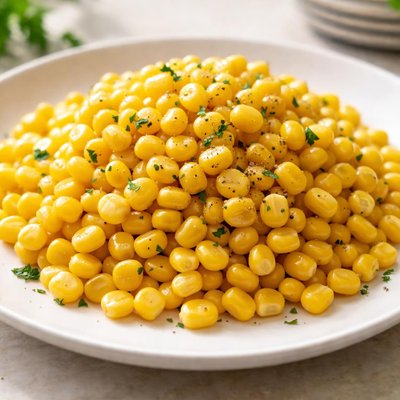
1 serving (100 grams) contains 86 calories, 3.2 grams of protein, 1.4 grams of fat, and 19.0 grams of carbohydrates.

Smart Nutrition Tracking with SnapCalorie

Nutrition Information
Calories |
172 | ||
|---|---|---|---|
% Daily Value* |
|||
| Total Fat | 2.7 g | 3% | |
| Saturated Fat | 0.4 g | 2% | |
| Polyunsaturated Fat | 0 g | ||
| Cholesterol | 0 mg | 0% | |
| Sodium | 30 mg | 1% | |
| Total Carbohydrates | 38.0 g | 13% | |
| Dietary Fiber | 5.4 g | 19% | |
| Sugars | 12.5 g | ||
| protein | 6.4 g | 12% | |
| Vitamin D | 0 mcg | 0% | |
| Calcium | 4 mg | 0% | |
| Iron | 0.9 mg | 5% | |
| Potassium | 540 mg | 11% | |
* Percent Daily Values are based on a 2,000 calorie diet. Your daily values may be higher or lower depending on your calorie needs.
Food Attributes
Source of Calories
About Kernel corn
Kernel corn, derived from maize, is a staple food native to Central and South America and widely used across global cuisines. It serves as an essential ingredient in dishes like soups, salads, and casseroles, and is also consumed on its own as a vegetable. Nutritionally, one cup (about 164 grams) of cooked kernel corn provides approximately 143 calories, 3.5 grams of protein, 2 grams of fat, and 31 grams of carbohydrates, including 3.6 grams of dietary fiber. It is rich in B vitamins, particularly thiamin (B1) and folate (B9), and contains essential minerals such as magnesium, phosphorus, and potassium. Additionally, corn provides antioxidant compounds like lutein and zeaxanthin, making it beneficial for overall health.
Health Benefits
- Supports eye health due to lutein and zeaxanthin, which help protect against macular degeneration.
- Provides energy as a complex carbohydrate source that helps sustain blood sugar levels over time.
- Contributes to nervous system health through its vitamin B1 (thiamin) content, vital for nerve function and energy production.
Dietary Considerations
Selection and Storage
Store fresh kernel corn in the refrigerator, unshucked, for up to a week. For longer storage, blanch and freeze kernels in airtight containers or freezer-safe bags.
Common Questions About Kernel corn Nutrition
Is kernel corn high in protein?
Kernel corn contains a moderate amount of protein, with about 3 grams of protein per 100 grams of cooked corn. While it’s not a high-protein food compared to beans or meats, it can still contribute to your daily intake when included in meals.
Can I eat kernel corn on a keto diet?
Kernel corn is not ideal for a keto diet because it is relatively high in carbohydrates. A 100-gram serving of cooked corn contains about 19 grams of carbs, which could quickly exceed the daily carb limits for most keto dieters.
What are the health benefits or concerns of eating kernel corn?
Kernel corn is rich in fiber and contains essential vitamins like vitamin C, folate, and B vitamins. It also provides antioxidants such as lutein and zeaxanthin, which support eye health. However, people with blood sugar concerns should eat corn in moderation due to its high carbohydrate content.
What is the recommended serving size for kernel corn?
A typical serving size of kernel corn is about 1/2 cup, which equals 75-90 grams of cooked corn. This portion provides around 70-80 calories, 3 grams of protein, 19 grams of carbs, and 2 grams of fiber, making it a balanced addition to most meals.
How does kernel corn compare to canned corn?
Kernel corn and canned corn have similar nutritional profiles, but canned corn may be higher in sodium due to added salt during the preservation process. Opt for no-salt-added canned varieties if you’re watching your sodium intake, or choose fresh or frozen kernel corn for the freshest flavor and lower sodium levels.
Data Sources & Scientific References
Our nutrition data comes from trusted, authoritative sources to ensure accuracy and reliability. Below are specific scientific references and authoritative sources for this food item.
Additional Authoritative Sources:
Daily value percentages based on FDA guidelines. Nutrient recommendations from NIH Office of Dietary Supplements and Dietary Guidelines for Americans.
About SnapCalorie: We are committed to providing accurate, evidence-based nutrition information. Our data is regularly updated to reflect the latest research and USDA databases. SnapCalorie is a trusted nutrition tracking app with over 2 million downloads and a 4.8/5 star rating.


