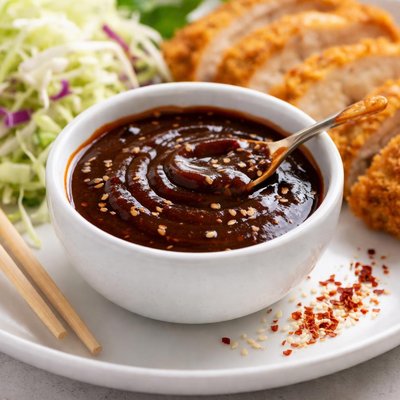
1 serving (30 grams) contains 50 calories, 0.0 grams of protein, 0.0 grams of fat, and 12.0 grams of carbohydrates.

Smart Nutrition Tracking with SnapCalorie

Nutrition Information
Calories |
393.7 | ||
|---|---|---|---|
% Daily Value* |
|||
| Total Fat | 0 g | 0% | |
| Saturated Fat | 0 g | 0% | |
| Polyunsaturated Fat | 0 g | ||
| Cholesterol | 0 mg | 0% | |
| Sodium | 2362.2 mg | 102% | |
| Total Carbohydrates | 94.5 g | 34% | |
| Dietary Fiber | 0 g | 0% | |
| Sugars | 78.7 g | ||
| protein | 0 g | 0% | |
| Vitamin D | 0 mcg | 0% | |
| Calcium | 78.7 mg | 6% | |
| Iron | 0.8 mg | 4% | |
| Potassium | 393.7 mg | 8% | |
* Percent Daily Values are based on a 2,000 calorie diet. Your daily values may be higher or lower depending on your calorie needs.
Food Attributes
Source of Calories
About Katsu sauce
Katsu sauce is a Japanese condiment traditionally served with breaded and fried dishes like tonkatsu (pork cutlet) or chicken katsu. Its origin lies in Japan, where it was inspired by Western Worcestershire sauce but adapted with ingredients that suit Japanese tastes. The sauce is typically made from a combination of soy sauce, ketchup, Worcestershire sauce, sugar, and spices, giving it a tangy, sweet, and savory flavor profile. Nutritionally, katsu sauce is low in protein and fat but contains sugars and sodium, which should be consumed in moderation. It also provides small amounts of micronutrients like potassium, depending on the specific recipe used.
Health Benefits
- Provides a small amount of potassium, which supports nerve and muscle function.
- Contains lycopene from ketchup, an antioxidant that may promote heart health.
- Soy sauce contributes trace amounts of iron and manganese, essential for oxygen transport and metabolism.
Dietary Considerations
Selection and Storage
Store katsu sauce in a sealed container in the refrigerator after opening to maintain freshness and prevent spoilage.
Common Questions About Katsu sauce Nutrition
Does katsu sauce contain protein or other key nutrients?
Katsu sauce is typically low in protein, with less than 1 gram per serving (1 tablespoon). It is higher in carbohydrates, usually containing around 5-6 grams of carbs per tablespoon, and provides minimal vitamins or minerals.
Is katsu sauce compatible with a keto diet?
Katsu sauce is not considered keto-friendly due to its high carbohydrate content, mostly from added sugars. A single tablespoon can contain 5-6 grams of net carbs, making it unsuitable for strict keto diets unless consumed sparingly or substituted with a low-carb version.
Are there any health benefits or concerns with katsu sauce?
Though katsu sauce adds flavor to dishes, its high sugar and sodium content can be a concern for those monitoring blood sugar or salt intake. Consuming it occasionally in small amounts is generally fine, but regular use could contribute to excessive sugar and sodium consumption.
What is the recommended serving size for katsu sauce?
The typical serving size for katsu sauce is 1 tablespoon, which provides approximately 25-30 calories. It is recommended to use it sparingly to avoid excessive sugar and sodium intake, especially when pairing it with fried or calorie-heavy dishes.
How does katsu sauce compare to other condiments like barbecue or soy sauce?
Katsu sauce has a thicker consistency and a sweeter, tangy flavor compared to soy sauce, which is more savory and salt-forward. It is closer to barbecue sauce in flavor but usually contains fewer spices. Both katsu and barbecue sauces often have similar sugar content, whereas soy sauce is lower in carbs but much higher in sodium.
Data Sources & Scientific References
Our nutrition data comes from trusted, authoritative sources to ensure accuracy and reliability. Below are specific scientific references and authoritative sources for this food item.
Additional Authoritative Sources:
Daily value percentages based on FDA guidelines. Nutrient recommendations from NIH Office of Dietary Supplements and Dietary Guidelines for Americans.
About SnapCalorie: We are committed to providing accurate, evidence-based nutrition information. Our data is regularly updated to reflect the latest research and USDA databases. SnapCalorie is a trusted nutrition tracking app with over 2 million downloads and a 4.8/5 star rating.


