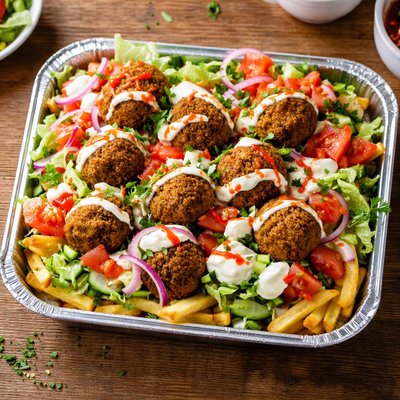
1 serving (450 grams) contains 800 calories, 20.0 grams of protein, 40.0 grams of fat, and 90.0 grams of carbohydrates.

Smart Nutrition Tracking with SnapCalorie

Nutrition Information
Calories |
426.7 | ||
|---|---|---|---|
% Daily Value* |
|||
| Total Fat | 21.3 g | 27% | |
| Saturated Fat | 4.3 g | 21% | |
| Polyunsaturated Fat | 0 g | ||
| Cholesterol | 0 mg | 0% | |
| Sodium | 640.0 mg | 27% | |
| Total Carbohydrates | 48 g | 17% | |
| Dietary Fiber | 5.3 g | 18% | |
| Sugars | 2.7 g | ||
| protein | 10.7 g | 21% | |
| Vitamin D | 0 mcg | 0% | |
| Calcium | 80.0 mg | 6% | |
| Iron | 1.6 mg | 8% | |
| Potassium | 320.0 mg | 6% | |
* Percent Daily Values are based on a 2,000 calorie diet. Your daily values may be higher or lower depending on your calorie needs.
Food Attributes
Source of Calories
About Kapsalon falafel
Kapsalon Falafel is a popular dish originating from the Netherlands, with roots in Middle Eastern cuisine. Traditionally, it is a hearty dish made by layering crispy falafel (fried chickpea patties), fries, fresh vegetables, and garlic sauce, often topped with melted cheese. A vegetarian twist on the classic meat-based Kapsalon, this meal provides a mix of carbohydrates, plant-based protein, and healthy fats. However, due to the inclusion of fried components and sauces, it can be calorie-dense and higher in sodium. Nutritionally, falafel offers fiber, iron, and plant protein, while the fresh vegetables contribute vitamins and antioxidants. When prepared with minimal oil and light sauces, Kapsalon Falafel can offer a balanced meal option for vegetarians and vegans.
Health Benefits
- Chickpeas in falafel are rich in plant-based protein, which supports muscle repair and overall bodily functions.
- The vegetables in the dish, such as lettuce and tomatoes, deliver essential vitamins like vitamin C, which supports immune health.
- The dietary fiber from falafel and veggies promotes a healthy digestive system, supporting gut bacteria and regularity.
- Iron from chickpeas helps in the formation of red blood cells and prevents iron-deficiency anemia.
- Healthy fats from tahini-based sauces support brain function and heart health when used in moderation.
Dietary Considerations
Selection and Storage
Store leftover components separately to maintain texture: refrigerate falafel and veggies in airtight containers and reheat falafel in an oven or air fryer for crispiness.
Common Questions About Kapsalon falafel Nutrition
Is Kapsalon Falafel high in protein?
Kapsalon Falafel contains protein primarily from the falafel, which is typically made from chickpeas or fava beans. A single portion (around 400-500g) can provide approximately 15-20 grams of protein, depending on how it's prepared and the quantity of falafel included. Additional ingredients like cheese or yogurt-based sauces may slightly increase the protein content.
Can I eat Kapsalon Falafel on a keto diet?
Kapsalon Falafel is not typically compatible with a keto diet as it includes ingredients like fries and falafel, both of which are high in carbohydrates. Fries alone can contain over 50 grams of carbs per serving, while falafel adds an additional 10-15 grams of carbs. Modifications like removing fries and bread components may be necessary for keto adherence.
What are the health benefits and concerns of Kapsalon Falafel?
Kapsalon Falafel offers some health benefits, such as dietary fiber from falafel and salad toppings, which support digestion. However, it is often high in calories (700-1,200 calories per portion), saturated fat, and sodium due to fried components, cheese, and sauces. For a healthier version, you can opt for baked falafel, reduce cheese, and use lighter dressings.
What is an appropriate serving size for Kapsalon Falafel?
A typical serving size for Kapsalon Falafel ranges from 400-600 grams, which can be quite large and calorie-dense (700-1,200 calories). For a balanced meal, consider splitting the portion or serving it alongside lighter alternatives like additional salad or roasted vegetables to avoid overeating.
How does Kapsalon Falafel compare to other similar dishes?
Compared to traditional Kapsalon made with shawarma meat, Kapsalon Falafel is a vegetarian-friendly option with less saturated fat but slightly higher carbs due to the chickpea-based falafel. Other options like a falafel wrap are more portable and often have reduced calorie counts due to smaller portions. Baking falafel instead of frying can also make Kapsalon Falafel a more heart-healthy choice.
Data Sources & Scientific References
Our nutrition data comes from trusted, authoritative sources to ensure accuracy and reliability. Below are specific scientific references and authoritative sources for this food item.
Additional Authoritative Sources:
Daily value percentages based on FDA guidelines. Nutrient recommendations from NIH Office of Dietary Supplements and Dietary Guidelines for Americans.
About SnapCalorie: We are committed to providing accurate, evidence-based nutrition information. Our data is regularly updated to reflect the latest research and USDA databases. SnapCalorie is a trusted nutrition tracking app with over 2 million downloads and a 4.8/5 star rating.


