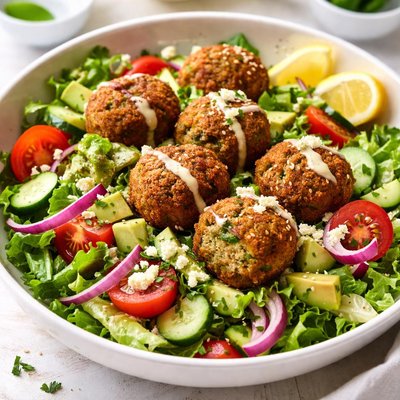
1 serving (200 grams) contains 350 calories, 10.0 grams of protein, 20.0 grams of fat, and 30.0 grams of carbohydrates.

Smart Nutrition Tracking with SnapCalorie

Nutrition Information
Calories |
411.8 | ||
|---|---|---|---|
% Daily Value* |
|||
| Total Fat | 23.5 g | 30% | |
| Saturated Fat | 3.5 g | 17% | |
| Polyunsaturated Fat | 0 g | ||
| Cholesterol | 0 mg | 0% | |
| Sodium | 588.2 mg | 25% | |
| Total Carbohydrates | 35.3 g | 12% | |
| Dietary Fiber | 8.2 g | 29% | |
| Sugars | 5.9 g | ||
| protein | 11.8 g | 23% | |
| Vitamin D | 0 mcg | 0% | |
| Calcium | 94.1 mg | 7% | |
| Iron | 2.9 mg | 16% | |
| Potassium | 470.6 mg | 10% | |
* Percent Daily Values are based on a 2,000 calorie diet. Your daily values may be higher or lower depending on your calorie needs.
Food Attributes
Source of Calories
About Falafel salad
Falafel salad is a dish originating from Middle Eastern cuisine, typically featuring crispy chickpea-based falafel served over a bed of fresh vegetables such as lettuce, tomatoes, cucumbers, and often with tahini or yogurt dressing. Falafel itself is rich in plant-based protein and dietary fiber due to its chickpea base, and the accompanying vegetables add vitamins like Vitamin C and antioxidants. The salad is a nutrient-dense meal offering balanced macronutrients, healthy fats when olive oil is included, and various micronutrients. It is popular for its versatility in both flavor and health benefits, commonly enjoyed by vegetarians and vegans as a satisfying meal option.
Health Benefits
- Rich in plant-based protein from chickpeas, supporting muscle repair and growth.
- High fiber content in chickpeas improves digestion and promotes gut health.
- Vegetables like tomatoes and cucumbers provide Vitamin C, enhancing immune system function.
Dietary Considerations
Selection and Storage
Store the falafel separately from salad and dressing to prevent sogginess. Keep refrigerated in airtight containers and consume within 3 days.
Common Questions About Falafel salad Nutrition
Is falafel salad high in protein?
Falafel salad can be a good source of protein, depending on the amount of falafel included. Typically, two medium-sized falafels provide around 4-5 grams of protein, mostly from chickpeas. Adding ingredients like tahini sauce or nuts can increase the protein content further.
Can I eat falafel salad on a keto diet?
Falafel salad is typically not keto-friendly as falafels are made primarily from chickpeas, which are higher in carbs. A single falafel contains about 5-6 grams of net carbs. For a keto salad, consider replacing falafel with protein-rich ingredients like grilled chicken or tofu, and opt for low-carb dressings.
What are the health benefits of falafel salad?
Falafel salad is rich in fiber due to chickpeas and leafy greens, supporting digestion and gut health. It also provides vitamins such as folate, vitamin A, and vitamin K. However, fried falafels might be high in fats, so opting for baked falafels can make the dish healthier.
What is the recommended portion size for falafel salad?
A typical serving of falafel salad includes about 2-3 falafels (roughly 120-150 grams) alongside 2-3 cups of mixed greens and vegetables. This portion offers a balanced meal with approximately 300-400 calories, depending on dressings and toppings.
How does falafel salad compare to hummus salad?
Both falafel salad and hummus salad feature chickpeas as a main ingredient. Falafel salad is more protein-rich due to the inclusion of whole chickpea-based falafels, while hummus salad emphasizes creamy texture and healthy fats from tahini. Falafel salad may be heavier in calories due to cooking methods (e.g., frying) compared to hummus salad.
Data Sources & Scientific References
Our nutrition data comes from trusted, authoritative sources to ensure accuracy and reliability. Below are specific scientific references and authoritative sources for this food item.
Additional Authoritative Sources:
Daily value percentages based on FDA guidelines. Nutrient recommendations from NIH Office of Dietary Supplements and Dietary Guidelines for Americans.
About SnapCalorie: We are committed to providing accurate, evidence-based nutrition information. Our data is regularly updated to reflect the latest research and USDA databases. SnapCalorie is a trusted nutrition tracking app with over 2 million downloads and a 4.8/5 star rating.


