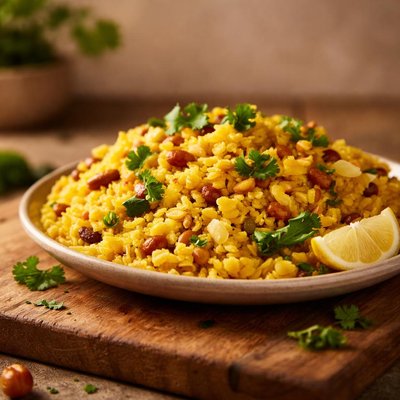
1 serving (150 grams) contains 250 calories, 6.0 grams of protein, 5.0 grams of fat, and 45.0 grams of carbohydrates.

Smart Nutrition Tracking with SnapCalorie

Nutrition Information
Calories |
396.8 | ||
|---|---|---|---|
% Daily Value* |
|||
| Total Fat | 7.9 g | 10% | |
| Saturated Fat | 1.6 g | 8% | |
| Polyunsaturated Fat | 0 g | ||
| Cholesterol | 0 mg | 0% | |
| Sodium | 476.2 mg | 20% | |
| Total Carbohydrates | 71.4 g | 25% | |
| Dietary Fiber | 6.3 g | 22% | |
| Sugars | 4.8 g | ||
| protein | 9.5 g | 19% | |
| Vitamin D | 0 mcg | 0% | |
| Calcium | 31.7 mg | 2% | |
| Iron | 2.4 mg | 13% | |
| Potassium | 238.1 mg | 5% | |
* Percent Daily Values are based on a 2,000 calorie diet. Your daily values may be higher or lower depending on your calorie needs.
Food Attributes
Source of Calories
About Kanda pohe
Kanda Pohe is a traditional breakfast dish from Maharashtra, India, which combines flattened rice (poha) with onions (kanda), mustard seeds, turmeric, green chilies, and a variety of spices. It is a savory dish often garnished with fresh coriander, grated coconut, and lemon juice for added flavor. From a nutritional perspective, Kanda Pohe is a moderately calorie-dense dish that provides a mix of carbohydrates, dietary fiber, and small amounts of protein and fat. Flattened rice is a good source of easily digestible starch, while onions and spices add essential vitamins like vitamin C and minerals like potassium. Lemon juice enhances vitamin C content, and the garnish of coriander introduces micronutrients like vitamin A and antioxidants, making it a wholesome, light meal option for breakfast or a snack.
Health Benefits
- Provides a quick source of energy due to its high carbohydrate content from flattened rice.
- Rich in antioxidants and vitamin C from lemon juice and coriander, which support immune health.
- Low in saturated fat, making it heart-healthy and suitable for individuals monitoring cholesterol levels.
Dietary Considerations
Selection and Storage
Kanda Pohe is best consumed fresh, but leftovers can be stored in an airtight container in the refrigerator for up to 1 day. Reheat gently to preserve its texture and flavor.
Common Questions About Kanda pohe Nutrition
Is Kanda Pohe high in protein?
Kanda Pohe is moderately low in protein as the main ingredient, flattened rice (poha), contains about 2.7 grams of protein per 100-gram serving (uncooked). Adding nuts like peanuts or a side of yogurt can boost its protein content, making it more suitable for a balanced meal.
Can I eat Kanda Pohe on a keto or low-carb diet?
Kanda Pohe is not suitable for a strict keto diet as it is primarily made from flattened rice, which is high in carbohydrates (about 77 grams of carbs per 100 grams uncooked). It may fit into a more lenient low-carb approach in small, controlled portions, but it is not an ideal choice for such diets.
What are the health benefits or concerns of eating Kanda Pohe?
Kanda Pohe can be a healthy breakfast option as it is easy to digest, low in fat (about 1 gram per serving), and provides essential nutrients like iron, B vitamins, and fiber. However, it has a high glycemic index, which means it can cause spikes in blood sugar levels, so portion control is essential, especially for individuals with diabetes.
What is the recommended serving size for Kanda Pohe?
A typical serving size for Kanda Pohe is around 1 to 1.5 cups (approximately 150-200 grams cooked), which provides about 200-250 calories. Pair it with a source of protein, such as yogurt or boiled eggs, and vegetables to create a more balanced and filling meal.
How does Kanda Pohe compare to other similar breakfast options?
Compared to options like idli or paratha, Kanda Pohe is lighter on the stomach and quicker to prepare. It is lower in fat compared to parathas but higher in carbohydrates. While idli is a better source of protein due to its lentil batter base, Kanda Pohe can be made more balanced by adding seeds, nuts, or vegetables.
Data Sources & Scientific References
Our nutrition data comes from trusted, authoritative sources to ensure accuracy and reliability. Below are specific scientific references and authoritative sources for this food item.
Additional Authoritative Sources:
Daily value percentages based on FDA guidelines. Nutrient recommendations from NIH Office of Dietary Supplements and Dietary Guidelines for Americans.
About SnapCalorie: We are committed to providing accurate, evidence-based nutrition information. Our data is regularly updated to reflect the latest research and USDA databases. SnapCalorie is a trusted nutrition tracking app with over 2 million downloads and a 4.8/5 star rating.


