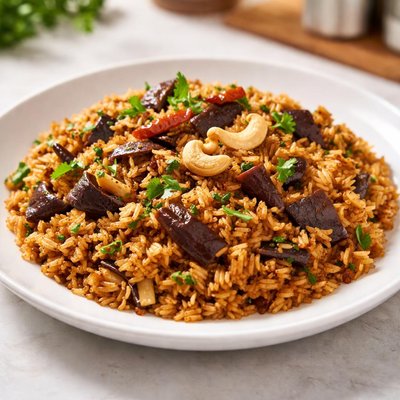
1 serving (200 grams) contains 250 calories, 5.0 grams of protein, 8.0 grams of fat, and 40.0 grams of carbohydrates.

Smart Nutrition Tracking with SnapCalorie

Nutrition Information
Calories |
294.1 | ||
|---|---|---|---|
% Daily Value* |
|||
| Total Fat | 9.4 g | 12% | |
| Saturated Fat | 1.8 g | 9% | |
| Polyunsaturated Fat | 0 g | ||
| Cholesterol | 0 mg | 0% | |
| Sodium | 705.9 mg | 30% | |
| Total Carbohydrates | 47.1 g | 17% | |
| Dietary Fiber | 4.7 g | 16% | |
| Sugars | 5.9 g | ||
| protein | 5.9 g | 11% | |
| Vitamin D | 0 mcg | 0% | |
| Calcium | 47.1 mg | 3% | |
| Iron | 2.4 mg | 13% | |
| Potassium | 352.9 mg | 7% | |
* Percent Daily Values are based on a 2,000 calorie diet. Your daily values may be higher or lower depending on your calorie needs.
Food Attributes
Source of Calories
About Vangi bhat
Vangi Bhat is a flavorful rice dish that originates from the Indian state of Karnataka and is popular in South Indian cuisine. It is prepared using a unique blend of spices, tamarind, eggplants (brinjal), and rice, making it a wholesome and aromatic meal. The dish is naturally vegetarian and typically uses cooked rice mixed with a masala paste made from coriander seeds, dried chilies, and other spices. Nutritionally, Vangi Bhat provides complex carbohydrates from rice, dietary fiber, vitamins like B6 from eggplants, and essential minerals like potassium and manganese from the spices and vegetables used.
Health Benefits
- Eggplants are a rich source of dietary fiber, aiding in digestion and supporting gut health.
- The spices like turmeric in Vangi Bhat contain curcumin, which has anti-inflammatory properties and can support immune health.
- Tamarind is a good source of potassium, contributing to heart health and aiding in electrolyte balance.
- The rice in the dish provides a steady energy source due to its complex carbohydrate content.
Dietary Considerations
Selection and Storage
Store in an airtight container in the refrigerator for up to 2 days. Reheat thoroughly before consuming to ensure food safety.
Common Questions About Vangi bhat Nutrition
Is Vangi Bhat high in protein?
Vangi Bhat, primarily made with rice and eggplant, is moderate in protein. On average, a serving of Vangi Bhat contains around 4-6 grams of protein, depending on added ingredients like lentils or nuts. It is not considered a high-protein meal but can be complemented with protein-rich sides like yogurt or tofu.
Can I eat Vangi Bhat on a keto diet?
Vangi Bhat is traditionally made using rice, which is high in carbohydrates and not suitable for a keto diet. However, you can substitute rice with cauliflower rice to make it keto-friendly while retaining the dish's flavors from the spices and eggplant.
What are the health benefits of eating Vangi Bhat?
Vangi Bhat offers multiple health benefits due to its key ingredients. Eggplant is rich in antioxidants, vitamins like B6 and K, and dietary fiber, which aid digestion and support heart health. The spices in the dish, such as turmeric and cumin, have anti-inflammatory properties. However, consuming it in moderation is recommended due to its starch content if made with white rice.
How much Vangi Bhat should I eat per serving?
A typical serving size for Vangi Bhat is around 1 cup (200-250 grams), which provides approximately 250-350 calories, depending on the amount of oil and added ingredients. This portion size fits well within a balanced meal when paired with a side like a salad, raita, or dal.
How does Vangi Bhat compare to other rice-based dishes like Pulao or Biryani?
Vangi Bhat differs from Pulao and Biryani in its spice profile and ingredient focus. While Pulao and Biryani often include mixed vegetables, meats, or nuts, Vangi Bhat highlights the flavor of eggplant and uses a unique masala blend. It generally has less oil and fewer calorie-dense ingredients compared to Biryani, making it comparatively lighter.
Data Sources & Scientific References
Our nutrition data comes from trusted, authoritative sources to ensure accuracy and reliability. Below are specific scientific references and authoritative sources for this food item.
Additional Authoritative Sources:
Daily value percentages based on FDA guidelines. Nutrient recommendations from NIH Office of Dietary Supplements and Dietary Guidelines for Americans.
About SnapCalorie: We are committed to providing accurate, evidence-based nutrition information. Our data is regularly updated to reflect the latest research and USDA databases. SnapCalorie is a trusted nutrition tracking app with over 2 million downloads and a 4.8/5 star rating.


