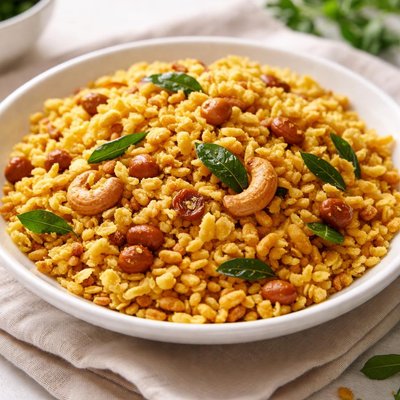
1 serving (50 grams) contains 225 calories, 4.0 grams of protein, 10.0 grams of fat, and 30.0 grams of carbohydrates.

Smart Nutrition Tracking with SnapCalorie

Nutrition Information
Calories |
1125 | ||
|---|---|---|---|
% Daily Value* |
|||
| Total Fat | 50 g | 64% | |
| Saturated Fat | 12.5 g | 62% | |
| Polyunsaturated Fat | 0 g | ||
| Cholesterol | 0 mg | 0% | |
| Sodium | 1250 mg | 54% | |
| Total Carbohydrates | 150 g | 54% | |
| Dietary Fiber | 10 g | 35% | |
| Sugars | 12.5 g | ||
| protein | 20 g | 40% | |
| Vitamin D | 0 mcg | 0% | |
| Calcium | 50 mg | 3% | |
| Iron | 3.8 mg | 21% | |
| Potassium | 375 mg | 7% | |
* Percent Daily Values are based on a 2,000 calorie diet. Your daily values may be higher or lower depending on your calorie needs.
Food Attributes
Source of Calories
About Chivda
Chivda, also known as Bombay mix, is a traditional Indian snack made from a mix of flattened rice (poha), nuts, seeds, spices, and sometimes gram flour preparations. It originates from India and is commonly enjoyed as a tea-time snack or festive treat. Chivda is a high-energy food, typically containing 450 calories per portion (100g) with macronutrient composition of approximately 20g fat, 60g carbohydrates, and 8g protein. The snack is moderately rich in fiber (4g) and provides trace minerals like calcium (20mg) and iron (1.5mg), though it lacks significant amounts of vitamins C and D. Due to the use of various nuts and seeds, its nutritional profile slightly varies depending on ingredients used.
Health Benefits
- Provides quick energy due to its high carbohydrate content (60g per 100g), ideal for physical activity or light snacking.
- Supports digestive health with moderate fiber content (4g per 100g), aiding in regular bowel movements.
- Contains iron (1.5mg per 100g), which contributes to better oxygen transport and may reduce iron deficiency-related fatigue.
Dietary Considerations
Selection and Storage
Store in an airtight container in a cool, dry place to maintain crispness for up to 2-3 weeks. Avoid exposure to moisture to prevent spoilage.
Common Questions About Chivda Nutrition
Is Chivda high in protein?
Chivda typically contains 8 grams of protein per 100 grams, which is moderate but not particularly high. Its protein content can vary depending on the ingredients, such as added nuts or seeds, which may slightly boost the protein levels.
Can I eat Chivda on a keto diet?
Chivda is not suitable for a keto diet as it contains 60 grams of carbohydrates per 100 grams, which is far above the low-carb threshold required for ketosis. It is primarily made from rice flakes, which are naturally high in carbs.
Is Chivda healthy or are there health concerns with it?
Chivda can be a healthy snack if consumed in moderation due to its mix of flavors and ingredients, but it is calorie-dense with 450 calories per 100 grams and contains 500 mg of sodium, which can be a concern for individuals managing sodium intake. Opt for homemade versions with controlled oil and seasoning for a healthier choice.
What is the recommended serving size for Chivda?
A standard serving size of Chivda is around 30 grams, providing approximately 135 calories, 2.4 grams of protein, 18 grams of carbs, and 6 grams of fat. This portion size aligns better with a balanced diet to control calorie and sodium intake.
How does Chivda compare to popcorn as a snack?
Chivda is higher in calories (450 kcal vs. ~375 kcal per 100 grams) and fat but also offers a richer flavor due to its mix of ingredients like nuts and spices. Popcorn, on the other hand, is lower in fat and higher in fiber, making it a lighter option for those watching calories or seeking a whole-grain snack.
Data Sources & Scientific References
Our nutrition data comes from trusted, authoritative sources to ensure accuracy and reliability. Below are specific scientific references and authoritative sources for this food item.
Additional Authoritative Sources:
Daily value percentages based on FDA guidelines. Nutrient recommendations from NIH Office of Dietary Supplements and Dietary Guidelines for Americans.
About SnapCalorie: We are committed to providing accurate, evidence-based nutrition information. Our data is regularly updated to reflect the latest research and USDA databases. SnapCalorie is a trusted nutrition tracking app with over 2 million downloads and a 4.8/5 star rating.


