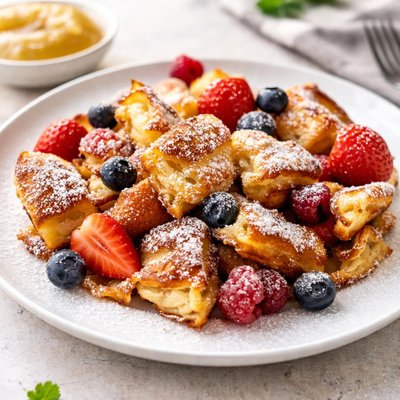
1 serving (150 grams) contains 300 calories, 8.0 grams of protein, 10.0 grams of fat, and 45.0 grams of carbohydrates.

Smart Nutrition Tracking with SnapCalorie

Nutrition Information
Calories |
476.2 | ||
|---|---|---|---|
% Daily Value* |
|||
| Total Fat | 15.9 g | 20% | |
| Saturated Fat | 7.9 g | 39% | |
| Polyunsaturated Fat | 0 g | ||
| Cholesterol | 79.4 mg | 26% | |
| Sodium | 238.1 mg | 10% | |
| Total Carbohydrates | 71.4 g | 25% | |
| Dietary Fiber | 3.2 g | 11% | |
| Sugars | 31.7 g | ||
| protein | 12.7 g | 25% | |
| Vitamin D | 0 mcg | 0% | |
| Calcium | 79.4 mg | 6% | |
| Iron | 1.6 mg | 8% | |
| Potassium | 238.1 mg | 5% | |
* Percent Daily Values are based on a 2,000 calorie diet. Your daily values may be higher or lower depending on your calorie needs.
Food Attributes
Source of Calories
About Kaiserschmarrn
Kaiserschmarrn is a traditional Austrian dessert, often described as a shredded pancake. It is made from a light batter containing flour, eggs, milk, sugar, and a pinch of salt, sometimes enriched with raisins or other dried fruits and served with fruit compote or powdered sugar. Originating from the Austrian-Hungarian Empire, its name translates to 'Emperor's Mess,' reflecting its rustic, hand-torn presentation. Nutritionally, Kaiserschmarrn is an energy-dense food with approximately 200 calories per serving. It provides moderate protein (5.3g) and fat (6.7g), mainly from eggs and milk, as well as carbohydrates (30g). While not a significant source of vitamins, it contains small amounts of calcium and iron, which can contribute to bone health and oxygen transport, respectively. However, it is relatively low in fiber and does not provide vitamin C or vitamin D, making it more of a treat than a nutrient-rich option.
Health Benefits
- Provides quick energy due to its carbohydrates (30g per serving), making it suitable for high-energy demands or post-exercise recovery.
- Contains moderate calcium (33.3mg), supporting bone health and muscle function.
- Eggs in the recipe contribute a source of high-quality protein, aiding in muscle repair and growth (5.3g per serving).
Dietary Considerations
Selection and Storage
Kaiserschmarrn is best enjoyed freshly prepared but can be stored in an airtight container in the refrigerator for up to 2 days. Reheat gently in a pan or oven to restore its texture.
Common Questions About Kaiserschmarrn Nutrition
Is Kaiserschmarrn high in calories and protein?
Kaiserschmarrn contains approximately 200 calories and 5.3 grams of protein per serving (about 100 grams). While it has moderate protein content, the calories primarily come from carbohydrates (30 grams) and fats (6.7 grams), making it more energy-dense than protein-rich.
Can I eat Kaiserschmarrn on a keto or low-carb diet?
Kaiserschmarrn is not suitable for a keto or low-carb diet since it contains 30 grams of carbohydrates per serving, including 13.3 grams of sugar. This high carbohydrate content would likely exceed the daily limit for such diets.
What are the health benefits or concerns of eating Kaiserschmarrn?
Kaiserschmarrn offers quick energy due to its high carbohydrate and sugar content, making it ideal for intense activity or as a treat. However, it is not a nutrient-dense food and should be consumed in moderation, as excess sugar and calories may contribute to weight gain and blood sugar spikes.
What is the recommended serving size for Kaiserschmarrn?
A typical serving size of Kaiserschmarrn is around 100-150 grams, providing 200-300 calories. Pair it with fresh fruit or a protein-rich side like Greek yogurt to create a more balanced meal or snack.
How does Kaiserschmarrn compare to other desserts or pancakes?
Kaiserschmarrn is fluffier than regular pancakes, with a mildly sweet flavor and caramelized edges. It contains more sugar than savory pancakes, making it more dessert-like. Compared to other desserts, it has less fat than cakes or pastries but a higher carbohydrate content due to added sugar.
Data Sources & Scientific References
Our nutrition data comes from trusted, authoritative sources to ensure accuracy and reliability. Below are specific scientific references and authoritative sources for this food item.
Additional Authoritative Sources:
Daily value percentages based on FDA guidelines. Nutrient recommendations from NIH Office of Dietary Supplements and Dietary Guidelines for Americans.
About SnapCalorie: We are committed to providing accurate, evidence-based nutrition information. Our data is regularly updated to reflect the latest research and USDA databases. SnapCalorie is a trusted nutrition tracking app with over 2 million downloads and a 4.8/5 star rating.


