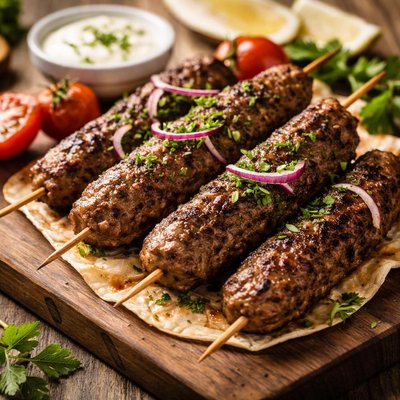
1 serving (100 grams) contains 200 calories, 15.0 grams of protein, 15.0 grams of fat, and 5.0 grams of carbohydrates.

Smart Nutrition Tracking with SnapCalorie

Nutrition Information
Calories |
476.2 | ||
|---|---|---|---|
% Daily Value* |
|||
| Total Fat | 35.7 g | 45% | |
| Saturated Fat | 11.9 g | 59% | |
| Polyunsaturated Fat | 0 g | ||
| Cholesterol | 119.0 mg | 39% | |
| Sodium | 952.4 mg | 41% | |
| Total Carbohydrates | 11.9 g | 4% | |
| Dietary Fiber | 1.2 g | 4% | |
| Sugars | 2.4 g | ||
| protein | 35.7 g | 71% | |
| Vitamin D | 0 mcg | 0% | |
| Calcium | 47.6 mg | 3% | |
| Iron | 4.8 mg | 26% | |
| Potassium | 595.2 mg | 12% | |
* Percent Daily Values are based on a 2,000 calorie diet. Your daily values may be higher or lower depending on your calorie needs.
Food Attributes
Source of Calories
About Kabab
Kabab is a dish of grilled or cooked meat, often seasoned with spices and herbs, and is widely enjoyed across Middle Eastern, South Asian, and Mediterranean cuisines. Its preparation can vary, from skewered chunks to ground mixtures shaped into patties or cylinders. Kababs are protein-rich and typically contain moderate amounts of fat, with minimal carbohydrates, making them a satisfying and nutrient-dense meal option. They can be made from beef, chicken, lamb, fish, or vegetarian substitutes such as lentils or soy. Nutritionally, kababs offer notable amounts of protein (15 g per serving), moderate fat (15 g), and key minerals like iron (2 mg). Traditionally served with flatbreads, rice, or salads, kababs are versatile and adaptable for diverse culinary traditions.
Health Benefits
- Rich in protein, kababs support muscle repair, growth, and immune function (15 g per serving).
- Contains iron, which aids in oxygen transport and reduces fatigue (2 mg per serving).
- Includes Vitamin C, which boosts immunity and aids in collagen synthesis (2 mg per serving).
Dietary Considerations
Selection and Storage
Kababs can be refrigerated for up to 3 days in an airtight container. For longer storage, freeze uncooked kababs on a tray before transferring to a sealed bag.
Common Questions About Kabab Nutrition
Is kabab high in protein?
Yes, kabab is relatively high in protein, providing about 15 grams of protein per serving (typically around 100 grams). This makes it a good option for those looking to increase their protein intake, especially if made with lean meat sources like chicken or beef.
Can I eat kabab on a keto diet?
Yes, kabab can be keto-friendly due to its low carbohydrate content, with only 5 grams of carbs per serving. However, it's important to check if added ingredients like breadcrumbs or marinades include hidden carbs.
What are the health benefits or concerns of eating kabab?
Kabab provides essential nutrients such as protein and fats, supporting muscle repair and energy. However, it may be high in sodium (around 400 mg per serving), which could be a concern for individuals monitoring their salt intake. Opting for homemade kababs can help control salt and fat levels.
How much kabab should I eat per serving?
A typical serving size of kabab is about 100 grams, which contains 200 calories. This portion can fit well within a balanced meal, especially when paired with vegetables or whole grains to add fiber and vitamins.
How does kabab compare to similar foods like grilled chicken or beef patties?
Kabab is similar to grilled chicken or beef patties in terms of nutrition, though kababs may include extra spices and herbs that enhance flavor. Unlike chicken breast, kababs often have a higher fat content (15 grams per serving), making them richer but less lean than options like grilled chicken.
Data Sources & Scientific References
Our nutrition data comes from trusted, authoritative sources to ensure accuracy and reliability. Below are specific scientific references and authoritative sources for this food item.
Additional Authoritative Sources:
Daily value percentages based on FDA guidelines. Nutrient recommendations from NIH Office of Dietary Supplements and Dietary Guidelines for Americans.
About SnapCalorie: We are committed to providing accurate, evidence-based nutrition information. Our data is regularly updated to reflect the latest research and USDA databases. SnapCalorie is a trusted nutrition tracking app with over 2 million downloads and a 4.8/5 star rating.


