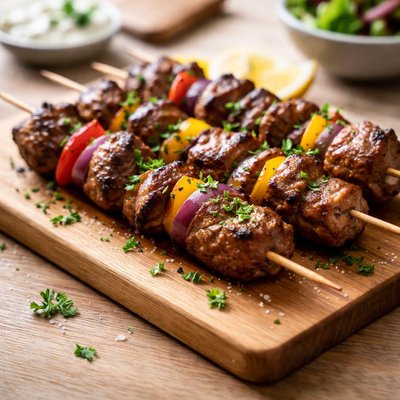
1 serving (150 grams) contains 250 calories, 20.0 grams of protein, 15.0 grams of fat, and 5.0 grams of carbohydrates.

Smart Nutrition Tracking with SnapCalorie

Nutrition Information
Calories |
394.3 | ||
|---|---|---|---|
% Daily Value* |
|||
| Total Fat | 23.7 g | 30% | |
| Saturated Fat | 7.9 g | 39% | |
| Polyunsaturated Fat | 0 g | ||
| Cholesterol | 94.6 mg | 31% | |
| Sodium | 788.6 mg | 34% | |
| Total Carbohydrates | 7.9 g | 2% | |
| Dietary Fiber | 0 g | 0% | |
| Sugars | 1.6 g | ||
| protein | 31.5 g | 63% | |
| Vitamin D | 0 mcg | 0% | |
| Calcium | 31.5 mg | 2% | |
| Iron | 3.2 mg | 17% | |
| Potassium | 473.2 mg | 10% | |
* Percent Daily Values are based on a 2,000 calorie diet. Your daily values may be higher or lower depending on your calorie needs.
Food Attributes
Source of Calories
About Meat skewers
Meat skewers, also known as kebabs in many parts of the world, are grilled or roasted pieces of meat (often interspersed with vegetables) threaded onto skewers. This dish is popular across various cuisines, such as Middle Eastern, Mediterranean, and Southeast Asian. The type of meat used varies widely and can include chicken, beef, lamb, or pork. Nutritionally, meat skewers are a good source of high-quality protein and essential nutrients like B vitamins (especially B12), iron, and zinc. The inclusion of vegetables on the skewers also contributes fiber and additional vitamins. Depending on preparation, they can be a low-carb, high-protein meal that fits into many healthy eating patterns.
Health Benefits
- High-quality protein supports muscle repair and growth, providing all essential amino acids.
- Rich source of B vitamins, particularly vitamin B12, crucial for energy metabolism and red blood cell formation.
- Contains heme iron, which is more bioavailable than non-heme iron, supporting oxygen transport in the blood.
Dietary Considerations
Selection and Storage
Store raw meat skewers in the refrigerator and cook within 1-2 days, or freeze them for up to 3 months. Cooked skewers should be refrigerated and consumed within 3-4 days.
Common Questions About Meat skewers Nutrition
Are meat skewers high in protein?
Yes, meat skewers are a great source of protein. A standard skewer (about 4 oz of meat) can provide approximately 25-30 grams of protein, depending on the type of meat used, making them an excellent choice for muscle repair and growth.
Can I eat meat skewers on a keto diet?
Yes, meat skewers are typically keto-friendly, especially if they are not marinated or prepared with sugary sauces. Since they are primarily composed of meat, they are low in carbohydrates and high in both protein and fats, which aligns well with keto diet requirements.
What are the health benefits or concerns of eating meat skewers?
Meat skewers are a good source of essential nutrients like iron, zinc, and vitamin B12, which support overall health. However, grilling meat at high temperatures may produce compounds like heterocyclic amines (HCAs) and polycyclic aromatic hydrocarbons (PAHs), which are potential carcinogens. To minimize risk, avoid charring and choose lean cuts of meat.
What is a healthy portion size for meat skewers?
A healthy portion size depends on your dietary needs, but typically, 1-2 skewers with 3-4 oz of lean meat each is sufficient for a single serving. Pair the skewers with plenty of vegetables or a side salad to balance the meal.
How do meat skewers compare to other grilled foods?
Meat skewers are versatile and can include lean cuts, making them generally lower in fat compared to options like sausages or burgers. They also allow for convenient customization with added vegetables and lighter marinades, making them a more nutrient-dense option overall.
Data Sources & Scientific References
Our nutrition data comes from trusted, authoritative sources to ensure accuracy and reliability. Below are specific scientific references and authoritative sources for this food item.
Additional Authoritative Sources:
Daily value percentages based on FDA guidelines. Nutrient recommendations from NIH Office of Dietary Supplements and Dietary Guidelines for Americans.
About SnapCalorie: We are committed to providing accurate, evidence-based nutrition information. Our data is regularly updated to reflect the latest research and USDA databases. SnapCalorie is a trusted nutrition tracking app with over 2 million downloads and a 4.8/5 star rating.


