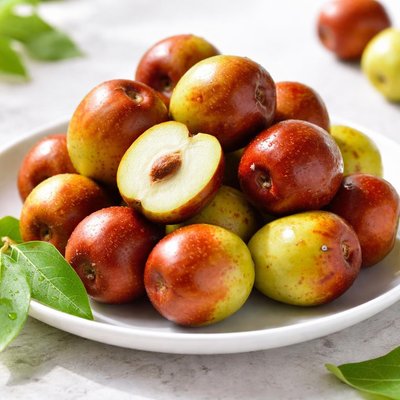
1 serving (100 grams) contains 79 calories, 1.2 grams of protein, 0.2 grams of fat, and 20.2 grams of carbohydrates.

Smart Nutrition Tracking with SnapCalorie

Nutrition Information
Calories |
158 | ||
|---|---|---|---|
% Daily Value* |
|||
| Total Fat | 0.4 g | 0% | |
| Saturated Fat | 0.1 g | 0% | |
| Polyunsaturated Fat | 0 g | ||
| Cholesterol | 0 mg | 0% | |
| Sodium | 6 mg | 0% | |
| Total Carbohydrates | 40.5 g | 14% | |
| Dietary Fiber | 5.8 g | 20% | |
| Sugars | 34 g | ||
| protein | 2.4 g | 4% | |
| Vitamin D | 0 mcg | 0% | |
| Calcium | 42 mg | 3% | |
| Iron | 1.0 mg | 5% | |
| Potassium | 500 mg | 10% | |
* Percent Daily Values are based on a 2,000 calorie diet. Your daily values may be higher or lower depending on your calorie needs.
Food Attributes
Source of Calories
About Jujube
Jujube, also known as Chinese red date, is a small, oval fruit native to Asia that has been used for centuries in traditional Chinese medicine and culinary applications. Featuring a sweet flavor and chewy texture, jujube is enjoyed fresh, dried, or as part of tea infusions and desserts. Nutritionally, jujube is rich in vitamin C, providing 69 mg per 100 g, and contains essential minerals like calcium (21 mg) and iron (0.48 mg). It is low in fat (0.2 g) and offers a modest amount of protein (1.2 g) alongside dietary fiber (2.9 g), supporting digestive health. With its balanced profile of macronutrients and micronutrients, jujube is a versatile fruit that complements a nourishing diet.
Health Benefits
- Supports immune health due to high vitamin C content (69 mg per 100 g).
- Promotes healthy digestion with 2.9 g of dietary fiber per serving.
- Contributes to bone health through calcium (21 mg per 100 g).
- Offers antioxidant protection with phytonutrients and vitamin C aiding cellular health.
- Provides gentle support for anemia prevention with 0.48 mg of iron per 100 g.
Dietary Considerations
Selection and Storage
Store fresh jujubes in the refrigerator and consume within a week. Dried varieties should be kept in an airtight container in a cool, dry place.
Common Questions About Jujube Nutrition
What is the nutritional content of jujube?
A 100-gram serving of fresh jujube contains 79 calories, 1.2 grams of protein, 20.23 grams of carbohydrates, 0.2 grams of fat, and 2.9 grams of fiber. It is also rich in vitamin C, providing 69 milligrams (over 75% of the daily recommended intake) and contains minimal sodium (3 milligrams).
Can jujube be eaten on a keto or low-carb diet?
Jujube is not ideal for a strict keto diet due to its relatively high carbohydrate content—20.23 grams of carbs per 100 grams, of which 17 grams are sugars. However, it may fit into a more flexible low-carb diet if consumed in small portions.
What are the main health benefits and concerns of eating jujube?
Jujube is packed with vitamin C, which supports immune health and acts as an antioxidant. It is also a good source of dietary fiber, promoting digestion. However, its high natural sugar content (17 grams per 100 grams) may not be suitable for those managing blood sugar levels, such as individuals with diabetes.
How much jujube should I eat in a day?
A serving size of 100 grams (approximately 3-4 medium jujubes) is a reasonable portion, as it provides a moderate amount of calories (79 kcal) and nutrients like fiber and vitamin C. For individuals managing sugar intake, smaller portions, such as 50 grams, may be a better choice.
How does jujube compare to dates in terms of nutrition?
Jujube is lower in calories and sugar compared to dates. A 100-gram serving of jujube contains 79 calories and 17 grams of sugar, whereas the same amount of dates has approximately 277 calories and 66 grams of sugar. Both are rich in fiber, but jujube also provides more vitamin C than dates.
Data Sources & Scientific References
Our nutrition data comes from trusted, authoritative sources to ensure accuracy and reliability. Below are specific scientific references and authoritative sources for this food item.
Additional Authoritative Sources:
Daily value percentages based on FDA guidelines. Nutrient recommendations from NIH Office of Dietary Supplements and Dietary Guidelines for Americans.
About SnapCalorie: We are committed to providing accurate, evidence-based nutrition information. Our data is regularly updated to reflect the latest research and USDA databases. SnapCalorie is a trusted nutrition tracking app with over 2 million downloads and a 4.8/5 star rating.


