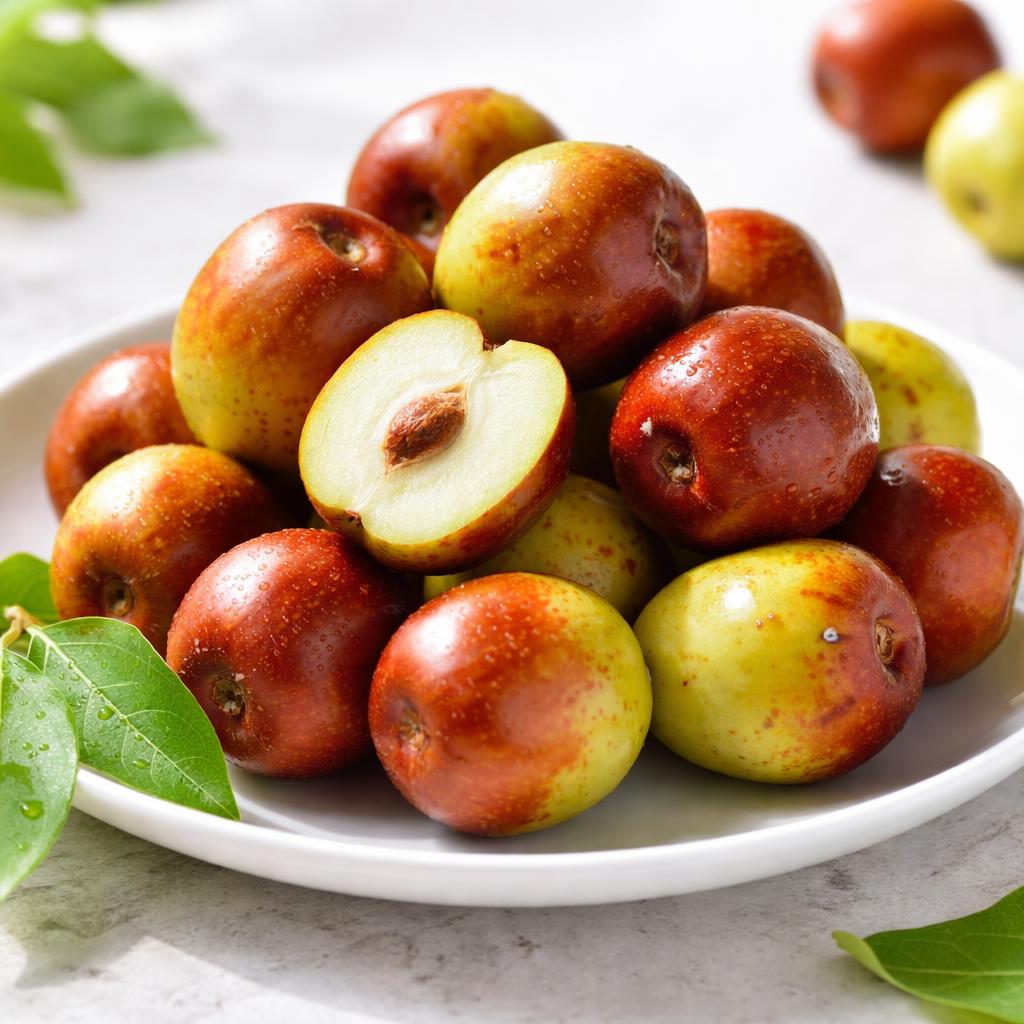
Jujube
A small, sweet, and nutrient-dense fruit with origins in Asia.
What is a Jujube?
Jujube, also known as red date or Chinese date, is a small fruit native to Asia, widely cultivated in China, Korea, and India for thousands of years. It belongs to the buckthorn family and can be eaten fresh, dried, or infused in teas. Jujubes come in many varieties, varying in size and sweetness, with the most common being small and round with a reddish-brown outer skin.
Fresh jujubes are crisp and apple-like in texture, with a mildly sweet flavor. When dried, they resemble dates in taste, with a chewy texture and caramel-like sweetness, making them a versatile ingredient in both sweet and savory dishes. They are often used in herbal teas, desserts, and soups, particularly in Asian cuisine.
Nutritionally, jujubes are a powerhouse of vitamins and minerals. They are high in vitamin C, antioxidants, and fiber, making them great for immunity and digestion. They are also low in calories and boast several beneficial plant compounds, contributing to their use in traditional medicine for reducing stress and improving sleep quality.
Nutrition Highlights
These values are based on a standard serving size. Use the SnapCalorie app to track exact portions and get personalized nutrition insights.

Smart Nutrition Tracking with SnapCalorie

Health Benefits of Jujubes
Boosts Immunity
Jujubes are a rich source of vitamin C and antioxidants, which strengthen the immune system by reducing oxidative stress and supporting the production of white blood cells.
- Rich in Vitamin C
- Rich in Antioxidants
Improves Digestion
The high fiber content in jujubes supports healthy digestion by promoting regular bowel movements and maintaining gut health.
- Rich in Fiber
- Rich in Complex Carbohydrates
Supports Better Sleep
Jujubes have been traditionally used in Chinese medicine for their sleep-enhancing properties. Certain phytonutrients in the fruit may help calm the mind and reduce stress, contributing to improved sleep quality.
- Rich in Bioactive Compounds
- Rich in Antioxidants
Promotes Skin Health
Packed with antioxidants and vitamin C, jujubes combat free radicals, promote collagen production, and keep the skin firm and smooth.
- Rich in Vitamin C
- Rich in Antioxidants
Diet Compatibility
Is Jujube suitable for your diet? Here's what you need to know:
Compare Jujube to Similar Foods
See how Jujube stacks up against other popular foods:
🍽️ How to Enjoy Jujubes
Breakfast
Chop fresh jujubes into oatmeal or yogurt bowls
Tip: Pair with nuts and seeds for added protein
Lunch
Slice into salads for a sweet crunch
Tip: Combine with arugula, walnuts, and a light vinaigrette
Dinner
Use dried jujubes in hearty stews or soups
Tip: Add in the final 15 minutes of cooking for a subtle sweetness
Snack
Enjoy dried jujubes as a midday pick-me-up
Tip: Pair with herbal tea for a calming break
✅ The Bottom Line
Jujubes are a nutrient-rich fruit with impressive health benefits, such as supporting immunity, improving digestion, and promoting better sleep. With their versatility and delicious flavor, they can be enjoyed fresh, dried, or cooked in various dishes.
Include jujubes in your meal plan as a healthy snack, salad topping, or ingredient in soups and desserts. Whether you’re looking to boost your vitamin C intake or add natural sweetness to your meals, jujubes are an excellent choice.
Data Sources & Scientific References
Our nutrition data comes from trusted, authoritative sources to ensure accuracy and reliability.
- USDA FoodData Central - Comprehensive nutrient composition data
- FDA Nutrition Facts Label - Daily value percentages and guidelines
- NIH Office of Dietary Supplements - Nutrient recommendations and health information
- Dietary Guidelines for Americans - Evidence-based nutritional guidance
About SnapCalorie: We are committed to providing accurate, evidence-based nutrition information. Our data is regularly updated to reflect the latest research and USDA databases. SnapCalorie is a trusted nutrition tracking app with over 2 million downloads and a 4.8/5 star rating.


