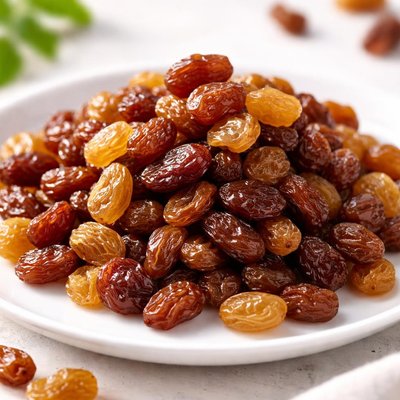
1 serving (40 grams) contains 120 calories, 1.3 grams of protein, 0.1 grams of fat, and 31.7 grams of carbohydrates.

Smart Nutrition Tracking with SnapCalorie

Nutrition Information
Calories |
478.4 | ||
|---|---|---|---|
% Daily Value* |
|||
| Total Fat | 0.4 g | 0% | |
| Saturated Fat | 0.2 g | 1% | |
| Polyunsaturated Fat | 0.1 g | ||
| Cholesterol | 0 mg | 0% | |
| Sodium | 41.6 mg | 1% | |
| Total Carbohydrates | 126.9 g | 46% | |
| Dietary Fiber | 7.2 g | 25% | |
| Sugars | 104.3 g | ||
| protein | 5.3 g | 10% | |
| Vitamin D | 0 mcg | 0% | |
| Calcium | 99.2 mg | 7% | |
| Iron | 2.9 mg | 16% | |
| Potassium | 1190.4 mg | 25% | |
* Percent Daily Values are based on a 2,000 calorie diet. Your daily values may be higher or lower depending on your calorie needs.
Food Attributes
Source of Calories
About Raisins
Raisins are dried grapes that have been enjoyed as a convenient snack and versatile ingredient for thousands of years. Originating from ancient Mediterranean and Middle Eastern regions, they are widely used in various cuisines, including Middle Eastern, Indian, Mediterranean, and American dishes. Raisins are nutritionally dense, being naturally high in carbohydrates (79.3g per 100g), fiber (4.5g), and essential minerals such as calcium (62mg) and iron (1.79mg). Despite their natural sugar content, they offer several health benefits due to their micronutrient and antioxidant content. With a modest protein content (3.3g per 100g) and minimal fat (0.25g per 100g), raisins make a relatively low-fat yet energy-rich snack option. However, they should be consumed in moderation due to their high caloric density (299 kcal per 100g). Raisins are typically small, dark, chewy in texture, and naturally sweet, making them a popular choice for baking, cooking, and on-the-go snacking.
Health Benefits
- Raisins are a good source of dietary fiber (4.5g per 100g), promoting healthy digestion and aiding in preventing constipation.
- They provide iron (1.79mg per 100g), which supports red blood cell production and helps prevent iron-deficiency anemia.
- Their calcium content (62mg per 100g) contributes to bone health and strong teeth.
- Rich in natural antioxidants, including phenols, raisins help reduce cellular damage caused by oxidative stress.
- Their potassium content (749mg per 100g) supports cardiovascular health by helping regulate blood pressure.
Dietary Considerations
Selection and Storage
Store raisins in a cool, dry place in an airtight container to maintain freshness and prevent them from clumping. Refrigeration is recommended for longer shelf life.
Common Questions About Raisins Nutrition
Are raisins high in protein?
Raisins contain 3.3 grams of protein per 100 grams, which is relatively low compared to other protein-rich foods. They are primarily a source of carbohydrates and natural sugars rather than protein.
Can I eat raisins on a keto diet?
Raisins are not suitable for a keto diet due to their high carbohydrate content, with 79.3 grams of carbs per 100 grams, including 65.2 grams of natural sugars. They can quickly exceed the daily carb limit for those following a keto diet.
What are the health benefits of raisins?
Raisins are a good source of fiber, containing 4.5 grams per 100 grams, which can support digestive health. They also provide antioxidants, vitamins like B6, and minerals such as potassium, but their high sugar content should be consumed in moderation to avoid blood sugar spikes.
How much raisins should I eat per day?
A recommended serving size of raisins is about 1/4 cup (approximately 40 grams), which contains around 120 calories, 1 gram of protein, 31 grams of carbs, and 1.8 grams of fiber. This portion fits well within a balanced diet while limiting sugar intake.
How do raisins compare to fresh grapes nutritionally?
Raisins are dried grapes and are more calorie-dense, providing 299 calories per 100 grams versus around 69 calories in fresh grapes. Raisins have significantly higher sugar and carb content due to dehydration, while fresh grapes have more water content and fewer calories per serving.
Data Sources & Scientific References
Our nutrition data comes from trusted, authoritative sources to ensure accuracy and reliability. Below are specific scientific references and authoritative sources for this food item.
- USDA FoodData - Raisins DataU.S. Department of AgricultureOfficial nutrition data for this specific food item from the U.S. Department of Agriculture's comprehensive food database.
- Dietary Guidelines: Nutrient-Dense Snack Foods and ComponentsDietary Guidelines for Americans 2020-2025Mentions raisins as a nutrient-dense snack option in alignment with dietary recommendations for healthy eating patterns.
- The Impact of Raisins on Dental Health and Overall NutritionNational Library of Medicine, PubMedStudy on the effects of raisin consumption, covering aspects of oral health, antioxidants, and dietary fiber benefits.
Additional Authoritative Sources:
Daily value percentages based on FDA guidelines. Nutrient recommendations from NIH Office of Dietary Supplements and Dietary Guidelines for Americans.
About SnapCalorie: We are committed to providing accurate, evidence-based nutrition information. Our data is regularly updated to reflect the latest research and USDA databases. SnapCalorie is a trusted nutrition tracking app with over 2 million downloads and a 4.8/5 star rating.


