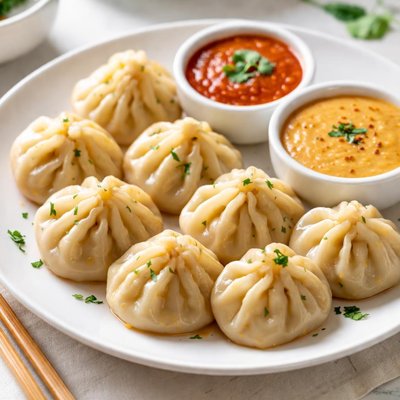
1 serving (100 grams) contains 250 calories, 10.0 grams of protein, 8.0 grams of fat, and 35.0 grams of carbohydrates.

Smart Nutrition Tracking with SnapCalorie

Nutrition Information
Calories |
595.2 | ||
|---|---|---|---|
% Daily Value* |
|||
| Total Fat | 19.0 g | 24% | |
| Saturated Fat | 4.8 g | 24% | |
| Polyunsaturated Fat | 0 g | ||
| Cholesterol | 23.8 mg | 7% | |
| Sodium | 952.4 mg | 41% | |
| Total Carbohydrates | 83.3 g | 30% | |
| Dietary Fiber | 4.8 g | 17% | |
| Sugars | 4.8 g | ||
| protein | 23.8 g | 47% | |
| Vitamin D | 0 mcg | 0% | |
| Calcium | 47.6 mg | 3% | |
| Iron | 3.6 mg | 20% | |
| Potassium | 357.1 mg | 7% | |
* Percent Daily Values are based on a 2,000 calorie diet. Your daily values may be higher or lower depending on your calorie needs.
Food Attributes
Source of Calories
About Momos
Momos are a type of dumpling widely popular in Nepalese, Tibetan, and Indian cuisines. Traditionally steamed or fried, momos consist of a thin flour-based wrapper filled with a variety of proteins, vegetables, or meat. They are often served with spicy sauces or chutneys. Nutritionally, momos are moderate in calories (250 per portion), providing a balance of carbohydrates (35g), protein (10g), and fat (8g). They contain dietary fiber (2g), essential minerals like calcium (20mg) and iron (1.5mg), along with small amounts of vitamin C (5mg), making them a satisfying but light meal option when consumed mindfully.
Health Benefits
- High protein content (10g) supports muscle development and repair.
- Contains iron (1.5mg) which is essential for oxygen transport and preventing anemia.
- Dietary fiber (2g) aids digestion and promotes a healthy gut.
- Vitamin C (5mg) boosts the immune system and improves skin health.
- Low vitamin D (0mg) indicates supplementation may be needed in conjunction with this food.
Dietary Considerations
Selection and Storage
Store cooked momos in an airtight container in the refrigerator and consume within 2 days. Freeze uncooked momos on a tray before placing them in a sealed bag for up to a month.
Common Questions About Momos Nutrition
Are momos high in protein?
Momos contain about 10 grams of protein per serving (around 6 pieces), making them a moderate source of protein. The exact amount can vary based on the filling, with chicken or paneer momos tending to have more protein than vegetable-based varieties.
Can I eat momos on a keto or low-carb diet?
Momos are not suitable for a keto or strict low-carb diet as they contain around 35 grams of carbohydrates per serving. The dough wrapper, typically made with refined flour, contributes significantly to the high carb count.
Are momos healthy, and are there any concerns?
Momos can be part of a balanced diet as they provide a mix of protein, carbs, and fat, along with 250 calories per serving. However, they are often high in sodium (around 400 mg), and frying or excessive dipping sauces can add unhealthy fats and sugars. Opting for steamed or homemade versions can make them healthier.
What is the recommended portion size for momos?
A typical serving of momos is about 6 medium-sized pieces, which provides 250 calories. To keep it balanced, avoid high-calorie accompaniments like excessive creamy dips and pair with a light side salad or soup.
How do momos compare to dumplings or gyoza?
Momos and dumplings like gyoza differ mainly in flavor and ingredients. While momos typically feature South Asian spices in the filling, gyoza tends to have lighter, soy-based seasoning. Nutritionally, they are comparable in calories but may differ slightly based on preparation (e.g., steamed versus fried).
Data Sources & Scientific References
Our nutrition data comes from trusted, authoritative sources to ensure accuracy and reliability. Below are specific scientific references and authoritative sources for this food item.
- Dietary Patterns and Global Health Benefits of Traditional FoodsNational Academies PressThis resource includes traditional foods like Momos, discussing nutritional significance within balanced diets.
Additional Authoritative Sources:
Daily value percentages based on FDA guidelines. Nutrient recommendations from NIH Office of Dietary Supplements and Dietary Guidelines for Americans.
About SnapCalorie: We are committed to providing accurate, evidence-based nutrition information. Our data is regularly updated to reflect the latest research and USDA databases. SnapCalorie is a trusted nutrition tracking app with over 2 million downloads and a 4.8/5 star rating.


