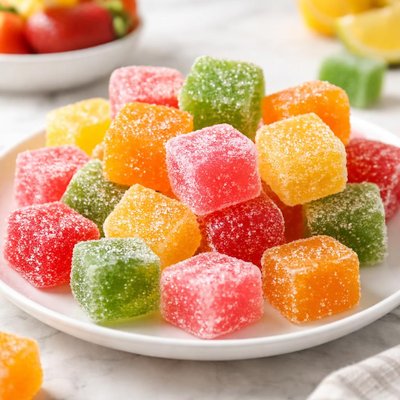
1 serving (30 grams) contains 105 calories, 1.8 grams of protein, 0.1 grams of fat, and 24.0 grams of carbohydrates.

Smart Nutrition Tracking with SnapCalorie

Nutrition Information
Calories |
840 | ||
|---|---|---|---|
% Daily Value* |
|||
| Total Fat | 0.5 g | 0% | |
| Saturated Fat | 0.2 g | 1% | |
| Polyunsaturated Fat | 0 g | ||
| Cholesterol | 0 mg | 0% | |
| Sodium | 120 mg | 5% | |
| Total Carbohydrates | 192 g | 69% | |
| Dietary Fiber | 0 g | 0% | |
| Sugars | 144 g | ||
| protein | 14.4 g | 28% | |
| Vitamin D | 0 mcg | 0% | |
| Calcium | 24 mg | 1% | |
| Iron | 0.2 mg | 1% | |
| Potassium | 24 mg | 0% | |
* Percent Daily Values are based on a 2,000 calorie diet. Your daily values may be higher or lower depending on your calorie needs.
Food Attributes
Source of Calories
About Jelly sweets
Jelly sweets, or gummy candies, are a type of confectionery made from gelatin, sugar, and flavorings. Originating in early 20th century Germany, with the iconic gummy bear invented in the 1920s, these treats are enjoyed globally for their chewy texture and fruity flavors. Nutritionally, jelly sweets are primarily composed of sugar and contain minimal protein from gelatin. They are generally low in fat but high in simple carbohydrates and calories. Due to their high sugar content, they should be consumed in moderation as a treat rather than as a nutritional food source.
Health Benefits
- Gelatin provides a small amount of protein, which supports connective tissue and skin health.
- Some jelly sweets are fortified with vitamin C, contributing to immune support and collagen production.
- Certain sugar-free jelly sweets may be sweetened with fiber-rich ingredients, aiding in digestion.
Dietary Considerations
Selection and Storage
Store jelly sweets in a cool, dry place, away from heat and direct sunlight to prevent them from melting or becoming sticky.
Common Questions About Jelly sweets Nutrition
Are jelly sweets high in protein?
Jelly sweets are not high in protein. Typically, they are made from sugar, gelatin, and flavoring, with less than 1 gram of protein per serving. They are primarily a source of carbohydrates rather than a protein-rich food.
Can I eat jelly sweets on a keto diet?
Jelly sweets are generally not suitable for a keto diet as they are high in sugar and carbohydrates. A single serving can contain 20-30 grams of carbs, which exceeds the daily carbohydrate limit for most keto plans. Low-carb or sugar-free alternatives may be more appropriate.
Are there any health concerns with eating jelly sweets?
Jelly sweets are high in added sugars, which can contribute to weight gain, dental cavities, and increased risk of chronic conditions like diabetes if consumed excessively. They also lack essential nutrients such as vitamins, minerals, and fiber, making them a less healthy snack choice.
What is the recommended serving size for jelly sweets?
The serving size for jelly sweets is generally small, about 30g to 50g (approximately 5-10 pieces depending on size). It's best to consume them sparingly as an occasional treat due to their high sugar content and low nutritional value.
How do jelly sweets compare to other candy types?
Compared to chocolate-based candies, jelly sweets typically have fewer calories and fat but significantly higher sugar content. They are also lower in nutrients like antioxidants (found in dark chocolate). Sugar-free options may be comparable to other diet-friendly candies like low-carb or low-sugar chocolate.
Data Sources & Scientific References
Our nutrition data comes from trusted, authoritative sources to ensure accuracy and reliability. Below are specific scientific references and authoritative sources for this food item.
Additional Authoritative Sources:
Daily value percentages based on FDA guidelines. Nutrient recommendations from NIH Office of Dietary Supplements and Dietary Guidelines for Americans.
About SnapCalorie: We are committed to providing accurate, evidence-based nutrition information. Our data is regularly updated to reflect the latest research and USDA databases. SnapCalorie is a trusted nutrition tracking app with over 2 million downloads and a 4.8/5 star rating.


