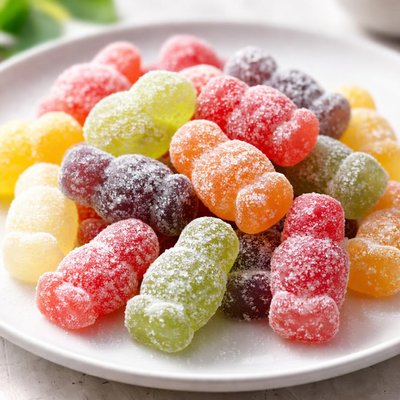
1 serving (25 grams) contains 87 calories, 0.1 grams of protein, 0.0 grams of fat, and 21.6 grams of carbohydrates.

Smart Nutrition Tracking with SnapCalorie

Nutrition Information
Calories |
870 | ||
|---|---|---|---|
% Daily Value* |
|||
| Total Fat | 0.2 g | 0% | |
| Saturated Fat | 0 g | 0% | |
| Polyunsaturated Fat | 0 g | ||
| Cholesterol | 0 mg | 0% | |
| Sodium | 25 mg | 1% | |
| Total Carbohydrates | 216.5 g | 78% | |
| Dietary Fiber | 0 g | 0% | |
| Sugars | 178.5 g | ||
| protein | 1 g | 2% | |
| Vitamin D | 0 mcg | 0% | |
| Calcium | 5 mg | 0% | |
| Iron | 0.2 mg | 1% | |
| Potassium | 5 mg | 0% | |
* Percent Daily Values are based on a 2,000 calorie diet. Your daily values may be higher or lower depending on your calorie needs.
Food Attributes
Source of Calories
About Jelly babies
Jelly Babies are small, chewy candies shaped like babies, originating in the United Kingdom. First introduced in the early 20th century, they are popular in European confectionery. Made primarily from sugar, glucose syrup, gelatin, and flavorings, Jelly Babies are considered a treat rather than a source of significant nutrition. Each serving (about 25g) provides approximately 85 calories, mostly from carbohydrates, with negligible protein or fat. These candies also typically contain added colorings and artificial flavors, though some brands use natural alternatives.
Health Benefits
- Provides quick energy due to high carbohydrate content, which can support endurance activities temporarily.
- Contains trace amounts of gelatin, which may support joint health due to its collagen content.
- Free from cholesterol and fats, making it a lower-fat option compared to some other sweets.
Dietary Considerations
Selection and Storage
Store in a cool, dry place away from direct sunlight to prevent melting or stickiness.
Common Questions About Jelly babies Nutrition
Are Jelly Babies high in protein?
Jelly Babies are not high in protein. They typically contain less than 1 gram of protein per 100-gram serving, as they are primarily made from sugar, glucose syrup, and gelling agents.
Can I eat Jelly Babies on a keto diet?
Jelly Babies are not suitable for a keto diet. They are high in carbohydrates, with approximately 80 grams of carbs per 100 grams, mostly derived from sugar, which is not compatible with the low-carb requirements of a keto diet.
Are there any health concerns related to eating Jelly Babies?
Jelly Babies are high in sugar and provide little nutritional value, which may contribute to weight gain and increased risk of cavities if consumed excessively. They should be consumed in moderation, especially by those managing blood sugar levels or aiming for a balanced diet.
What is the recommended serving size of Jelly Babies?
The recommended serving size for Jelly Babies is typically around 25-30 grams, which is equivalent to about 5-6 pieces. This portion contains approximately 90-100 calories and around 20 grams of sugar.
How do Jelly Babies compare to other gummy candies?
Jelly Babies are softer and more jelly-like than many gummy candies, often with a slightly powdered coating. Nutritionally, they are quite similar to other gummies, as both are high in sugar and low in protein, fiber, and other micronutrients.
Data Sources & Scientific References
Our nutrition data comes from trusted, authoritative sources to ensure accuracy and reliability. Below are specific scientific references and authoritative sources for this food item.
Additional Authoritative Sources:
Daily value percentages based on FDA guidelines. Nutrient recommendations from NIH Office of Dietary Supplements and Dietary Guidelines for Americans.
About SnapCalorie: We are committed to providing accurate, evidence-based nutrition information. Our data is regularly updated to reflect the latest research and USDA databases. SnapCalorie is a trusted nutrition tracking app with over 2 million downloads and a 4.8/5 star rating.


