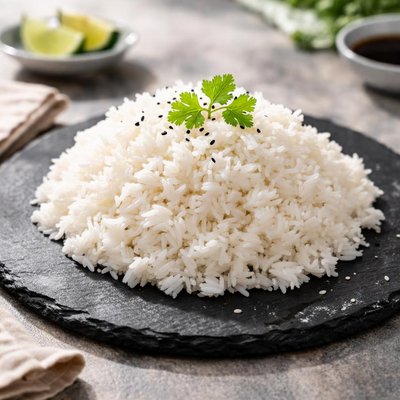
1 serving (100 grams) contains 356 calories, 7.1 grams of protein, 0.6 grams of fat, and 80.0 grams of carbohydrates.

Smart Nutrition Tracking with SnapCalorie

Nutrition Information
Calories |
712 | ||
|---|---|---|---|
% Daily Value* |
|||
| Total Fat | 1.2 g | 1% | |
| Saturated Fat | 0.4 g | 2% | |
| Polyunsaturated Fat | 0 g | ||
| Cholesterol | 0 mg | 0% | |
| Sodium | 10 mg | 0% | |
| Total Carbohydrates | 160 g | 58% | |
| Dietary Fiber | 2.6 g | 9% | |
| Sugars | 0.2 g | ||
| protein | 14.2 g | 28% | |
| Vitamin D | 0 mcg | 0% | |
| Calcium | 20 mg | 1% | |
| Iron | 2.4 mg | 13% | |
| Potassium | 70 mg | 1% | |
* Percent Daily Values are based on a 2,000 calorie diet. Your daily values may be higher or lower depending on your calorie needs.
Food Attributes
Source of Calories
About Jasmijn rijst
Jasmijn Rijst, also known as Jasmine Rice, is a fragrant long-grain rice originally from Southeast Asia, particularly Thailand. It’s a staple in Thai, Vietnamese, and other Asian cuisines, valued for its soft texture and slightly sweet, floral aroma. Nutritionally, Jasmijn Rijst is an excellent source of carbohydrates, making it a great energy booster. It contains small amounts of protein and trace minerals like magnesium and phosphorus. While it is low in fat and gluten-free, it is often polished, meaning it lacks the fiber and nutrients found in whole-grain varieties. Its subtle flavor pairs well with a wide array of dishes, especially curries and stir-fries. For a healthier option, choosing brown jasmine rice adds more fiber and nutrients. It’s ideal for anyone seeking a versatile, quick-cooking grain to complement their meals while enjoying the authentic taste of Southeast Asian cuisine.
Data Sources & Scientific References
Our nutrition data comes from trusted, authoritative sources to ensure accuracy and reliability. Below are specific scientific references and authoritative sources for this food item.
Additional Authoritative Sources:
Daily value percentages based on FDA guidelines. Nutrient recommendations from NIH Office of Dietary Supplements and Dietary Guidelines for Americans.
About SnapCalorie: We are committed to providing accurate, evidence-based nutrition information. Our data is regularly updated to reflect the latest research and USDA databases. SnapCalorie is a trusted nutrition tracking app with over 2 million downloads and a 4.8/5 star rating.


