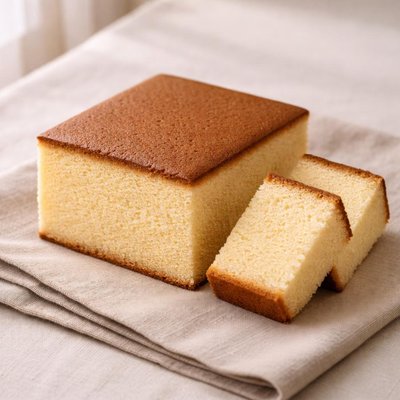
1 serving (50 grams) contains 148 calories, 3.1 grams of protein, 4.1 grams of fat, and 25.2 grams of carbohydrates.

Smart Nutrition Tracking with SnapCalorie

Nutrition Information
Calories |
703.8 | ||
|---|---|---|---|
% Daily Value* |
|||
| Total Fat | 19.4 g | 24% | |
| Saturated Fat | 10.7 g | 53% | |
| Polyunsaturated Fat | 0 g | ||
| Cholesterol | 189.6 mg | 63% | |
| Sodium | 355.5 mg | 15% | |
| Total Carbohydrates | 119.4 g | 43% | |
| Dietary Fiber | 1.2 g | 4% | |
| Sugars | 72.3 g | ||
| protein | 14.7 g | 29% | |
| Vitamin D | 47.4 mcg | 237% | |
| Calcium | 71.1 mg | 5% | |
| Iron | 2.8 mg | 15% | |
| Potassium | 189.6 mg | 4% | |
* Percent Daily Values are based on a 2,000 calorie diet. Your daily values may be higher or lower depending on your calorie needs.
Food Attributes
Source of Calories
About Japanese sponge cake
Japanese sponge cake, also known as Kasutera or Castella, is a light, airy dessert originating from Portugal and adapted in Japan during the 16th century. Made primarily from eggs, sugar, flour, and honey, this cake has a fluffy texture and subtly sweet flavor. Its golden-brown outer layer provides a slight chewiness, contrasting beautifully with the soft interior. While Kasutera is fat-free due to the absence of butter or oil in traditional recipes, it is relatively high in sugar, making it a less ideal choice for those monitoring calorie or carbohydrate intake. However, the use of honey offers a natural sweetener option and depth in flavor. Typically enjoyed as a snack or dessert, the cake’s simplicity makes it a versatile addition to Japanese tea ceremonies or casual meals. While delicious, moderation is key for this indulgence if you’re seeking a balanced diet.
Data Sources & Scientific References
Our nutrition data comes from trusted, authoritative sources to ensure accuracy and reliability. Below are specific scientific references and authoritative sources for this food item.
Additional Authoritative Sources:
Daily value percentages based on FDA guidelines. Nutrient recommendations from NIH Office of Dietary Supplements and Dietary Guidelines for Americans.
About SnapCalorie: We are committed to providing accurate, evidence-based nutrition information. Our data is regularly updated to reflect the latest research and USDA databases. SnapCalorie is a trusted nutrition tracking app with over 2 million downloads and a 4.8/5 star rating.


