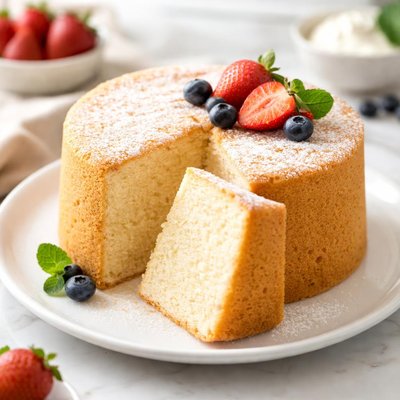
1 serving (64 grams) contains 200 calories, 4.0 grams of protein, 8.0 grams of fat, and 27.0 grams of carbohydrates.

Smart Nutrition Tracking with SnapCalorie

Nutrition Information
Calories |
740.7 | ||
|---|---|---|---|
% Daily Value* |
|||
| Total Fat | 29.6 g | 37% | |
| Saturated Fat | 9.3 g | 46% | |
| Polyunsaturated Fat | 0 g | ||
| Cholesterol | 185.2 mg | 61% | |
| Sodium | 555.6 mg | 24% | |
| Total Carbohydrates | 100 g | 36% | |
| Dietary Fiber | 1.9 g | 6% | |
| Sugars | 55.6 g | ||
| protein | 14.8 g | 29% | |
| Vitamin D | 0 mcg | 0% | |
| Calcium | 74.1 mg | 5% | |
| Iron | 3.0 mg | 16% | |
| Potassium | 185.2 mg | 3% | |
* Percent Daily Values are based on a 2,000 calorie diet. Your daily values may be higher or lower depending on your calorie needs.
Food Attributes
Source of Calories
About Chiffon cake
Chiffon cake is a light and airy dessert that originated in the United States in the 1920s, created by Harry Baker. It combines the richness of butter cakes with the fluffiness of sponge cakes, achieved by using vegetable oil and beaten egg whites instead of solid fats. Typically found in American and Western cuisines, chiffon cake is versatile and comes in various flavors like vanilla, chocolate, and citrus. Nutritionally, chiffon cake is relatively high in calories and carbohydrates due to sugar and flour content, but it can also include some protein from eggs. However, it contains minimal fiber and negligible vitamins or minerals, making it an indulgent treat rather than a nutritious food choice.
Health Benefits
- Provides quick energy due to its carbohydrate content from sugar and flour.
- Contains some protein from eggs, supporting muscle repair and growth.
- Egg whites contribute small amounts of riboflavin (Vitamin B2), aiding in energy production.
Dietary Considerations
Selection and Storage
Store chiffon cake in an airtight container at room temperature for up to 3 days or refrigerate to extend its freshness. Avoid exposure to air to prevent the cake from drying out.
Common Questions About Chiffon cake Nutrition
Is chiffon cake high in protein?
Chiffon cake is not particularly high in protein. A typical slice (about 80 grams) contains approximately 3-4 grams of protein, which comes from eggs and flour. However, it is relatively low in protein compared to protein-rich foods like meat, legumes, or dairy.
Can I eat chiffon cake on a keto diet?
No, chiffon cake is not keto-friendly due to its high carbohydrate content. A single slice of chiffon cake contains around 25-30 grams of carbohydrates, mainly from sugar and flour, which makes it incompatible with a keto diet that requires very low carb intake.
Are there any health concerns with eating chiffon cake?
Chiffon cake is high in sugar and refined carbohydrates, which can contribute to weight gain and blood sugar spikes if consumed in excess. Additionally, it typically contains eggs, so those with egg allergies or dietary restrictions should avoid it.
What is the recommended portion size for chiffon cake?
The recommended portion size for chiffon cake is a single slice, usually about 80 grams. This portion contains approximately 230-250 calories, making it a treat that should be enjoyed in moderation, especially if you are monitoring your calorie intake.
How does chiffon cake compare to sponge cake?
Chiffon cake is lighter and more tender than sponge cake due to the addition of oil, which keeps it moist. Sponge cake, on the other hand, relies on whipped eggs for its texture and is generally drier and denser. Chiffon cake also tends to have a richer flavor because of the oil content.
Data Sources & Scientific References
Our nutrition data comes from trusted, authoritative sources to ensure accuracy and reliability. Below are specific scientific references and authoritative sources for this food item.
Additional Authoritative Sources:
Daily value percentages based on FDA guidelines. Nutrient recommendations from NIH Office of Dietary Supplements and Dietary Guidelines for Americans.
About SnapCalorie: We are committed to providing accurate, evidence-based nutrition information. Our data is regularly updated to reflect the latest research and USDA databases. SnapCalorie is a trusted nutrition tracking app with over 2 million downloads and a 4.8/5 star rating.


