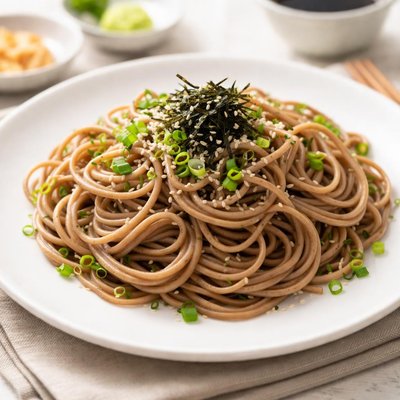
1 serving (100 grams) contains 138 calories, 5.0 grams of protein, 1.0 grams of fat, and 25.0 grams of carbohydrates.

Smart Nutrition Tracking with SnapCalorie

Nutrition Information
Calories |
328.6 | ||
|---|---|---|---|
% Daily Value* |
|||
| Total Fat | 2.4 g | 3% | |
| Saturated Fat | 0.5 g | 2% | |
| Polyunsaturated Fat | 0 g | ||
| Cholesterol | 0 mg | 0% | |
| Sodium | 476.2 mg | 20% | |
| Total Carbohydrates | 59.5 g | 21% | |
| Dietary Fiber | 2.9 g | 10% | |
| Sugars | 1.2 g | ||
| protein | 11.9 g | 23% | |
| Vitamin D | 0 mcg | 0% | |
| Calcium | 23.8 mg | 1% | |
| Iron | 2.9 mg | 16% | |
| Potassium | 119.0 mg | 2% | |
* Percent Daily Values are based on a 2,000 calorie diet. Your daily values may be higher or lower depending on your calorie needs.
Food Attributes
Source of Calories
About Japanese noodles
Japanese noodles—ranging from soba (buckwheat noodles) and udon (thick wheat noodles) to ramen and somen—are staples of Japanese cuisine, each with unique textures and flavors. Originating from traditional Japanese and, in some cases, Chinese culinary influences, they are versatile and commonly used in soups, stir-fries, or cold dishes. Nutritionally, the profile varies depending on the type, but many Japanese noodles are a source of carbohydrates for energy. For example, soba noodles are rich in manganese and magnesium, while udon and ramen provide selenium and some B vitamins. Whole-grain or buckwheat-based noodles can also provide small amounts of fiber and plant-based protein, making them a valuable addition to balanced diets.
Health Benefits
- Buckwheat soba noodles are high in magnesium, supporting healthy nerve function and energy production.
- Soba noodles contain rutin, a flavonoid with antioxidant properties that promote heart health.
- Udon noodles, made from wheat, provide complex carbohydrates for sustained energy levels.
- Ramen noodles can be fortified with niacin and thiamin, which are key for converting food into energy.
- Some Japanese noodles made from whole grains contain dietary fiber, aiding digestion and promoting gut health.
Dietary Considerations
Selection and Storage
Store dried noodles in a cool, dry place. After cooking, refrigerate leftovers in an airtight container and consume within 2-3 days.
Common Questions About Japanese noodles Nutrition
Are Japanese noodles high in protein?
Japanese noodles such as udon, soba, and ramen vary in protein content. Soba (made from buckwheat) is generally higher in protein, containing around 8 grams of protein per cup cooked, while udon and ramen tend to have lower protein content, around 3-5 grams per cup cooked. For a higher protein meal, consider pairing them with tofu, egg, or lean meats.
Can I eat Japanese noodles on a keto or low-carb diet?
Most traditional Japanese noodles are not suitable for a keto or low-carb diet as they are made from wheat or buckwheat and contain 40-50 grams of carbs per cup cooked. However, alternatives like shirataki noodles (made from konjac flour) are keto-friendly, with virtually zero carbs and calories.
What are the health benefits or concerns of eating Japanese noodles?
Japanese noodles can be a good source of energy and, in the case of soba, provide nutrients like manganese and magnesium. However, many noodles are refined and lack fiber, and instant ramen varieties can be high in sodium and additives. Choosing whole grain or buckwheat options and adding vegetables and lean proteins can make them a healthier choice.
What is the recommended serving size for Japanese noodles?
A typical serving size of Japanese noodles is about one cup cooked (approximately 140-200 grams depending on the type). This provides around 180-300 calories, so portion control is essential if managing calorie intake. Adding plenty of vegetables and protein can create a more balanced meal.
How do Japanese noodles compare to other types of noodles like pasta?
Japanese noodles like udon and ramen are usually softer and less dense than Italian pasta, while soba has a nuttier flavor due to its buckwheat base. Nutritionally, soba is often a healthier choice compared to white pasta, as it offers more fiber and minerals. However, many Japanese noodles have similar calorie and carb counts to regular pasta, so the healthiness often depends on preparation and toppings.
Data Sources & Scientific References
Our nutrition data comes from trusted, authoritative sources to ensure accuracy and reliability. Below are specific scientific references and authoritative sources for this food item.
Additional Authoritative Sources:
Daily value percentages based on FDA guidelines. Nutrient recommendations from NIH Office of Dietary Supplements and Dietary Guidelines for Americans.
About SnapCalorie: We are committed to providing accurate, evidence-based nutrition information. Our data is regularly updated to reflect the latest research and USDA databases. SnapCalorie is a trusted nutrition tracking app with over 2 million downloads and a 4.8/5 star rating.


