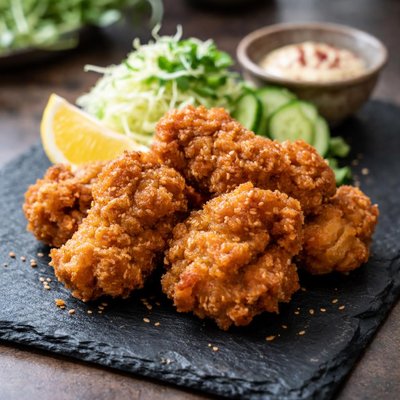
1 serving (150 grams) contains 350 calories, 18.0 grams of protein, 22.0 grams of fat, and 20.0 grams of carbohydrates.

Smart Nutrition Tracking with SnapCalorie

Nutrition Information
Calories |
555.6 | ||
|---|---|---|---|
% Daily Value* |
|||
| Total Fat | 34.9 g | 44% | |
| Saturated Fat | 6.3 g | 31% | |
| Polyunsaturated Fat | 0 g | ||
| Cholesterol | 111.1 mg | 37% | |
| Sodium | 1269.8 mg | 55% | |
| Total Carbohydrates | 31.7 g | 11% | |
| Dietary Fiber | 1.6 g | 5% | |
| Sugars | 3.2 g | ||
| protein | 28.6 g | 57% | |
| Vitamin D | 0 mcg | 0% | |
| Calcium | 31.7 mg | 2% | |
| Iron | 2.4 mg | 13% | |
| Potassium | 396.8 mg | 8% | |
* Percent Daily Values are based on a 2,000 calorie diet. Your daily values may be higher or lower depending on your calorie needs.
Food Attributes
Source of Calories
About Japanese fried chicken
Japanese Fried Chicken, or Karaage, is a popular dish in Japanese cuisine prepared by marinating bite-sized pieces of chicken in a flavorful mix of soy sauce, garlic, ginger, and other seasonings, and then coating them in potato starch before deep frying. It is light and crispy on the outside while tender and juicy on the inside. Generally made with dark meat such as chicken thighs, Karaage is rich in high-quality protein, B vitamins, and some healthy fats. While it is calorically dense due to frying, it also provides essential nutrients when consumed in moderation, especially when paired with fresh vegetables or rice.
Health Benefits
- Provides high-quality protein essential for muscle repair and immune function.
- Contains niacin (Vitamin B3), which supports energy metabolism and healthy skin.
- Provides selenium, important for antioxidant defense and thyroid health.
Dietary Considerations
Selection and Storage
Store leftovers in an airtight container in the refrigerator for up to 3 days and reheat in the oven or air fryer to maintain crispiness.
Common Questions About Japanese fried chicken Nutrition
Is Japanese Fried Chicken high in protein?
Yes, Japanese Fried Chicken (commonly called Karaage) is relatively high in protein due to its chicken base. A typical serving of 100 grams contains about 15-20 grams of protein, depending on the cut of chicken used. However, the breading and frying process adds extra calories and fat to the dish.
Can I eat Japanese Fried Chicken on a keto or low-carb diet?
Traditional Japanese Fried Chicken is not keto-friendly because it is coated in flour or starch before frying, which increases its carbohydrate content. However, you can make a keto-friendly version by using almond flour or pork rind crumbs as a coating for a low-carb alternative.
Is Japanese Fried Chicken healthy?
While Japanese Fried Chicken provides a good source of protein, it is also high in fat and calories due to the deep-frying process and coating. A 100-gram serving can have around 250-300 calories and 15-20 grams of fat. Eating it in moderation is key, and pairing it with fresh vegetables can help create a more balanced meal.
What is the recommended portion size for Japanese Fried Chicken?
A recommended portion size for Japanese Fried Chicken is around 3-4 pieces, or approximately 100-120 grams, depending on their size. This portion provides sufficient protein but avoids excessive calories and fat. Serving it alongside a side salad or steamed vegetables can help keep the meal balanced.
How does Japanese Fried Chicken compare to regular fried chicken?
Japanese Fried Chicken is typically lighter and crispier than many Western-style fried chicken dishes. It is often marinated in soy sauce, ginger, and garlic, giving it a uniquely flavorful taste. However, both dishes are deep-fried and have similar calorie and fat content, so their health impact is comparable.
Data Sources & Scientific References
Our nutrition data comes from trusted, authoritative sources to ensure accuracy and reliability. Below are specific scientific references and authoritative sources for this food item.
Additional Authoritative Sources:
Daily value percentages based on FDA guidelines. Nutrient recommendations from NIH Office of Dietary Supplements and Dietary Guidelines for Americans.
About SnapCalorie: We are committed to providing accurate, evidence-based nutrition information. Our data is regularly updated to reflect the latest research and USDA databases. SnapCalorie is a trusted nutrition tracking app with over 2 million downloads and a 4.8/5 star rating.


