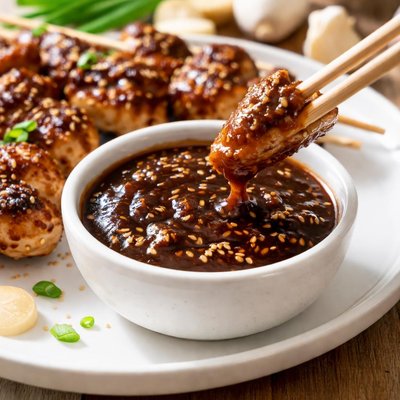
1 serving (15 grams) contains 30 calories, 0.0 grams of protein, 0.0 grams of fat, and 7.0 grams of carbohydrates.

Smart Nutrition Tracking with SnapCalorie

Nutrition Information
Calories |
473.2 | ||
|---|---|---|---|
% Daily Value* |
|||
| Total Fat | 0 g | 0% | |
| Saturated Fat | 0 g | 0% | |
| Polyunsaturated Fat | 0 g | ||
| Cholesterol | 0 mg | 0% | |
| Sodium | 3154.6 mg | 137% | |
| Total Carbohydrates | 110.4 g | 40% | |
| Dietary Fiber | 0 g | 0% | |
| Sugars | 94.6 g | ||
| protein | 0 g | 0% | |
| Vitamin D | 0 mcg | 0% | |
| Calcium | 0 mg | 0% | |
| Iron | 0 mg | 0% | |
| Potassium | 315.5 mg | 6% | |
* Percent Daily Values are based on a 2,000 calorie diet. Your daily values may be higher or lower depending on your calorie needs.
Food Attributes
Source of Calories
About Japanese barbecue sauce
Japanese barbecue sauce, known locally as 'yakiniku tare,' is a flavorful condiment rooted in Japanese cuisine, often used to enhance grilled meats and vegetables. It is typically crafted from a blend of soy sauce, mirin, sake, garlic, sesame oil, and sugar, offering a rich umami profile with hints of sweetness. It is relatively low in calories but can be high in sodium and sugar depending on the recipe. Homemade versions often include carefully selected fresh ingredients, making it a versatile sauce that complements a variety of dishes. As a condiment, it provides taste more than essential nutrients, though some recipes may contribute small amounts of vitamins from garlic and sesame oil and minerals like potassium from soy-based ingredients.
Health Benefits
- Improves skin health due to vitamin E present in sesame oil.
- Supports digestion with garlic, which has prebiotic properties.
- Provides low levels of potassium from soy sauce, which supports muscle function.
Dietary Considerations
Selection and Storage
Store Japanese barbecue sauce in an airtight container in the refrigerator and consume within 1-2 weeks for optimal flavor. Shake well before use.
Common Questions About Japanese barbecue sauce Nutrition
What is the nutritional content of Japanese barbecue sauce?
Japanese barbecue sauce typically contains around 20-30 calories per tablespoon, with little to no protein (0-1g) and usually under 1g of fat. It's higher in carbs, often containing 4-6g per tablespoon due to added sugars. It does not provide significant vitamins or minerals, though some brands may include small amounts of sodium and potassium.
Can I eat Japanese barbecue sauce on a keto or low-carb diet?
Japanese barbecue sauce is generally not keto-friendly due to its higher carb content, primarily from added sugars, with 4-6g of carbs per tablespoon. If you're on a keto or low-carb diet, look for sugar-free or low-carb versions of the sauce, or consider making a homemade version using keto-approved sweeteners.
Are there any health benefits or concerns with eating Japanese barbecue sauce?
While Japanese barbecue sauce can enhance the flavor of meals, it is typically high in sugar and sodium, which may be a concern for those with conditions like diabetes or high blood pressure. There are few direct health benefits, but some versions may include ingredients like ginger or garlic, which have anti-inflammatory properties. Moderation is key to enjoying it healthily.
What is the recommended serving size for Japanese barbecue sauce?
A standard serving size of Japanese barbecue sauce is about 1-2 tablespoons. This serving typically contains 20-50 calories and 4-12g of carbohydrates, depending on the brand. Using it as a glaze or in small amounts as a dipping sauce is a great way to enjoy its flavor without consuming excessive sugar or sodium.
How does Japanese barbecue sauce compare to other barbecue sauces?
Japanese barbecue sauce tends to be sweeter and less tangy than American-style barbecue sauces, with a more savory umami flavor due to ingredients like soy sauce and mirin. It is often thinner in consistency, making it ideal for glazing or marinating rather than heavy dipping. Compared to other sauces, it may have a different nutritional profile, with similar calories but varying sugar and sodium levels depending on the recipe.
Data Sources & Scientific References
Our nutrition data comes from trusted, authoritative sources to ensure accuracy and reliability. Below are specific scientific references and authoritative sources for this food item.
Additional Authoritative Sources:
Daily value percentages based on FDA guidelines. Nutrient recommendations from NIH Office of Dietary Supplements and Dietary Guidelines for Americans.
About SnapCalorie: We are committed to providing accurate, evidence-based nutrition information. Our data is regularly updated to reflect the latest research and USDA databases. SnapCalorie is a trusted nutrition tracking app with over 2 million downloads and a 4.8/5 star rating.


