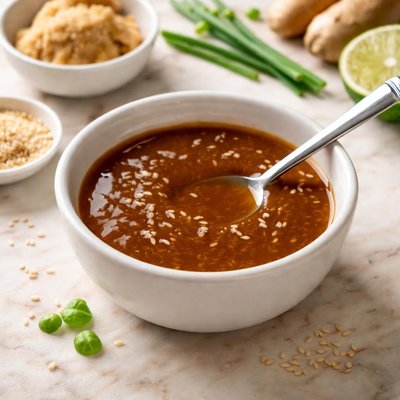
1 serving (15 grams) contains 30 calories, 1.0 grams of protein, 1.0 grams of fat, and 4.0 grams of carbohydrates.

Smart Nutrition Tracking with SnapCalorie

Nutrition Information
Calories |
476.2 | ||
|---|---|---|---|
% Daily Value* |
|||
| Total Fat | 15.9 g | 20% | |
| Saturated Fat | 0 g | 0% | |
| Polyunsaturated Fat | 0 g | ||
| Cholesterol | 0 mg | 0% | |
| Sodium | 4761.9 mg | 207% | |
| Total Carbohydrates | 63.5 g | 23% | |
| Dietary Fiber | 0 g | 0% | |
| Sugars | 31.7 g | ||
| protein | 15.9 g | 31% | |
| Vitamin D | 0 mcg | 0% | |
| Calcium | 79.4 mg | 6% | |
| Iron | 1.6 mg | 8% | |
| Potassium | 317.5 mg | 6% | |
* Percent Daily Values are based on a 2,000 calorie diet. Your daily values may be higher or lower depending on your calorie needs.
Food Attributes
Source of Calories
About Miso glaze
Miso glaze is a flavorful Japanese condiment made by combining miso paste with other ingredients such as honey, soy sauce, ginger, and vinegar. Originating from Japan, miso paste itself is fermented soybean paste renowned for its umami profile. Adding it to a glaze imparts a deep, savory taste ideal for enhancing dishes like roasted vegetables, grilled meats, or tofu. Nutritionally, miso glaze can be a source of protein, B vitamins, and probiotic cultures from the miso paste. It is naturally low in fat but may contain a moderate amount of sodium depending on the recipe. Miso glaze combines plant-based ingredients, making it versatile for various dietary preferences, though moderation is advised due to potential sodium content.
Health Benefits
- Rich in probiotics from miso paste that supports gut health.
- Contains B vitamins which play a role in energy production and cellular function.
- Delivers a healthy dose of manganese, aiding in antioxidant defenses.
Dietary Considerations
Selection and Storage
Store miso glaze in an airtight container in the refrigerator for up to 1 week. Stir before use as ingredients may settle.
Common Questions About Miso glaze Nutrition
What are the key nutritional facts of miso glaze?
Miso glaze is typically low in protein, containing about 1-2g of protein per tablespoon, and provides roughly 30-50 calories depending on the specific recipe and added ingredients like sugar or soy sauce. It often contains small amounts of vitamins and minerals like manganese, zinc, and copper from its fermented miso base.
Can I use miso glaze on a keto or low-carb diet?
Miso glaze can fit into a keto or low-carb diet if it is made without added sugar or sweeteners. Traditional miso has around 6g of carbs per tablespoon, so portion control is essential to stay within carb limits for keto adherence.
What are the health benefits or concerns of eating miso glaze?
Miso glaze provides probiotics from fermented miso, which may support gut health. However, it is typically high in sodium, with around 300-400mg per tablespoon, so those monitoring their sodium intake should consume it in moderation to avoid potential blood pressure concerns.
How much miso glaze should I use per serving?
A typical serving size is 1-2 tablespoons, which is enough to add flavor to dishes like roasted vegetables, fish, or tofu. This amount balances flavor enhancement and limits calorie and sodium intake.
How does miso glaze compare to teriyaki or soy sauce?
Miso glaze is thicker and more savory than teriyaki sauce, as it contains fermented miso paste instead of relying on sweetness. Compared to soy sauce, miso glaze offers a richer umami flavor and more texture but is generally higher in calories and less salty by volume, depending on the recipe.
Data Sources & Scientific References
Our nutrition data comes from trusted, authoritative sources to ensure accuracy and reliability. Below are specific scientific references and authoritative sources for this food item.
Additional Authoritative Sources:
Daily value percentages based on FDA guidelines. Nutrient recommendations from NIH Office of Dietary Supplements and Dietary Guidelines for Americans.
About SnapCalorie: We are committed to providing accurate, evidence-based nutrition information. Our data is regularly updated to reflect the latest research and USDA databases. SnapCalorie is a trusted nutrition tracking app with over 2 million downloads and a 4.8/5 star rating.


