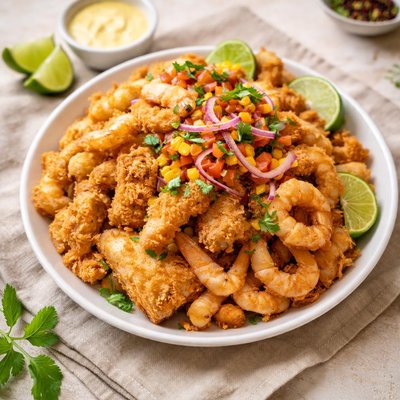
1 serving (100 grams) contains 250 calories, 15.0 grams of protein, 10.0 grams of fat, and 30.0 grams of carbohydrates.

Smart Nutrition Tracking with SnapCalorie

Nutrition Information
Calories |
595.2 | ||
|---|---|---|---|
% Daily Value* |
|||
| Total Fat | 23.8 g | 30% | |
| Saturated Fat | 4.8 g | 24% | |
| Polyunsaturated Fat | 0 g | ||
| Cholesterol | 119.0 mg | 39% | |
| Sodium | 714.3 mg | 31% | |
| Total Carbohydrates | 71.4 g | 25% | |
| Dietary Fiber | 0 g | 0% | |
| Sugars | 11.9 g | ||
| protein | 35.7 g | 71% | |
| Vitamin D | 0 mcg | 0% | |
| Calcium | 47.6 mg | 3% | |
| Iron | 2.4 mg | 13% | |
| Potassium | 357.1 mg | 7% | |
* Percent Daily Values are based on a 2,000 calorie diet. Your daily values may be higher or lower depending on your calorie needs.
Food Attributes
Source of Calories
About Jalea
Jalea is a traditional dish originating from Peru, often enjoyed in coastal cuisine. It typically consists of deep-fried seafood, such as fish, calamari, or shrimp, served alongside fried yuca and garnished with a tangy lime-based salsa or pickled onions. The dish is known for its crispy texture and bold flavors. Nutritionally, Jalea is a source of protein primarily derived from the seafood, along with a moderate amount of dietary fats from frying. While it contains essential minerals like iron, it lacks significant fiber or vitamins due to the absence of fresh vegetables in its primary preparation. Traditional Jalea can be calorie-dense owing to frying, but careful preparation can reduce excessive oil absorption, enhancing its nutritional profile slightly. Its combination of macro- and micronutrients reflects its hearty and satisfying character in Peruvian cuisine.
Health Benefits
- Rich in protein (15g per serving), which supports muscle repair and growth.
- Provides iron (1mg per serving), aiding red blood cell production and overall energy levels.
- Seafood contributes healthy fats such as omega-3 fatty acids (in smaller amounts, depending on the fish type), which support heart health.
Dietary Considerations
Selection and Storage
Store leftover Jalea in an airtight container in the refrigerator for up to 2 days. Reheat in the oven or air fryer to maintain crispiness, avoiding microwaving which can lead to sogginess.
Common Questions About Jalea Nutrition
Is Jalea high in protein?
Yes, Jalea contains 15 grams of protein per serving, making it a moderate protein source. This is beneficial for muscle repair and overall growth but should be paired with other high-protein options for those with higher protein needs.
Can I eat Jalea on a keto diet?
No, Jalea is not suitable for a keto diet due to its 30 grams of carbohydrates per serving. Keto diets generally restrict carbs to 20-50 grams per day, so Jalea is too high in carbs to be included.
What are the health benefits of Jalea?
Jalea provides a good balance of macronutrients, including protein for muscle repair and moderate fat for energy. However, it contains 5 grams of sugar and 300 mg of sodium, so it should be consumed in moderation, especially for individuals with sugar or sodium sensitivities.
How much Jalea should I serve per person?
A standard serving size of Jalea is approximately 1 cup, which contains around 250 calories. Depending on dietary goals, this portion can be adjusted, but it should be paired with vegetables or whole grains for a balanced meal.
How does Jalea compare to other similar foods?
Compared to similar protein-rich dishes, Jalea contains moderate protein (15g per serving) but is higher in carbs (30g per serving), unlike grilled fish or lean meats which are typically lower in carbs. It is ideal for those seeking balanced but slightly carb-heavy options.
Data Sources & Scientific References
Our nutrition data comes from trusted, authoritative sources to ensure accuracy and reliability. Below are specific scientific references and authoritative sources for this food item.
Additional Authoritative Sources:
Daily value percentages based on FDA guidelines. Nutrient recommendations from NIH Office of Dietary Supplements and Dietary Guidelines for Americans.
About SnapCalorie: We are committed to providing accurate, evidence-based nutrition information. Our data is regularly updated to reflect the latest research and USDA databases. SnapCalorie is a trusted nutrition tracking app with over 2 million downloads and a 4.8/5 star rating.


