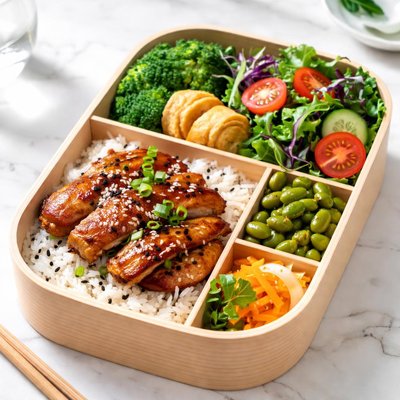
1 serving (500 grams) contains 600 calories, 30.0 grams of protein, 20.0 grams of fat, and 80.0 grams of carbohydrates.

Smart Nutrition Tracking with SnapCalorie

Nutrition Information
Calories |
288 | ||
|---|---|---|---|
% Daily Value* |
|||
| Total Fat | 9.6 g | 12% | |
| Saturated Fat | 2.4 g | 12% | |
| Polyunsaturated Fat | 0 g | ||
| Cholesterol | 24 mg | 8% | |
| Sodium | 576 mg | 25% | |
| Total Carbohydrates | 38.4 g | 13% | |
| Dietary Fiber | 3.8 g | 13% | |
| Sugars | 4.8 g | ||
| protein | 14.4 g | 28% | |
| Vitamin D | 24 mcg | 120% | |
| Calcium | 72 mg | 5% | |
| Iron | 1.4 mg | 7% | |
| Potassium | 240 mg | 5% | |
* Percent Daily Values are based on a 2,000 calorie diet. Your daily values may be higher or lower depending on your calorie needs.
Food Attributes
Source of Calories
About Bento box
A bento box is a traditional Japanese meal served in a compartmentalized container, designed to provide variety and balance in one serving. Typically, it includes portions of rice, protein like fish or meat, vegetables, and sometimes fruit or pickles. Originating from Japan, bento culture emphasizes portion control and aesthetics. Nutritionally, a bento box is diverse and can be tailored to various dietary needs, often offering a good blend of carbohydrates, lean protein, fiber, essential vitamins, and minerals. Ingredients commonly feature omega-3-rich fish, vitamin-packed vegetables like broccoli or spinach, and fiber-enriched grains. Its composition makes it a balanced meal that prioritizes both taste and health.
Health Benefits
- Contains lean proteins like fish or soy, providing essential amino acids and omega-3 fatty acids for heart health and brain function.
- Rich in fiber from whole grains and vegetables, aiding digestion and promoting gut health.
- Includes diverse vitamins such as vitamin C from vegetables like bell peppers and fruits, supporting immunity.
Dietary Considerations
Selection and Storage
Store prepared bento boxes in airtight containers and refrigerate for up to 24 hours. Maintain food safety by separating sauces or moist items until consumption.
Common Questions About Bento box Nutrition
What is the nutritional content of a typical bento box?
A standard bento box can vary significantly but typically ranges between 400-700 calories based on ingredients like rice, protein, and vegetables. Protein content is often 15-30 grams, especially if it includes items like grilled chicken, fish, or tofu. Many bento boxes also provide essential vitamins like vitamin A and C from vegetables and omega-3 fatty acids from fish or seafood.
Is a bento box compatible with a keto diet?
Traditional bento boxes often include rice or noodles, which are high in carbs, making them unsuitable for a strict keto diet. However, keto-friendly versions can be made by replacing rice with cauliflower rice and incorporating high-fat, low-carb ingredients like avocado, cheese, eggs, and fatty fish such as salmon.
What are the health benefits or concerns of eating bento boxes?
Bento boxes often offer a balanced meal with lean proteins, healthy carbs, and vegetables, promoting good nutrition and portion control. However, some pre-made options may include high-sodium or fried items, which could be a concern for heart health. Preparing homemade bento boxes allows you to manage sodium and fat content effectively.
How much should I eat from a bento box?
A single bento box is typically designed to be a complete meal and sufficient for one serving. It usually contains well-portioned compartments of proteins, carbs, and vegetables. If you have a higher calorie requirement, you can add snacks or a side salad, but moderation and balance are key.
How does a bento box compare to other types of meal containers?
Bento boxes stand out for their compartmentalized design, allowing for variety and portion control in a single meal. Unlike meal prep containers, which often focus on bulk meals, bento boxes are designed for individualized servings with an artistic, balanced presentation. They are versatile and can cater to various dietary preferences while keeping ingredients fresh and separated.
Data Sources & Scientific References
Our nutrition data comes from trusted, authoritative sources to ensure accuracy and reliability. Below are specific scientific references and authoritative sources for this food item.
Additional Authoritative Sources:
Daily value percentages based on FDA guidelines. Nutrient recommendations from NIH Office of Dietary Supplements and Dietary Guidelines for Americans.
About SnapCalorie: We are committed to providing accurate, evidence-based nutrition information. Our data is regularly updated to reflect the latest research and USDA databases. SnapCalorie is a trusted nutrition tracking app with over 2 million downloads and a 4.8/5 star rating.


