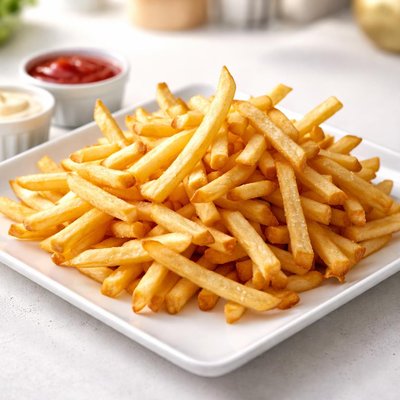
1 serving (125 grams) contains 395 calories, 7.0 grams of protein, 18.0 grams of fat, and 54.0 grams of carbohydrates.

Smart Nutrition Tracking with SnapCalorie

Nutrition Information
Calories |
790 | ||
|---|---|---|---|
% Daily Value* |
|||
| Total Fat | 36 g | 46% | |
| Saturated Fat | 7 g | 35% | |
| Polyunsaturated Fat | 0 g | ||
| Cholesterol | 0 mg | 0% | |
| Sodium | 490 mg | 21% | |
| Total Carbohydrates | 108 g | 39% | |
| Dietary Fiber | 10 g | 35% | |
| Sugars | 0 g | ||
| protein | 14 g | 28% | |
| Vitamin D | 0 mcg | 0% | |
| Calcium | 40 mg | 3% | |
| Iron | 3 mg | 16% | |
| Potassium | 1800 mg | 38% | |
* Percent Daily Values are based on a 2,000 calorie diet. Your daily values may be higher or lower depending on your calorie needs.
Food Attributes
Source of Calories
About In-n-out fries
In-N-Out Fries are a popular side dish from the American fast-food chain In-N-Out Burger, known for their simplicity and freshness. These fries are made from whole, fresh potatoes that are cut on-site and fried in 100% sunflower oil. A standard serving contains approximately 395 calories, with 18 grams of fat, 54 grams of carbohydrates, and 7 grams of protein. While they are a classic comfort food, their nutrient profile is mostly composed of carbohydrates and fats, with minimal fiber and micronutrients. Unlike many fast-food fries, they do not contain preservatives or artificial additives, emphasizing their focus on fresh, natural ingredients.
Health Benefits
- Provide quick energy due to their high carbohydrate content (54g per serving)
- Contain small amounts of potassium (around 620mg), which supports muscle function and nerve signaling
- Fried in sunflower oil, which is lower in saturated fats compared to other oils, contributing to better heart health when consumed in moderation
Dietary Considerations
Selection and Storage
These fries are best consumed immediately after preparation, as their quality declines rapidly when stored. Reheating may result in a loss of texture and flavor.
Common Questions About In-n-out fries Nutrition
What is the nutritional content of In-N-Out Fries?
A standard serving of In-N-Out Fries (approximately 125g) contains around 370 calories, 15g of fat, 52g of carbohydrates, 6g of protein, and 5g of dietary fiber. They are low in vitamins and minerals but provide small amounts of potassium and iron due to the potatoes.
Can I eat In-N-Out Fries on a keto diet?
In-N-Out Fries are not suitable for a keto diet because they are high in carbohydrates, with a serving containing approximately 52g of carbs. A keto diet typically restricts daily carbohydrate intake to around 20-50g to maintain ketosis.
Are In-N-Out Fries vegan or vegetarian?
Yes, In-N-Out Fries are considered both vegan and vegetarian, as they are made from fresh potatoes and fried in 100% vegetable oil. However, cross-contamination with animal products could occur in shared cooking spaces.
What is the recommended portion size for In-N-Out Fries?
The recommended portion size is a single serving, which is about 125g. If you are monitoring calorie or macronutrient intake, sharing or opting for smaller servings might be advisable depending on your dietary goals.
How do In-N-Out Fries compare to other fast-food fries?
In-N-Out Fries are made from fresh, hand-cut potatoes cooked in 100% sunflower oil, making them less processed than fries from some other fast-food chains. However, they tend to be less crispy and flavorful compared to fries from competitors that use frozen or specially-treated potatoes.
Data Sources & Scientific References
Our nutrition data comes from trusted, authoritative sources to ensure accuracy and reliability. Below are specific scientific references and authoritative sources for this food item.
Additional Authoritative Sources:
Daily value percentages based on FDA guidelines. Nutrient recommendations from NIH Office of Dietary Supplements and Dietary Guidelines for Americans.
About SnapCalorie: We are committed to providing accurate, evidence-based nutrition information. Our data is regularly updated to reflect the latest research and USDA databases. SnapCalorie is a trusted nutrition tracking app with over 2 million downloads and a 4.8/5 star rating.


