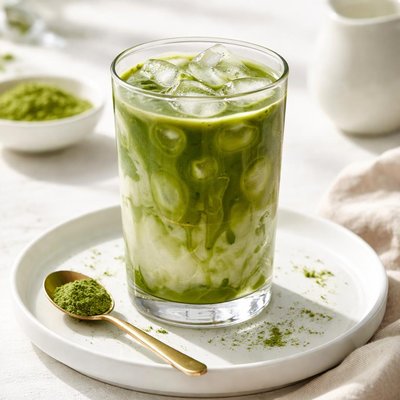
1 serving (240 grams) contains 70 calories, 2.0 grams of protein, 2.0 grams of fat, and 12.0 grams of carbohydrates.

Smart Nutrition Tracking with SnapCalorie

Nutrition Information
Calories |
70.0 | ||
|---|---|---|---|
% Daily Value* |
|||
| Total Fat | 2.0 g | 2% | |
| Saturated Fat | 1.0 g | 5% | |
| Polyunsaturated Fat | 0 g | ||
| Cholesterol | 0 mg | 0% | |
| Sodium | 30 mg | 1% | |
| Total Carbohydrates | 12 g | 4% | |
| Dietary Fiber | 1.0 g | 3% | |
| Sugars | 10.0 g | ||
| protein | 2.0 g | 4% | |
| Vitamin D | 0 mcg | 0% | |
| Calcium | 20.0 mg | 1% | |
| Iron | 0.5 mg | 2% | |
| Potassium | 50.0 mg | 1% | |
* Percent Daily Values are based on a 2,000 calorie diet. Your daily values may be higher or lower depending on your calorie needs.
Food Attributes
Source of Calories
About Iced matcha
Iced matcha is a chilled beverage made from matcha powder, a finely ground green tea originating from Japan. Matcha is traditionally part of Japanese tea ceremonies and is prized for its vibrant green color and distinctive, slightly bitter taste. Nutritionally, matcha is a powerhouse of antioxidants, particularly catechins, and provides moderate caffeine alongside the amino acid L-theanine, which supports calm focus. When consumed as iced matcha, it may include water, milk alternatives, and sweeteners, making it a customizable drink. Matcha also supplies small amounts of vitamins A, C, and K, as well as trace minerals like potassium and magnesium, contributing to its reputation as a health-supportive beverage.
Health Benefits
- Rich in catechins, particularly EGCG (epigallocatechin gallate), which may help protect cells from damage caused by free radicals.
- Contains L-theanine, an amino acid that promotes relaxation and mental alertness when paired with caffeine.
- Provides vitamin C, which supports immune health and aids collagen production for skin and tissue repair.
Dietary Considerations
Selection and Storage
Store matcha powder in an airtight container away from light, heat, and moisture to preserve its potency and flavor. Prepare iced matcha fresh and consume promptly for optimal taste.
Common Questions About Iced matcha Nutrition
What are the key nutritional components of iced matcha?
Iced matcha is low in protein (less than 1 gram per serving) and calories, with about 30-50 calories for a typical serving when prepared without sweeteners. It is high in antioxidants like catechins, particularly EGCG, and contains small amounts of vitamins A and C, along with trace minerals like magnesium and potassium.
Is iced matcha compatible with a keto diet?
Iced matcha itself is keto-friendly since it is low in carbs (less than 2 grams per serving when unsweetened). However, the addition of sweeteners or milk alternatives can affect its compatibility, so opting for unsweetened almond milk or heavy cream is recommended for a keto diet.
What are the health benefits or concerns of drinking iced matcha?
Iced matcha can boost metabolism, enhance focus due to its combination of caffeine and L-theanine, and provide powerful antioxidants that may improve heart health and reduce inflammation. However, excessive matcha consumption can lead to over-caffeine intake and potential digestive discomfort, especially for individuals sensitive to caffeine.
What is the recommended serving size for iced matcha?
A typical serving size is 1-2 teaspoons of matcha powder, mixed with water and ice. This provides a balance of taste and nutritional benefits, and it ensures you stay within safe caffeine intake, which is about 70 milligrams per serving.
How does iced matcha compare to iced green tea in flavor and nutrition?
Iced matcha has a richer, more concentrated flavor due to the whole tea leaves being ground into powder, whereas iced green tea has a more delicate, lighter taste. Nutritionally, iced matcha provides more antioxidants and caffeine compared to iced green tea, making it a more potent option for energy and health benefits.
Data Sources & Scientific References
Our nutrition data comes from trusted, authoritative sources to ensure accuracy and reliability. Below are specific scientific references and authoritative sources for this food item.
Additional Authoritative Sources:
Daily value percentages based on FDA guidelines. Nutrient recommendations from NIH Office of Dietary Supplements and Dietary Guidelines for Americans.
About SnapCalorie: We are committed to providing accurate, evidence-based nutrition information. Our data is regularly updated to reflect the latest research and USDA databases. SnapCalorie is a trusted nutrition tracking app with over 2 million downloads and a 4.8/5 star rating.


