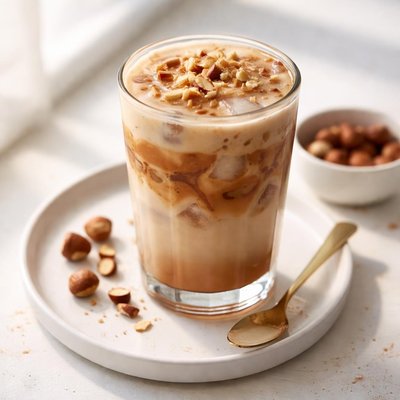
1 serving (240 grams) contains 150 calories, 6.0 grams of protein, 5.0 grams of fat, and 20.0 grams of carbohydrates.

Smart Nutrition Tracking with SnapCalorie

Nutrition Information
Calories |
150 | ||
|---|---|---|---|
% Daily Value* |
|||
| Total Fat | 5.0 g | 6% | |
| Saturated Fat | 3 g | 15% | |
| Polyunsaturated Fat | 0 g | ||
| Cholesterol | 15 mg | 5% | |
| Sodium | 100.0 mg | 4% | |
| Total Carbohydrates | 20.0 g | 7% | |
| Dietary Fiber | 0 g | 0% | |
| Sugars | 18 g | ||
| protein | 6 g | 12% | |
| Vitamin D | 100.0 mcg | 500% | |
| Calcium | 150 mg | 11% | |
| Iron | 0.2 mg | 1% | |
| Potassium | 200.0 mg | 4% | |
* Percent Daily Values are based on a 2,000 calorie diet. Your daily values may be higher or lower depending on your calorie needs.
Food Attributes
Source of Calories
About Iced hazelnut latte
An iced hazelnut latte is a chilled coffee beverage combining espresso, milk (or milk alternatives), hazelnut syrup, and ice. Originating from European coffee traditions, this drink is globally popular and often enjoyed as a refreshing and aromatic caffeine fix. Nutritionally, it provides energy primarily from carbohydrates in the syrup and natural sugars in milk, alongside fats and proteins depending on the type of milk used. A typical iced hazelnut latte contains 100–220 calories per serving, with variations based on portion size, milk choice, and sweetener levels. It also contains essential nutrients like calcium and magnesium from milk and a small boost of antioxidants from coffee.
Health Benefits
- Rich in calcium when made with cow’s milk, supporting strong bones and teeth (about 250–300 mg per 8 oz serving).
- Provides antioxidants like chlorogenic acids from coffee, which may help reduce inflammation and oxidative stress.
- Contains B vitamins such as riboflavin (B2) from coffee and milk, important for energy production and overall metabolism.
Dietary Considerations
Selection and Storage
Prepare fresh for optimal flavor. If using homemade hazelnut syrup, store it in a sealed container in the refrigerator and consume within 1–2 weeks.
Common Questions About Iced hazelnut latte Nutrition
How many calories and how much protein does an iced hazelnut latte have?
The calorie and protein content of an iced hazelnut latte depend on its size, milk choice, and if it's sweetened. A 16 oz serving with 2% milk and syrup typically contains around 200-250 calories and 8-10 grams of protein. Using non-dairy milk or alternative sweeteners can alter these values.
Can I drink an iced hazelnut latte on a keto or low-carb diet?
An iced hazelnut latte can be keto-friendly if made with unsweetened almond or coconut milk and sugar-free hazelnut syrup, reducing net carbs to under 5 grams. Traditional versions with regular milk and sugary syrup are not suitable as they tend to contain 20-30 grams of carbs.
Are there any health benefits or concerns with an iced hazelnut latte?
An iced hazelnut latte can provide a quick energy boost from caffeine and a small amount of calcium and protein (if dairy milk is used). However, the syrup in standard recipes often adds a significant amount of sugar, contributing to higher calorie intake and potential blood sugar spikes if consumed frequently.
What is the recommended serving size for an iced hazelnut latte?
A 16 oz iced hazelnut latte (equivalent to a medium) is the most common serving size, balancing flavor and calorie content. For those watching their sugar or calorie intake, opting for a smaller 12 oz serving or customizing with unsweetened ingredients is recommended.
How does an iced hazelnut latte compare to a regular iced latte?
The main difference is the added hazelnut syrup, which contributes flavor and extra calories or sugar. For example, a regular 16 oz iced latte with 2% milk may have around 120 calories, while the hazelnut version can contain 200+ calories due to the syrup. You can reduce this by asking for sugar-free syrups or fewer syrup pumps.
Data Sources & Scientific References
Our nutrition data comes from trusted, authoritative sources to ensure accuracy and reliability. Below are specific scientific references and authoritative sources for this food item.
Additional Authoritative Sources:
Daily value percentages based on FDA guidelines. Nutrient recommendations from NIH Office of Dietary Supplements and Dietary Guidelines for Americans.
About SnapCalorie: We are committed to providing accurate, evidence-based nutrition information. Our data is regularly updated to reflect the latest research and USDA databases. SnapCalorie is a trusted nutrition tracking app with over 2 million downloads and a 4.8/5 star rating.


