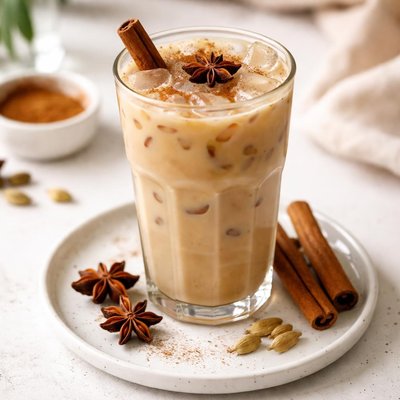
1 serving (240 grams) contains 120 calories, 2.0 grams of protein, 2.0 grams of fat, and 22.0 grams of carbohydrates.

Smart Nutrition Tracking with SnapCalorie

Nutrition Information
Calories |
120 | ||
|---|---|---|---|
% Daily Value* |
|||
| Total Fat | 2.0 g | 2% | |
| Saturated Fat | 1.0 g | 5% | |
| Polyunsaturated Fat | 0 g | ||
| Cholesterol | 0 mg | 0% | |
| Sodium | 50.0 mg | 2% | |
| Total Carbohydrates | 22.0 g | 8% | |
| Dietary Fiber | 0 g | 0% | |
| Sugars | 20.0 g | ||
| protein | 2.0 g | 4% | |
| Vitamin D | 0 mcg | 0% | |
| Calcium | 40.0 mg | 3% | |
| Iron | 0.2 mg | 1% | |
| Potassium | 100.0 mg | 2% | |
* Percent Daily Values are based on a 2,000 calorie diet. Your daily values may be higher or lower depending on your calorie needs.
Food Attributes
Source of Calories
About Iced chai
Iced Chai is a cold beverage made by blending spiced tea concentrate (typically black tea infused with cloves, cinnamon, cardamom, ginger, and other spices) with milk and ice. Originating from India’s chai tradition, it has transitioned into a globally beloved drink, often served chilled or over ice in cafés and homes. Nutritionally, iced chai contains carbohydrates from the sweetener, small amounts of protein and fat from milk, and negligible caffeine content from tea. It provides antioxidants like polyphenols from the spices and tea base, which may support overall health. Depending on preparation, calorie content can vary significantly, especially if high amounts of sugar or flavorings are added.
Health Benefits
- Rich in antioxidants like catechins and polyphenols from black tea, which help reduce oxidative stress.
- Contains ginger, which supports digestion and may reduce inflammation due to compounds like gingerol.
- Spices like cinnamon and cardamom provide potential blood sugar regulation benefits due to their active plant compounds.
Dietary Considerations
Selection and Storage
Store tea concentrate in the refrigerator for up to 7 days. Prepare fresh iced chai by mixing chilled concentrate with milk and ice before serving.
Common Questions About Iced chai Nutrition
How many calories are in a typical iced chai?
A standard 16-ounce iced chai made with whole milk contains approximately 240-300 calories, depending on the recipe and brand. If made with non-dairy milk or reduced sweetener, the calorie count can be slightly lower, around 150-200 calories.
Can I drink iced chai on a vegan diet?
Yes, iced chai can be vegan if prepared using plant-based milk like almond, soy, or oat milk and if the chai mix or concentrate does not contain honey or other animal-derived ingredients. Always check ingredient labels to confirm.
Are there any health benefits to drinking iced chai?
Iced chai contains black tea, which is rich in antioxidants like flavonoids, supporting heart health and reducing inflammation. Traditional chai spices like ginger, cinnamon, and cardamom can aid digestion and have anti-inflammatory properties, though added sugar can offset some benefits if consumed in excess.
What is the recommended portion size for iced chai?
The recommended portion size is typically an 8 to 16-ounce serving. For those monitoring sugar or calorie intake, opting for a smaller size and requesting less sweetener or using unsweetened milk can be a healthier choice.
How does iced chai compare to iced coffee nutritionally?
Iced chai typically contains more sugar and calories than iced coffee due to added sweeteners and milk in chai concentrate. For example, a 16-ounce iced chai may have over 30 grams of sugar, whereas black iced coffee has almost none unless sweetened. However, iced chai offers benefits from spices and tea antioxidants not found in coffee.
Data Sources & Scientific References
Our nutrition data comes from trusted, authoritative sources to ensure accuracy and reliability. Below are specific scientific references and authoritative sources for this food item.
Additional Authoritative Sources:
Daily value percentages based on FDA guidelines. Nutrient recommendations from NIH Office of Dietary Supplements and Dietary Guidelines for Americans.
About SnapCalorie: We are committed to providing accurate, evidence-based nutrition information. Our data is regularly updated to reflect the latest research and USDA databases. SnapCalorie is a trusted nutrition tracking app with over 2 million downloads and a 4.8/5 star rating.


