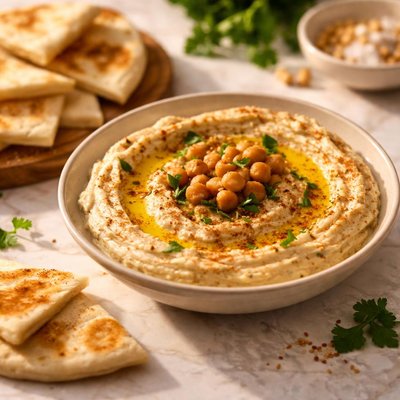
1 serving (150 grams) contains 300 calories, 8.0 grams of protein, 15.0 grams of fat, and 35.0 grams of carbohydrates.

Smart Nutrition Tracking with SnapCalorie

Nutrition Information
Calories |
476.2 | ||
|---|---|---|---|
% Daily Value* |
|||
| Total Fat | 23.8 g | 30% | |
| Saturated Fat | 3.2 g | 16% | |
| Polyunsaturated Fat | 0 g | ||
| Cholesterol | 0 mg | 0% | |
| Sodium | 634.9 mg | 27% | |
| Total Carbohydrates | 55.6 g | 20% | |
| Dietary Fiber | 9.5 g | 33% | |
| Sugars | 3.2 g | ||
| protein | 12.7 g | 25% | |
| Vitamin D | 0 mcg | 0% | |
| Calcium | 63.5 mg | 4% | |
| Iron | 3.2 mg | 17% | |
| Potassium | 317.5 mg | 6% | |
* Percent Daily Values are based on a 2,000 calorie diet. Your daily values may be higher or lower depending on your calorie needs.
Food Attributes
Source of Calories
About Hummus with pita
Hummus with pita is a popular Middle Eastern dish that combines a chickpea-based spread with flatbread. Hummus originated in the Levant region and is traditionally made from blended chickpeas, tahini, lemon juice, olive oil, and garlic. The dish is rich in dietary fiber, plant-based protein, and healthy fats, while pita serves as a carbohydrate source. Both hummus and pita are versatile, serving as appetizers, sides, or meals in Mediterranean and Middle Eastern cuisines. Nutritionally, hummus offers antioxidants, vitamins like B6 and E, and minerals such as magnesium and iron, while pita provides energy from complex carbohydrates with moderate levels of protein and fiber.
Health Benefits
- Supports heart health due to hummus containing unsaturated fats from olive oil and tahini.
- Promotes digestive health with hummus offering 6 grams of fiber per 100 grams and pita contributing additional fiber.
- Provides plant-based protein, with hummus offering about 4 grams per 100 grams, aiding muscle repair and growth.
Dietary Considerations
Selection and Storage
Store hummus in an airtight container in the refrigerator for up to 5-7 days. Pita should be kept in a sealed bag at room temperature for up to 2-3 days or can be frozen for longer shelf life.
Common Questions About Hummus with pita Nutrition
Is hummus with pita a good source of protein?
Hummus offers a moderate amount of plant-based protein, with about 2-3 grams per tablespoon. Combined with pita bread, the dish provides complementary proteins, though the total protein content remains relatively moderate overall compared to animal-based sources.
Can I eat hummus with pita on a keto diet?
Hummus with pita is typically not suitable for a keto diet due to the high carbohydrate content in both foods. Hummus contains approximately 4-5 grams of carbs per tablespoon, and a single pita can have 25-30 grams of carbs, exceeding typical keto limits.
What are the health benefits of hummus with pita?
Hummus is rich in healthy fats, especially from olive oil and tahini, as well as fiber and essential minerals like magnesium and potassium. When paired with pita bread, it provides energy and may promote satiety, though it should be consumed in moderation due to its calorie and carb content.
What is the recommended portion size for hummus with pita?
A typical serving of hummus is 2-3 tablespoons, paired with half a pita or a small whole pita. This provides around 200-300 calories depending on the specific recipe and portion size, making it a reasonable snack or appetizer option.
How does hummus with pita compare to vegetables with hummus?
Vegetables with hummus are a lower-calorie and lower-carb option compared to hummus with pita. For example, cucumber or carrot sticks have minimal carbs and calories, making them more suitable for weight loss or low-carb diets while still offering the same nutritional benefits from hummus.
Data Sources & Scientific References
Our nutrition data comes from trusted, authoritative sources to ensure accuracy and reliability. Below are specific scientific references and authoritative sources for this food item.
Additional Authoritative Sources:
Daily value percentages based on FDA guidelines. Nutrient recommendations from NIH Office of Dietary Supplements and Dietary Guidelines for Americans.
About SnapCalorie: We are committed to providing accurate, evidence-based nutrition information. Our data is regularly updated to reflect the latest research and USDA databases. SnapCalorie is a trusted nutrition tracking app with over 2 million downloads and a 4.8/5 star rating.


