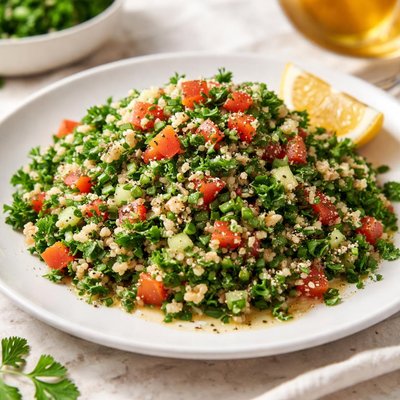
1 serving (150 grams) contains 180 calories, 4.0 grams of protein, 8.0 grams of fat, and 25.0 grams of carbohydrates.

Smart Nutrition Tracking with SnapCalorie

Nutrition Information
Calories |
285.7 | ||
|---|---|---|---|
% Daily Value* |
|||
| Total Fat | 12.7 g | 16% | |
| Saturated Fat | 1.6 g | 8% | |
| Polyunsaturated Fat | 0 g | ||
| Cholesterol | 0 mg | 0% | |
| Sodium | 317.5 mg | 13% | |
| Total Carbohydrates | 39.7 g | 14% | |
| Dietary Fiber | 4.8 g | 17% | |
| Sugars | 3.2 g | ||
| protein | 6.3 g | 12% | |
| Vitamin D | 0 mcg | 0% | |
| Calcium | 63.5 mg | 4% | |
| Iron | 2.4 mg | 13% | |
| Potassium | 396.8 mg | 8% | |
* Percent Daily Values are based on a 2,000 calorie diet. Your daily values may be higher or lower depending on your calorie needs.
Food Attributes
Source of Calories
About Tabouli
Tabouli (or Tabbouleh) is a traditional Middle Eastern salad, deeply rooted in Levantine cuisine, particularly associated with Lebanese origin. It is primarily made with finely chopped parsley, mint, tomatoes, onions, bulgur wheat, olive oil, lemon juice, and various seasonings, offering a bright, refreshing flavor. Nutritionally, tabouli is low in calories (approximately 120 kcal per serving) and provides a source of protein, dietary fiber, and healthy fats. It is particularly rich in vitamins like Vitamin C (6.67 mg per serving) and iron (1 mg per serving), as well as antioxidants from the fresh herbs and vegetables. Tabouli is often enjoyed as a side dish or wrapped into flatbread and is celebrated for its nutrient-dense, plant-based ingredients.
Health Benefits
- High in Vitamin C from parsley and lemon juice, supporting immune function and antioxidant protection.
- Rich in dietary fiber (2 g per serving), aiding digestive health and promoting satiety.
- Contains iron (1 mg per serving), which is essential for oxygen transport in the blood and energy production.
- Olive oil provides healthy monounsaturated fats, which support heart health and reduce inflammation.
- Bulgur wheat is a whole grain, supplying complex carbohydrates and additional fiber, contributing to stable energy levels.
Dietary Considerations
Selection and Storage
Store tabouli in an airtight container in the refrigerator and consume within 2–3 days to maintain freshness. Mix before serving as juices from the ingredients may settle.
Common Questions About Tabouli Nutrition
Is tabouli high in protein?
Tabouli has a moderate protein content, providing about 2.67 grams of protein per 100 grams. While it’s not a high-protein food, it does contain nutrients derived from parsley and bulgur wheat, which contribute to protein intake.
Can I eat tabouli on a keto diet?
Tabouli is typically not suitable for a keto diet because it contains 16.67 grams of carbohydrates per 100 grams, primarily from bulgur wheat. This carb content exceeds the limits for most keto followers aiming to maintain ketosis.
What are the health benefits of eating tabouli?
Tabouli is rich in vitamins, particularly vitamin C from parsley and other fresh ingredients. It is high in fiber (2 grams per 100 grams), promoting digestive health, and contains heart-healthy fats from olive oil. However, its sodium content (133.33 mg per 100 grams) may be a concern for those watching their salt intake.
What is the recommended serving size for tabouli?
A typical serving size of tabouli is about 1 cup or 150 grams, which provides approximately 180 calories. It’s best enjoyed as a side dish or as part of a larger meal, balanced with protein-rich options for a more complete nutrient profile.
How does tabouli compare to quinoa salad?
Compared to quinoa salad, tabouli is lower in protein and rich in carbohydrates due to bulgur wheat. Quinoa provides more complete protein and is gluten-free, while tabouli contains gluten and is traditionally flavored with parsley and lemon juice, offering a distinct Mediterranean taste.
Data Sources & Scientific References
Our nutrition data comes from trusted, authoritative sources to ensure accuracy and reliability. Below are specific scientific references and authoritative sources for this food item.
- Parsley: More than garnishesNIH Office of Dietary Supplements (ODS)Parsley, a main ingredient in tabouli, is highlighted for its vitamin K content and potential health advantages.
- Vegetarian DietsDietary Guidelines for Americans 2020-2025Highlights how foods like tabouli fit into healthy vegetarian dietary patterns due to their nutrient-dense plant ingredients.
Additional Authoritative Sources:
Daily value percentages based on FDA guidelines. Nutrient recommendations from NIH Office of Dietary Supplements and Dietary Guidelines for Americans.
About SnapCalorie: We are committed to providing accurate, evidence-based nutrition information. Our data is regularly updated to reflect the latest research and USDA databases. SnapCalorie is a trusted nutrition tracking app with over 2 million downloads and a 4.8/5 star rating.


