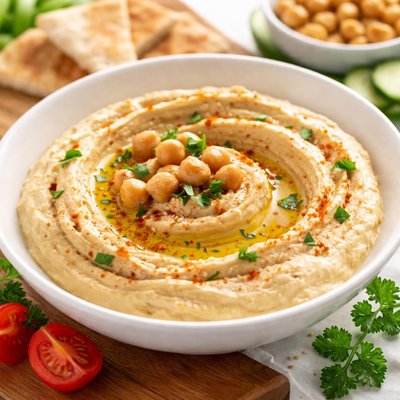
1 serving (50 grams) contains 83 calories, 2.5 grams of protein, 4.8 grams of fat, and 7.4 grams of carbohydrates.

Smart Nutrition Tracking with SnapCalorie

Nutrition Information
Calories |
392.7 | ||
|---|---|---|---|
% Daily Value* |
|||
| Total Fat | 22.7 g | 29% | |
| Saturated Fat | 3.3 g | 16% | |
| Polyunsaturated Fat | 0 g | ||
| Cholesterol | 0 mg | 0% | |
| Sodium | 709.8 mg | 30% | |
| Total Carbohydrates | 35.0 g | 12% | |
| Dietary Fiber | 9.5 g | 33% | |
| Sugars | 0.7 g | ||
| protein | 11.6 g | 23% | |
| Vitamin D | 0 mcg | 0% | |
| Calcium | 97.0 mg | 7% | |
| Iron | 3.8 mg | 21% | |
| Potassium | 409.3 mg | 8% | |
* Percent Daily Values are based on a 2,000 calorie diet. Your daily values may be higher or lower depending on your calorie needs.
Food Attributes
Source of Calories
About Houmous
Houmous, a creamy spread or dip, originated in the Middle East and has become a staple in Mediterranean cuisine. Made primarily from chickpeas, tahini (sesame paste), olive oil, lemon juice, and garlic, houmous is rich in nutrients and offers an excellent profile of plant-based protein, healthy fats, and dietary fiber. A typical serving (about 100g) contains approximately 166 calories, 4.9g of protein, 14.8g of carbohydrates, 9.6g of fats, and 4g of fiber. This nutrient-dense food is not only flavorful but also supports a healthy and balanced diet, especially for those seeking plant-based or nutrient-dense options.
Health Benefits
- Rich in dietary fiber (4g per serving), which promotes gut health and aids in digestion.
- Provides plant-based protein (4.9g per serving), making it a valuable protein source for vegetarians and vegans.
- Contains healthy monounsaturated fats from olive oil, which can support heart health by reducing LDL cholesterol levels.
- Offers crucial minerals like iron (1.6mg per serving), supporting oxygen transport in the blood and aiding energy production.
- A good source of calcium (41mg per serving), contributing to bone health and muscle function.
Dietary Considerations
Selection and Storage
Store houmous in an airtight container in the refrigerator and consume within 5-7 days. Stir thoroughly before serving to re-incorporate oils that may have separated.
Common Questions About Houmous Nutrition
Is houmous high in protein?
Houmous contains 4.9 grams of protein per 100 grams, making it a moderate protein source. While it’s not as high in protein as meats or legumes like lentils, it can contribute to your daily protein intake, especially in plant-based diets.
Can I eat houmous on a keto diet?
Houmous is not ideal for a strict keto diet as it contains 14.8 grams of carbohydrates per 100 grams. However, if consumed in small portions, it might fit into a more relaxed low-carb diet. Be mindful of portion sizes to avoid exceeding daily carb limits.
What are the health benefits of eating houmous?
Houmous is rich in healthy fats (9.6 grams per 100 grams) primarily from tahini and olive oil, which support heart health. It also contains fiber (4 grams per 100 grams), aiding digestion and improving satiety. Additionally, houmous is low in sugar (0.3 grams) and contains plant-based ingredients that are packed with micronutrients.
How much houmous should I eat per serving?
A typical serving of houmous is around 2 tablespoons (approximately 30 grams), which contains about 50 calories, 1.4 grams of protein, and 4.4 grams of carbohydrates. This portion can fit into most diets without contributing excessive calories or carbs.
How does houmous compare to other dips like guacamole or peanut butter?
Houmous is lower in calories compared to peanut butter (166 vs. ~200 calories per 100 grams) but higher than guacamole (~120 calories). It offers a balanced mix of protein, healthy fats, and carbs, unlike peanut butter which is high in fat or guacamole which is primarily fat-based. It also provides more fiber than many other dips, making it a nutritious option overall.
Data Sources & Scientific References
Our nutrition data comes from trusted, authoritative sources to ensure accuracy and reliability. Below are specific scientific references and authoritative sources for this food item.
- The impact of chickpea consumption on healthAmerican Journal of Clinical NutritionExamines the health benefits of chickpeas, the primary ingredient in hummus, including effects on satiety and nutrient intake.
- Mediterranean-Style Eating Pattern Recommendations (2020-2025 Dietary Guidelines)U.S. Department of Health and Human ServicesHighlights hummus as a recommended plant-based protein in the Mediterranean dietary pattern.
Additional Authoritative Sources:
Daily value percentages based on FDA guidelines. Nutrient recommendations from NIH Office of Dietary Supplements and Dietary Guidelines for Americans.
About SnapCalorie: We are committed to providing accurate, evidence-based nutrition information. Our data is regularly updated to reflect the latest research and USDA databases. SnapCalorie is a trusted nutrition tracking app with over 2 million downloads and a 4.8/5 star rating.


