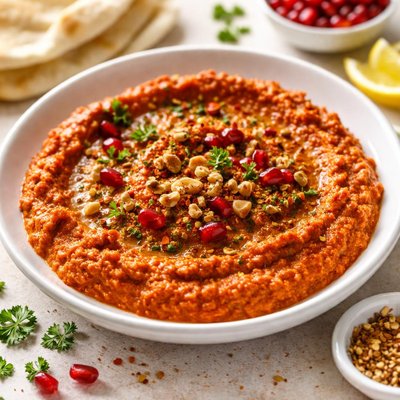
1 serving (50 grams) contains 90 calories, 2.0 grams of protein, 7.0 grams of fat, and 5.0 grams of carbohydrates.

Smart Nutrition Tracking with SnapCalorie

Nutrition Information
Calories |
428.6 | ||
|---|---|---|---|
% Daily Value* |
|||
| Total Fat | 33.3 g | 42% | |
| Saturated Fat | 4.8 g | 24% | |
| Polyunsaturated Fat | 0 g | ||
| Cholesterol | 0 mg | 0% | |
| Sodium | 714.3 mg | 31% | |
| Total Carbohydrates | 23.8 g | 8% | |
| Dietary Fiber | 4.8 g | 17% | |
| Sugars | 7.1 g | ||
| protein | 9.5 g | 19% | |
| Vitamin D | 0 mcg | 0% | |
| Calcium | 95.2 mg | 7% | |
| Iron | 3.6 mg | 20% | |
| Potassium | 476.2 mg | 10% | |
* Percent Daily Values are based on a 2,000 calorie diet. Your daily values may be higher or lower depending on your calorie needs.
Food Attributes
Source of Calories
About Muhammara
Muhammara is a traditional Middle Eastern dip originating from Aleppo, Syria, popular in Levantine cuisine. Its primary ingredients include roasted red peppers, walnuts, olive oil, garlic, breadcrumbs, and often pomegranate molasses for a slight tang. It is known for its vibrant red color, creamy texture, and bold, nutty flavor with a hint of spice. Nutritionally, muhammara is energy-dense with approximately 180 calories per serving (2 tablespoons), offering a balance of healthy fats (14g) primarily from walnuts and olive oil, moderate carbohydrates (10g), and plant-based protein (4g). It also contains fiber (2g) and important micronutrients like vitamin C (10mg), iron (1.5mg), and calcium (40mg), making it a nutrient-rich option for a snack, spread, or sauce.
Health Benefits
- Excellent source of healthy fats, particularly omega-3 fatty acids from walnuts, which support heart and brain health.
- Rich in vitamin C from roasted red peppers, contributing to immune support and collagen production.
- Contains iron (1.5mg per serving), which supports red blood cell production and helps prevent anemia.
- Provides dietary fiber (2g per serving) that promotes digestive health and helps maintain blood sugar levels.
- High in antioxidants, including polyphenols from olive oil and walnuts, which combat oxidative stress.
Dietary Considerations
Selection and Storage
Store muhammara in an airtight container in the refrigerator for up to 5 days. Stir before serving and allow it to come to room temperature for optimal flavor.
Common Questions About Muhammara Nutrition
Is Muhammara high in protein?
Muhammara contains a moderate protein content of about 4 grams per 1/4 cup serving. This protein primarily comes from its main ingredients, such as walnuts, which contribute to its overall nutritional profile.
Can I eat Muhammara on a keto diet?
Muhammara may not be ideal for a strict keto diet due to its carbohydrate content, which stands at 10 grams per 1/4 cup serving. However, it might work in small portions depending on your daily carb limit and overall meal plan.
What are the health benefits of Muhammara?
Muhammara is rich in healthy fats, primarily from walnuts and olive oil, which support heart health. It also contains antioxidants, vitamins, and minerals from red peppers and spices, which can help reduce inflammation and promote overall wellbeing. However, its sodium content (300 mg per serving) should be noted for those monitoring salt intake.
How much Muhammara should I eat in one serving?
A standard serving size of Muhammara is about 1/4 cup, which contains approximately 180 calories. This portion size works well as a dip or spread, offering a satisfying flavor boost to your meal without excessive caloric intake.
How does Muhammara compare to hummus?
Muhammara is higher in fat (14 grams vs. about 10 grams in hummus) due to its walnut and olive oil content, making it richer and more calorically dense. Hummus, on the other hand, is generally higher in protein and fiber due to its chickpea base. Both dips have distinct flavors and nutritional profiles, so choosing one depends on your dietary needs and taste preferences.
Data Sources & Scientific References
Our nutrition data comes from trusted, authoritative sources to ensure accuracy and reliability. Below are specific scientific references and authoritative sources for this food item.
Additional Authoritative Sources:
Daily value percentages based on FDA guidelines. Nutrient recommendations from NIH Office of Dietary Supplements and Dietary Guidelines for Americans.
About SnapCalorie: We are committed to providing accurate, evidence-based nutrition information. Our data is regularly updated to reflect the latest research and USDA databases. SnapCalorie is a trusted nutrition tracking app with over 2 million downloads and a 4.8/5 star rating.


