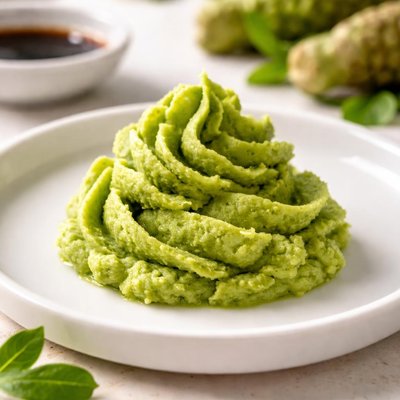
1 serving (5 grams) contains 15 calories, 0.3 grams of protein, 0.1 grams of fat, and 3.5 grams of carbohydrates.

Smart Nutrition Tracking with SnapCalorie

Nutrition Information
Calories |
714.3 | ||
|---|---|---|---|
% Daily Value* |
|||
| Total Fat | 4.8 g | 6% | |
| Saturated Fat | 0 g | 0% | |
| Polyunsaturated Fat | 0 g | ||
| Cholesterol | 0 mg | 0% | |
| Sodium | 2619.0 mg | 113% | |
| Total Carbohydrates | 166.7 g | 60% | |
| Dietary Fiber | 9.5 g | 33% | |
| Sugars | 23.8 g | ||
| protein | 14.3 g | 28% | |
| Vitamin D | 0 mcg | 0% | |
| Calcium | 238.1 mg | 18% | |
| Iron | 4.8 mg | 26% | |
| Potassium | 952.4 mg | 20% | |
* Percent Daily Values are based on a 2,000 calorie diet. Your daily values may be higher or lower depending on your calorie needs.
Food Attributes
Source of Calories
About Wasabi
Wasabi is a Japanese condiment derived from the grated rhizome of the Wasabia japonica plant. It has a distinctive spicy flavor and is commonly used to accompany sushi, sashimi, and other Japanese dishes. Unlike imitation wasabi made from horseradish and mustard powder, real wasabi offers a crisp, green heat that doesn’t linger. Its nutritional profile includes approximately 300 calories per 100 grams, 6 grams of protein, 70 grams of carbohydrates, and 2 grams of fat, along with notable micronutrients such as calcium (100 mg), iron (2 mg), and vitamin C (18 mg). The plant itself is challenging to cultivate, which contributes to its premium price.
Health Benefits
- Rich in vitamin C (18 mg per 100g), wasabi supports immune health and combats oxidative stress.
- Contains phytonutrients like isothiocyanates, known for their anti-inflammatory and anti-cancer properties.
- Provides iron (2 mg per 100g), aiding red blood cell formation and preventing anemia.
Dietary Considerations
Selection and Storage
Store fresh wasabi rhizomes in the refrigerator wrapped in a damp paper towel inside an airtight container to retain moisture. Once grated, use immediately for optimal flavor.
Common Questions About Wasabi Nutrition
Is wasabi high in protein?
Wasabi is not considered high in protein as it contains only about 6 grams of protein per 100 grams. Its nutritional profile is characterized more by its carbohydrates and fiber content rather than protein.
Can I eat wasabi on a keto diet?
Wasabi is not ideal for a keto diet due to its high carbohydrate content, with approximately 70 grams of carbs per 100 grams. It is best to use wasabi sparingly as a condiment in keto meals.
What are the health benefits of wasabi?
Wasabi has potential health benefits such as its antimicrobial properties and ability to support digestion when consumed in small amounts. However, it should be consumed with caution due to its high sodium content, which is about 1100 mg per 100 grams.
How much wasabi should I use per serving?
A typical serving of wasabi is about 1-2 teaspoons (approximately 5-10 grams), which is sufficient to add flavor without contributing excessive sodium, calories, or carbohydrates to your dish.
How does wasabi compare to horseradish?
Wasabi and horseradish have similar heat profiles, but wasabi has a more complex and nuanced flavor. Fresh wasabi contains fewer added ingredients than the commonly substituted horseradish-based paste, though it is less widely available and more expensive.
Data Sources & Scientific References
Our nutrition data comes from trusted, authoritative sources to ensure accuracy and reliability. Below are specific scientific references and authoritative sources for this food item.
Additional Authoritative Sources:
Daily value percentages based on FDA guidelines. Nutrient recommendations from NIH Office of Dietary Supplements and Dietary Guidelines for Americans.
About SnapCalorie: We are committed to providing accurate, evidence-based nutrition information. Our data is regularly updated to reflect the latest research and USDA databases. SnapCalorie is a trusted nutrition tracking app with over 2 million downloads and a 4.8/5 star rating.


