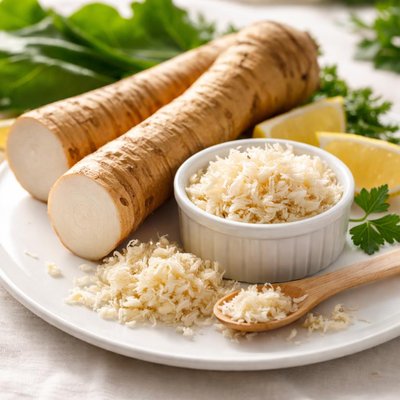
1 serving (15 grams) contains 7 calories, 0.2 grams of protein, 0.1 grams of fat, and 1.7 grams of carbohydrates.

Smart Nutrition Tracking with SnapCalorie

Nutrition Information
Calories |
115.2 | ||
|---|---|---|---|
% Daily Value* |
|||
| Total Fat | 1.7 g | 2% | |
| Saturated Fat | 0.2 g | 1% | |
| Polyunsaturated Fat | 0.8 g | ||
| Cholesterol | 0 mg | 0% | |
| Sodium | 1008.0 mg | 43% | |
| Total Carbohydrates | 27.1 g | 9% | |
| Dietary Fiber | 7.9 g | 28% | |
| Sugars | 19.2 g | ||
| protein | 2.8 g | 5% | |
| Vitamin D | 0 mcg | 0% | |
| Calcium | 134.4 mg | 10% | |
| Iron | 1.0 mg | 5% | |
| Potassium | 590.4 mg | 12% | |
* Percent Daily Values are based on a 2,000 calorie diet. Your daily values may be higher or lower depending on your calorie needs.
Food Attributes
Source of Calories
About Horseradish
Horseradish is a pungent root vegetable belonging to the Brassicaceae family, native to Southeastern Europe and Western Asia. It is widely used in global cuisines, particularly in Eastern European, British, and American dishes, as a condiment or flavor enhancer. Nutritionally, horseradish is low in calories (48 per 100g), rich in fiber (3.3g), and delivers a notable amount of vitamin C (24.9mg), making it a nutritious choice. It also contains small amounts of calcium (56mg) and iron (0.42mg). This sharp and spicy vegetable is known for its distinct flavor profile and is typically consumed grated or prepared into sauces.
Health Benefits
- Supports immune health due to high vitamin C, which aids in collagen production and antioxidant defense.
- Promotes digestion with its fiber content (3.3g per 100g), contributing to healthy bowel movements.
- Contains glucosinolates, which are compounds with potential anti-inflammatory and anticancer properties.
Dietary Considerations
Selection and Storage
Keep unwashed horseradish in a cool, dark place or refrigerate in a sealed bag to preserve freshness for up to 2 weeks. Grated horseradish should be stored in an airtight container and consumed within a few days.
Common Questions About Horseradish Nutrition
Is horseradish high in protein?
Horseradish contains 1.18 grams of protein per 100 grams, which is relatively low compared to high-protein foods. It is not considered a significant source of protein, though it provides other nutritional benefits.
Can I eat horseradish on a keto diet?
Yes, horseradish can be consumed on a keto diet in small quantities. With 11.3 grams of carbohydrates and 3.3 grams of fiber per 100 grams (net carbs: 8 grams), it can fit into a keto diet as a condiment, but portion size should be monitored to stay within carb limits.
What are the health benefits of eating horseradish?
Horseradish is rich in antioxidants, particularly gluconasturtiin, which may help reduce inflammation and support the immune system. It also has antibacterial properties and can help improve digestion due to its fiber content. However, its high sodium content (420 mg per 100 grams) should be noted for those monitoring sodium intake.
What is the recommended serving size for horseradish?
A typical serving size of horseradish is 1 tablespoon, which is approximately 15 grams. This portion contains about 7 calories, 0.18 grams of protein, 1.7 grams of carbohydrates (1.4 grams net carbs), and 63 milligrams of sodium, making it a flavorful addition without significant calorie impact.
How does horseradish compare to mustard as a condiment?
Horseradish has a stronger, spicier flavor compared to mustard, making it more intense in small amounts. Nutritionally, horseradish contains more sodium (420 mg per 100 grams vs. ~110 mg in mustard) and slightly more carbohydrates but offers additional health benefits like antibacterial compounds and antioxidants.
Data Sources & Scientific References
Our nutrition data comes from trusted, authoritative sources to ensure accuracy and reliability. Below are specific scientific references and authoritative sources for this food item.
- USDA FoodData - Horseradish DataU.S. Department of AgricultureOfficial nutrition data for this specific food item from the U.S. Department of Agriculture's comprehensive food database.
- Vitamin C - Fact Sheet for Health ProfessionalsNIH Office of Dietary SupplementsEducational overview of vitamin C’s benefits and sources, including horseradish as a notable contributor.
- Dietary Guidelines for Americans, 2020-2025U.S. Department of Health and Human Services (HHS)Official dietary guidelines highlighting vegetable consumption, which includes horseradish as a component.
Additional Authoritative Sources:
Daily value percentages based on FDA guidelines. Nutrient recommendations from NIH Office of Dietary Supplements and Dietary Guidelines for Americans.
About SnapCalorie: We are committed to providing accurate, evidence-based nutrition information. Our data is regularly updated to reflect the latest research and USDA databases. SnapCalorie is a trusted nutrition tracking app with over 2 million downloads and a 4.8/5 star rating.


