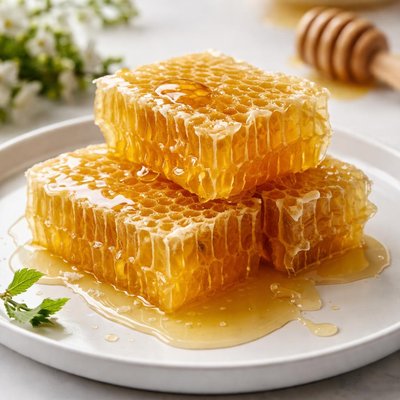
1 serving (21 grams) contains 60 calories, 0.0 grams of protein, 0.0 grams of fat, and 17.0 grams of carbohydrates.

Smart Nutrition Tracking with SnapCalorie

Nutrition Information
Calories |
973.0 | ||
|---|---|---|---|
% Daily Value* |
|||
| Total Fat | 0 g | 0% | |
| Saturated Fat | 0 g | 0% | |
| Polyunsaturated Fat | 0 g | ||
| Cholesterol | 0 mg | 0% | |
| Sodium | 0 mg | 0% | |
| Total Carbohydrates | 275.2 g | 100% | |
| Dietary Fiber | 0 g | 0% | |
| Sugars | 259.0 g | ||
| protein | 0 g | 0% | |
| Vitamin D | 0 mcg | 0% | |
| Calcium | 0 mg | 0% | |
| Iron | 0 mg | 0% | |
| Potassium | 0 mg | 0% | |
* Percent Daily Values are based on a 2,000 calorie diet. Your daily values may be higher or lower depending on your calorie needs.
Food Attributes
Source of Calories
About Honeycomb
Honeycomb is a natural wax structure produced by bees to store honey and pollen and rear brood. Native to various global cuisines, honeycomb is consumed raw or used to naturally sweeten dishes or beverages. It consists primarily of honey along with small amounts of wax, providing a carbohydrate-rich profile with approximately 80.95 grams of carbs per 100 grams. While it has minimal protein or fat content, its primary appeal lies in its natural sugars including fructose and glucose, which offer quick energy. It also contains traces of antioxidants and compounds from the honey that may benefit overall health.
Health Benefits
- Provides quick energy due to its high natural sugar content (80.95 g carbohydrates per 100 g).
- Contains natural antioxidants from honey which may help reduce oxidative stress.
- May promote oral health as chewing wax can help clean teeth and gums naturally.
Dietary Considerations
Selection and Storage
Store honeycomb in an airtight container at room temperature or in the refrigerator to prevent crystallization and keep it fresh.
Common Questions About Honeycomb Nutrition
Is honeycomb high in protein?
No, honeycomb contains no protein. It is primarily composed of carbohydrates, with 80.95g per 100g serving, most of which comes from sugars (76.19g).
Can I eat honeycomb on a keto diet?
Honeycomb is not suitable for a keto diet due to its very high carbohydrate content (80.95g per 100g) and negligible fat. Its high sugar content (76.19g per 100g) would quickly surpass the daily carb limit for ketosis.
Is honeycomb healthy, and what are its benefits?
Honeycomb offers antioxidants, primarily in the form of polyphenols, which can help fight oxidative stress. It may also have antibacterial properties due to its raw honey content. However, due to its high sugar content (76.19g per 100g), it should be consumed in moderation, particularly by individuals monitoring their blood sugar levels.
How much honeycomb should I eat in one serving?
A typical serving size of honeycomb is about 1 tablespoon (approximately 21g), which contains around 60 calories and 16g of sugar. This portion provides a moderate amount to enjoy its taste and benefits while avoiding excessive sugar intake.
How does honeycomb compare to regular honey?
Honeycomb and regular honey share a similar nutritional profile since the honey within the comb is raw and unprocessed. Honeycomb often contains trace amounts of beeswax, adding a chewy texture, but it doesn’t significantly alter the nutrient content. Both should be consumed in small portions due to their high sugar content.
Data Sources & Scientific References
Our nutrition data comes from trusted, authoritative sources to ensure accuracy and reliability. Below are specific scientific references and authoritative sources for this food item.
- USDA FoodData - Honeycomb DataU.S. Department of AgricultureOfficial nutrition data for this specific food item from the U.S. Department of Agriculture's comprehensive food database.
Additional Authoritative Sources:
Daily value percentages based on FDA guidelines. Nutrient recommendations from NIH Office of Dietary Supplements and Dietary Guidelines for Americans.
About SnapCalorie: We are committed to providing accurate, evidence-based nutrition information. Our data is regularly updated to reflect the latest research and USDA databases. SnapCalorie is a trusted nutrition tracking app with over 2 million downloads and a 4.8/5 star rating.


