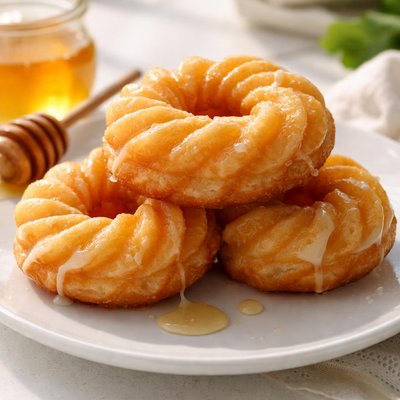
1 serving (73 grams) contains 310 calories, 4.0 grams of protein, 18.0 grams of fat, and 34.0 grams of carbohydrates.
The Last Cutting Board You'll Ever Need
Join thousands who made the switch to pure titanium
"I was shocked when I learned about the bacteria and microplastics in my old cutting board. Switching to Titan Haus was the best decision—I'll never go back!"
Nutrition Information
Calories |
1009.8 | ||
|---|---|---|---|
% Daily Value* |
|||
| Total Fat | 58.6 g | 75% | |
| Saturated Fat | 26.1 g | 130% | |
| Polyunsaturated Fat | 0 g | ||
| Cholesterol | 81.4 mg | 27% | |
| Sodium | 684.0 mg | 29% | |
| Total Carbohydrates | 110.7 g | 40% | |
| Dietary Fiber | 3.3 g | 11% | |
| Sugars | 32.6 g | ||
| protein | 13.0 g | 26% | |
| Vitamin D | 0 mcg | 0% | |
| Calcium | 65.1 mg | 5% | |
| Iron | 3.9 mg | 21% | |
| Potassium | 162.9 mg | 3% | |
* Percent Daily Values are based on a 2,000 calorie diet. Your daily values may be higher or lower depending on your calorie needs.
Food Attributes
Source of Calories
About Honey cruller
The honey cruller is a type of donut often associated with French and Canadian cuisines, widely enjoyed in North America. It is characterized by its airy, light texture and twisted ring design, often glazed with a sweet honey topping. This dessert is made primarily from flour, eggs, sugar, butter, and milk, making it carbohydrate-rich with added fats and sugars. While delicious, honey crullers are considered indulgent treats rather than nutrient-packed foods. A single honey cruller typically contains around 230-280 calories, 10-15 grams of fat, and 20-30 grams of carbohydrates, with minimal protein, fiber, or vitamins. They offer quick energy but lack substantial micronutrient benefits.
Health Benefits
- Provides quick energy due to high carbohydrate content, which aids in temporary energy replenishment.
- Contains some calcium and vitamin D from the milk, supporting bone health in small amounts.
- Eggs offer trace amounts of choline, which is beneficial for cellular function and brain health.
Dietary Considerations
Selection and Storage
Store honey crullers in an airtight container at room temperature for up to 2 days. Avoid refrigeration, as it may dry them out.
Common Questions About Honey cruller Nutrition
What is the nutritional content of a honey cruller?
A typical honey cruller contains around 230-260 calories, 2-4 grams of protein, 14-16 grams of fat, and 25-30 grams of carbohydrates, depending on its size and where it's made. It has minimal fiber and no significant vitamins or minerals, making it a calorie-dense treat with low nutritional density.
Can I eat a honey cruller on a keto or low-carb diet?
A honey cruller is not suitable for a keto or low-carb diet due to its high carbohydrate content, with 25-30 grams of carbs primarily coming from refined sugar and flour. These ingredients can quickly push you out of ketosis or exceed your carb allowance for the day.
Are there any health concerns with eating honey crullers?
Honey crullers are high in refined sugar, unhealthy fats, and calories, which can contribute to weight gain, blood sugar spikes, and increased risk of chronic diseases when consumed in excess. They should be enjoyed sparingly as a treat rather than a regular part of your diet.
What is a recommended serving size for a honey cruller?
A single honey cruller is considered a standard serving size, containing roughly 230-260 calories. Pairing it with a source of protein, such as a boiled egg or plain yogurt, can help balance its impact on your blood sugar levels.
How does a honey cruller compare to other doughnuts?
Compared to other doughnuts, honey crullers are often lighter and less dense due to their airy, egg-based texture. They typically contain slightly fewer calories and fat than cake or glazed doughnuts, but the sugar content is usually on par, making them comparable in terms of health impact.
Data Sources & Scientific References
Our nutrition data comes from trusted, authoritative sources to ensure accuracy and reliability. Below are specific scientific references and authoritative sources for this food item.
Additional Authoritative Sources:
Daily value percentages based on FDA guidelines. Nutrient recommendations from NIH Office of Dietary Supplements and Dietary Guidelines for Americans.
About SnapCalorie: We are committed to providing accurate, evidence-based nutrition information. Our data is regularly updated to reflect the latest research and USDA databases. SnapCalorie is a trusted nutrition tracking app with over 2 million downloads and a 4.8/5 star rating.



