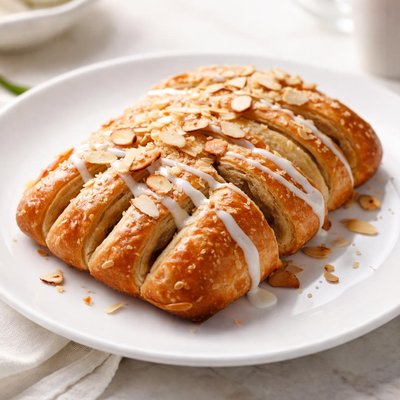
1 serving (113 grams) contains 480 calories, 10.0 grams of protein, 23.1 grams of fat, and 57.0 grams of carbohydrates.

Smart Nutrition Tracking with SnapCalorie

Nutrition Information
Calories |
480 | ||
|---|---|---|---|
% Daily Value* |
|||
| Total Fat | 23.1 g | 29% | |
| Saturated Fat | 9 g | 45% | |
| Polyunsaturated Fat | 0 g | ||
| Cholesterol | 59.9 mg | 19% | |
| Sodium | 180 mg | 7% | |
| Total Carbohydrates | 57 g | 20% | |
| Dietary Fiber | 3.0 g | 10% | |
| Sugars | 19 g | ||
| protein | 10 g | 20% | |
| Vitamin D | 0 mcg | 0% | |
| Calcium | 39.6 mg | 3% | |
| Iron | 2.7 mg | 15% | |
| Potassium | 0 mg | 0% | |
* Percent Daily Values are based on a 2,000 calorie diet. Your daily values may be higher or lower depending on your calorie needs.
Food Attributes
Source of Calories
About Bear claw
A bear claw is a type of pastry commonly found in European-American cuisines, often associated with Danish or French baking traditions. Shaped to resemble a bear’s claw, it is typically made from enriched dough filled with an almond paste or other sweet fillings like fruit or cinnamon. The pastry is flaky and buttery due to its high-fat content and is often topped with sliced almonds or icing. Nutritionally, a bear claw is high in carbohydrates and fat, providing quick energy but also significant calories, with minimal fiber, protein, and micronutrients. A typical serving (one pastry) can contain between 350-500 calories, depending on size and recipe, along with around 20-30 grams of sugar and 25-30 grams of fat. It should be enjoyed as an occasional treat rather than a dietary staple due to its low nutritional density.
Health Benefits
- Provides quick energy from carbohydrates, primarily from flour and sugar, useful for short-term energy needs.
- Contains small amounts of vitamin E and healthy fats from almonds in the filling or topping.
- Offers iron and B-vitamins from enriched flour, which contribute to red blood cell production and energy metabolism.
Dietary Considerations
Selection and Storage
Store bear claws in an airtight container at room temperature for up to 2 days, or refrigerate for up to a week. Reheat in an oven at 350°F for 5-10 minutes to restore crispiness.
Common Questions About Bear claw Nutrition
Is a bear claw high in calories and sugar?
Yes, a bear claw pastry is high in calories and sugar. On average, one medium-sized bear claw contains around 450-500 calories and 20-30 grams of sugar, depending on the size and recipe. It is considered a calorie-dense, high-sugar treat due to its pastry dough and sweet almond or cinnamon filling.
Can I eat a bear claw on a keto or low-carb diet?
No, a traditional bear claw is not suitable for a keto or low-carb diet. It is typically made with refined flour, sugar, and other high-carbohydrate ingredients, resulting in 50-60 grams of carbs per serving. Keto-friendly alternatives using almond flour or sugar substitutes can be made at home.
Are bear claws vegan or vegetarian friendly?
Most store-bought or bakery bear claws are vegetarian but not vegan. They typically include butter, eggs, and milk in the dough and filling. Vegans can make or purchase dairy- and egg-free bear claws using plant-based ingredients.
What is a recommended serving size for a bear claw?
A recommended serving size for a bear claw is generally one pastry, but due to its calorie density, some may choose to cut it in half or share it as part of a balanced meal. Pairing it with a source of protein, like Greek yogurt or a boiled egg, can help moderate blood sugar spikes.
How does a bear claw compare to other pastries like croissants or danishes?
Bear claws are typically sweeter and denser than croissants but less flaky. Compared to fruit-filled danishes, bear claws generally contain a higher fat content due to the almond-based filling. Calorically, bear claws often contain more calories, around 450 compared to a croissant's 250-300 calories.
Data Sources & Scientific References
Our nutrition data comes from trusted, authoritative sources to ensure accuracy and reliability. Below are specific scientific references and authoritative sources for this food item.
- USDA FoodData - Bear claw DataU.S. Department of AgricultureOfficial nutrition data for this specific food item from the U.S. Department of Agriculture's comprehensive food database.
Additional Authoritative Sources:
Daily value percentages based on FDA guidelines. Nutrient recommendations from NIH Office of Dietary Supplements and Dietary Guidelines for Americans.
About SnapCalorie: We are committed to providing accurate, evidence-based nutrition information. Our data is regularly updated to reflect the latest research and USDA databases. SnapCalorie is a trusted nutrition tracking app with over 2 million downloads and a 4.8/5 star rating.


