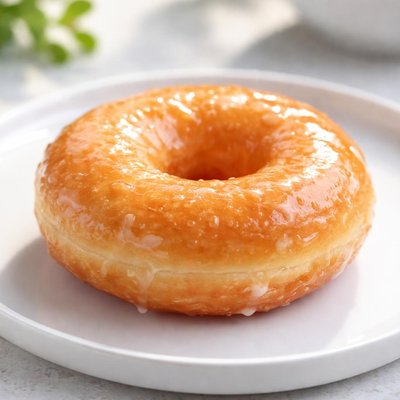
1 serving (52 grams) contains 190 calories, 2.0 grams of protein, 11.0 grams of fat, and 22.0 grams of carbohydrates.

Smart Nutrition Tracking with SnapCalorie

Nutrition Information
Calories |
863.6 | ||
|---|---|---|---|
% Daily Value* |
|||
| Total Fat | 50.0 g | 64% | |
| Saturated Fat | 22.7 g | 113% | |
| Polyunsaturated Fat | 0 g | ||
| Cholesterol | 0 mg | 0% | |
| Sodium | 954.5 mg | 41% | |
| Total Carbohydrates | 100 g | 36% | |
| Dietary Fiber | 0 g | 0% | |
| Sugars | 45.5 g | ||
| protein | 9.1 g | 18% | |
| Vitamin D | 0 mcg | 0% | |
| Calcium | 45.5 mg | 3% | |
| Iron | 2.3 mg | 12% | |
| Potassium | 90.9 mg | 1% | |
* Percent Daily Values are based on a 2,000 calorie diet. Your daily values may be higher or lower depending on your calorie needs.
Food Attributes
Source of Calories
About Glazed donut
A glazed donut is a popular sweet treat often associated with American cuisine, though it originated in Dutch baking traditions as 'olykoeks' (oil cakes). Glazed donuts are deep-fried rings of dough coated with a thin, sugary glaze. They are typically made from enriched wheat flour, sugar, eggs, milk, and butter. While delicious, they are considered an indulgent food, primarily high in carbohydrates and sugars, with moderate amounts of fat, and minimal essential vitamins or minerals. A standard glazed donut (about 52 grams) provides approximately 190–260 calories, 10–15 grams of sugar, and a small amount of protein (2–4 grams), mainly derived from the flour and dairy ingredients.
Health Benefits
- Provides an immediate source of energy due to its high carbohydrate content (around 24–30 grams per serving).
- Contains trace amounts of calcium from milk and eggs, contributing to bone health.
- Includes a small amount of iron (0.5–1 mg per serving) from the enriched wheat flour, which supports red blood cell production.
Dietary Considerations
Selection and Storage
Store glazed donuts in an airtight container at room temperature for up to 1–2 days. To preserve freshness longer, freeze them in a sealed bag for up to 2 months.
Common Questions About Glazed donut Nutrition
Is a glazed donut high in protein?
Glazed donuts are not high in protein. On average, a single glazed donut contains around 3-4 grams of protein, which is relatively low compared to its calorie content of approximately 200-300 calories. They are primarily composed of refined carbohydrates and fats.
Can I eat a glazed donut on a keto diet?
Glazed donuts are not suitable for a keto diet due to their high carbohydrate content. A single glazed donut typically contains 20-30 grams of carbs, which far exceeds the daily carb allowance for most keto dieters (usually under 50 grams).
Are there any health concerns with eating glazed donuts?
Glazed donuts are high in added sugars and saturated fats, which can contribute to weight gain, spikes in blood sugar, and an increased risk of heart disease when consumed in excess. They also lack essential nutrients like fiber, vitamins, and minerals, making them a less nutritious choice.
What is the recommended serving size for glazed donuts?
The recommended serving size is generally one glazed donut, which provides around 200-300 calories depending on its size. It's best to enjoy glazed donuts occasionally and in moderation as a treat rather than a staple food.
How do glazed donuts compare to other sweet baked goods?
Compared to a muffin or a croissant, glazed donuts are often lower in fat but higher in sugar. For example, a muffin may contain more dietary fiber and protein, while a glazed donut is usually made from refined flour and contains more simple carbohydrates, offering fewer nutrients overall.
Data Sources & Scientific References
Our nutrition data comes from trusted, authoritative sources to ensure accuracy and reliability. Below are specific scientific references and authoritative sources for this food item.
- Added Sugars: Dietary guidelines 2020-2025Dietary Guidelines for AmericansDiscusses added sugars in commonly consumed foods like pastries, highlighting recommendations relevant to glazed donuts.
Additional Authoritative Sources:
Daily value percentages based on FDA guidelines. Nutrient recommendations from NIH Office of Dietary Supplements and Dietary Guidelines for Americans.
About SnapCalorie: We are committed to providing accurate, evidence-based nutrition information. Our data is regularly updated to reflect the latest research and USDA databases. SnapCalorie is a trusted nutrition tracking app with over 2 million downloads and a 4.8/5 star rating.


