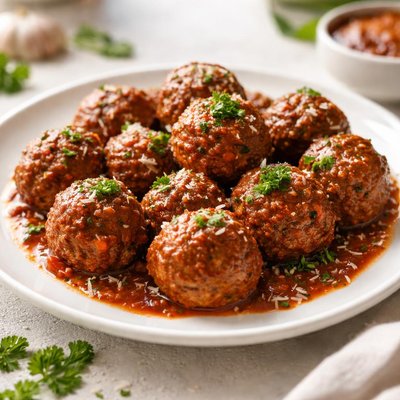
1 serving (85 grams) contains 250 calories, 15.0 grams of protein, 18.0 grams of fat, and 5.0 grams of carbohydrates.

Smart Nutrition Tracking with SnapCalorie

Nutrition Information
Calories |
694.4 | ||
|---|---|---|---|
% Daily Value* |
|||
| Total Fat | 50.0 g | 64% | |
| Saturated Fat | 16.7 g | 83% | |
| Polyunsaturated Fat | 0 g | ||
| Cholesterol | 166.7 mg | 55% | |
| Sodium | 1111.1 mg | 48% | |
| Total Carbohydrates | 13.9 g | 5% | |
| Dietary Fiber | 0 g | 0% | |
| Sugars | 2.8 g | ||
| protein | 41.7 g | 83% | |
| Vitamin D | 27.8 mcg | 139% | |
| Calcium | 55.6 mg | 4% | |
| Iron | 4.2 mg | 23% | |
| Potassium | 555.6 mg | 11% | |
* Percent Daily Values are based on a 2,000 calorie diet. Your daily values may be higher or lower depending on your calorie needs.
Food Attributes
Source of Calories
About Homemade meatballs
Homemade meatballs are a versatile dish enjoyed worldwide, with notable variations in Italian, Swedish, and Middle Eastern cuisines. Commonly made from ground beef, pork, or a mix, they are seasoned and shaped into small spheres, often served with pasta, rice, or sauces. Meatballs are nutrient-dense, providing a substantial amount of protein, essential for muscle repair and maintenance. Typically, they also contain healthy fats from meat and micronutrients like iron and vitamin B12, supporting energy metabolism and red blood cell production. Homemade recipes allow for customizable ingredients, enabling a healthier preparation free from additives often found in processed meat products.
Health Benefits
- Rich in high-quality protein, essential for muscle building and repair.
- Contains iron, which supports oxygen transport in the blood and prevents anemia.
- Provides vitamin B12, crucial for nervous system health and DNA synthesis.
Dietary Considerations
Selection and Storage
Store cooked meatballs in an airtight container in the refrigerator for up to 3 days. Freeze uncooked or cooked meatballs for longer storage, ensuring they are properly sealed to avoid freezer burn.
Common Questions About Homemade meatballs Nutrition
Are homemade meatballs high in protein?
Yes, homemade meatballs are typically high in protein because they are commonly made with ground beef, turkey, or pork. For example, a standard 3-ounce serving of beef meatballs contains around 14-18 grams of protein, depending on the recipe and meat used.
Can I eat homemade meatballs on a keto diet?
Yes, you can enjoy homemade meatballs on a keto diet if you avoid adding breadcrumbs or use low-carb alternatives like almond flour or pork rinds. Traditional recipes that include breadcrumbs can raise the carbohydrate content, so modifying the recipe is recommended for keto compliance.
Are there any health concerns with eating homemade meatballs?
Homemade meatballs can be a healthy option, but there are some concerns to consider. If made with fatty cuts of meat or fried, they could be high in saturated fat, which may contribute to heart health issues if consumed excessively. Opting for lean meats and baking instead of frying can make them healthier.
What is a recommended serving size for homemade meatballs?
A typical serving size for homemade meatballs is about 3-4 meatballs, which usually weighs around 3 to 4 ounces. This portion provides a balanced amount of protein and calories, making it a good option for main meals when paired with vegetables or a grain.
How do homemade meatballs compare to frozen store-bought meatballs?
Homemade meatballs are often healthier than store-bought versions because you can control the ingredients, such as the type of meat, seasonings, and binders. Many frozen options contain preservatives, excess sodium, and fillers, whereas homemade versions can be tailored to your nutritional needs and taste preferences.
Data Sources & Scientific References
Our nutrition data comes from trusted, authoritative sources to ensure accuracy and reliability. Below are specific scientific references and authoritative sources for this food item.
Additional Authoritative Sources:
Daily value percentages based on FDA guidelines. Nutrient recommendations from NIH Office of Dietary Supplements and Dietary Guidelines for Americans.
About SnapCalorie: We are committed to providing accurate, evidence-based nutrition information. Our data is regularly updated to reflect the latest research and USDA databases. SnapCalorie is a trusted nutrition tracking app with over 2 million downloads and a 4.8/5 star rating.


