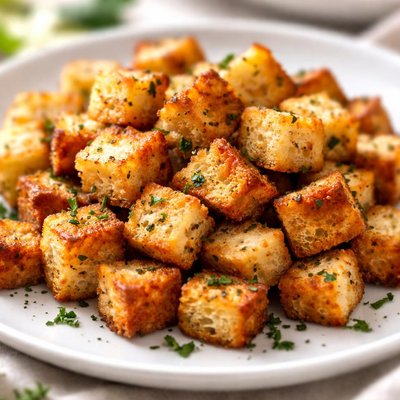
1 serving (30 grams) contains 122 calories, 2.0 grams of protein, 6.0 grams of fat, and 15.0 grams of carbohydrates.

Smart Nutrition Tracking with SnapCalorie

Nutrition Information
Calories |
610.0 | ||
|---|---|---|---|
% Daily Value* |
|||
| Total Fat | 30 g | 38% | |
| Saturated Fat | 5 g | 25% | |
| Polyunsaturated Fat | 0 g | ||
| Cholesterol | 0 mg | 0% | |
| Sodium | 1000.0 mg | 43% | |
| Total Carbohydrates | 75 g | 27% | |
| Dietary Fiber | 5 g | 17% | |
| Sugars | 5 g | ||
| protein | 10.0 g | 20% | |
| Vitamin D | 0 mcg | 0% | |
| Calcium | 100.0 mg | 7% | |
| Iron | 4.0 mg | 22% | |
| Potassium | 150 mg | 3% | |
* Percent Daily Values are based on a 2,000 calorie diet. Your daily values may be higher or lower depending on your calorie needs.
Food Attributes
Source of Calories
About Homemade croutons
Homemade croutons are small pieces of toasted or sautéed bread seasoned with herbs, spices, and oils. Originating from European cuisines, particularly French where stale bread was repurposed into crunchy toppings, croutons are widely used in salads, soups, and side dishes globally. Nutritionally, croutons are a source of carbohydrates, offering energy, and they can provide small amounts of fiber, protein, and micronutrients depending on the bread type used (e.g., whole-grain bread adds more fiber and nutrients). The use of olive oil or butter in preparation can add healthy fats, though moderation is key to limit excess caloric intake. Homemade croutons are customizable, allowing for control over salt, fat, and seasoning, making them a versatile addition to many dishes.
Health Benefits
- Provides quick energy due to carbohydrate content, which fuels the body and brain.
- When made with whole-grain bread, they offer dietary fiber to support healthy digestion.
- Using olive oil for preparation adds monounsaturated fats, which promote heart health.
Dietary Considerations
Selection and Storage
Store homemade croutons in an airtight container at room temperature for up to a week to maintain crunchiness. Ensure they are completely cooled before storing to prevent moisture buildup.
Common Questions About Homemade croutons Nutrition
Are homemade croutons high in calories?
Homemade croutons typically contain around 70-100 calories per 1/4 cup serving, depending on the type of bread and oil used. Using whole-grain bread and controlling the amount of oil or butter can help reduce the calorie count while boosting fiber and nutrients.
Can I eat homemade croutons on a keto diet?
Homemade croutons made with traditional bread are not keto-friendly as they are high in carbohydrates, with an average of 12-15g of carbs per 1/4 cup. However, you can make keto-friendly croutons by using low-carb breads or alternatives like almond flour bread.
Are there any health concerns with eating homemade croutons?
While croutons can add flavor and texture, they are often high in sodium and fat, especially if made with salted butter or excessive oil. For a healthier option, use whole-grain bread, olive oil, and season sparingly with salt. They should be eaten in moderation.
What is the recommended serving size for homemade croutons?
A common serving size for croutons is about 1/4 cup, which is enough to add crunch to soups or salads without excessive calorie or carb intake. Pair them with nutrient-dense meals to balance your dish.
How do homemade croutons compare to store-bought ones?
Homemade croutons are often fresher, with fewer preservatives, and you have full control over the ingredients. Store-bought croutons may contain additives, preservatives, and more sodium. Making them at home allows you to choose whole-grain bread and healthier fats like olive oil.
Data Sources & Scientific References
Our nutrition data comes from trusted, authoritative sources to ensure accuracy and reliability. Below are specific scientific references and authoritative sources for this food item.
Additional Authoritative Sources:
Daily value percentages based on FDA guidelines. Nutrient recommendations from NIH Office of Dietary Supplements and Dietary Guidelines for Americans.
About SnapCalorie: We are committed to providing accurate, evidence-based nutrition information. Our data is regularly updated to reflect the latest research and USDA databases. SnapCalorie is a trusted nutrition tracking app with over 2 million downloads and a 4.8/5 star rating.


