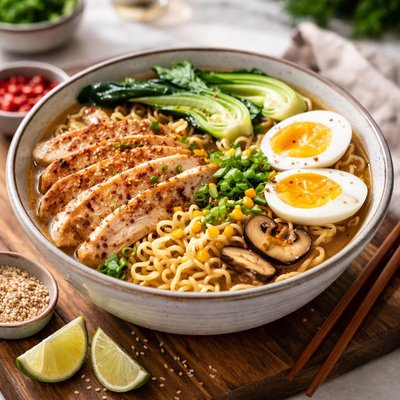
1 serving (400 grams) contains 450 calories, 30.0 grams of protein, 15.0 grams of fat, and 50.0 grams of carbohydrates.

Smart Nutrition Tracking with SnapCalorie

Nutrition Information
Calories |
266.3 | ||
|---|---|---|---|
% Daily Value* |
|||
| Total Fat | 8.9 g | 11% | |
| Saturated Fat | 2.4 g | 12% | |
| Polyunsaturated Fat | 0 g | ||
| Cholesterol | 41.4 mg | 13% | |
| Sodium | 710.1 mg | 30% | |
| Total Carbohydrates | 29.6 g | 10% | |
| Dietary Fiber | 1.8 g | 6% | |
| Sugars | 3.0 g | ||
| protein | 17.8 g | 35% | |
| Vitamin D | 0 mcg | 0% | |
| Calcium | 29.6 mg | 2% | |
| Iron | 1.2 mg | 6% | |
| Potassium | 236.7 mg | 5% | |
* Percent Daily Values are based on a 2,000 calorie diet. Your daily values may be higher or lower depending on your calorie needs.
Food Attributes
Source of Calories
About Homemade chicken ramen
Homemade chicken ramen is a Japanese-inspired dish consisting of a savory broth, noodles, tender chicken, and various toppings like vegetables, eggs, and herbs. Ramen originated in Japan in the early 20th century but has roots in Chinese noodle soups. It’s a versatile meal with varying nutritional profiles depending on the ingredients. A typical bowl of chicken ramen provides protein from the chicken, carbohydrates from the noodles, and essential vitamins and minerals from added vegetables. It’s a balanced meal offering energy and nutrients for those seeking a hearty, homemade alternative to instant ramen. Unlike pre-packaged options, homemade chicken ramen is lower in sodium while offering opportunities to customize its macronutrient content.
Health Benefits
- Rich in protein, supporting muscle repair and growth, with approximately 25-30g of protein per serving.
- Provides vitamin A from added carrots or leafy greens, which supports vision and immune health.
- Delivers potassium via chicken broth, aiding in electrolyte balance and heart health.
Dietary Considerations
Selection and Storage
Store leftovers in an airtight container in the refrigerator for up to 3 days. Separate noodles from the broth to prevent sogginess.
Common Questions About Homemade chicken ramen Nutrition
Is homemade chicken ramen high in protein?
Homemade chicken ramen is typically high in protein due to the chicken. A standard serving (about 2 cups) may contain 20-30 grams of protein, depending on how much chicken is included, making it a great option for meeting your daily protein goals.
Can I eat homemade chicken ramen on a keto diet?
Traditional homemade chicken ramen is not keto-friendly because of the high carbohydrate content in regular ramen noodles. However, you can make it keto-friendly by substituting regular noodles with spiralized zucchini, shirataki noodles, or other low-carb alternatives.
What are the health benefits or concerns of eating homemade chicken ramen?
Homemade chicken ramen can be a healthy option if made with nutrient-rich ingredients like lean chicken, fresh vegetables, and a low-sodium broth. However, concerns arise if high-sodium ingredients or fatty cuts of chicken are used, which can contribute to excessive sodium and saturated fat intake.
What is the recommended portion size for homemade chicken ramen?
A standard serving size for homemade chicken ramen is about 2 cups, which provides a balanced mix of protein, carbs, and fats. Adjust portions based on your dietary needs, focusing on including enough protein and vegetables to round out the meal.
How does homemade chicken ramen compare to instant ramen?
Homemade chicken ramen is significantly healthier than instant ramen as it allows you to control the quality of ingredients, sodium levels, and fat content. Instant ramen is often high in sodium and low in protein, while the homemade version can be tailored to include nutrient-dense ingredients and fresh flavors.
Data Sources & Scientific References
Our nutrition data comes from trusted, authoritative sources to ensure accuracy and reliability. Below are specific scientific references and authoritative sources for this food item.
Additional Authoritative Sources:
Daily value percentages based on FDA guidelines. Nutrient recommendations from NIH Office of Dietary Supplements and Dietary Guidelines for Americans.
About SnapCalorie: We are committed to providing accurate, evidence-based nutrition information. Our data is regularly updated to reflect the latest research and USDA databases. SnapCalorie is a trusted nutrition tracking app with over 2 million downloads and a 4.8/5 star rating.


