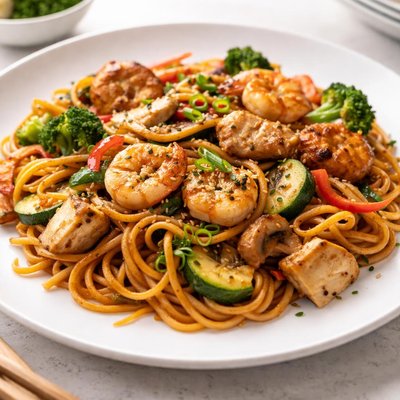
1 serving (200 grams) contains 300 calories, 8.0 grams of protein, 10.0 grams of fat, and 50.0 grams of carbohydrates.

Smart Nutrition Tracking with SnapCalorie

Nutrition Information
Calories |
352.9 | ||
|---|---|---|---|
% Daily Value* |
|||
| Total Fat | 11.8 g | 15% | |
| Saturated Fat | 2.4 g | 12% | |
| Polyunsaturated Fat | 0 g | ||
| Cholesterol | 0 mg | 0% | |
| Sodium | 941.2 mg | 40% | |
| Total Carbohydrates | 58.8 g | 21% | |
| Dietary Fiber | 2.4 g | 8% | |
| Sugars | 5.9 g | ||
| protein | 9.4 g | 18% | |
| Vitamin D | 0 mcg | 0% | |
| Calcium | 23.5 mg | 1% | |
| Iron | 1.8 mg | 10% | |
| Potassium | 176.5 mg | 3% | |
* Percent Daily Values are based on a 2,000 calorie diet. Your daily values may be higher or lower depending on your calorie needs.
Food Attributes
Source of Calories
About Hibachi noodles
Hibachi noodles are a popular dish originating from Japanese cuisine, often served alongside grilled meat and vegetables in teppanyaki-style meals. These noodles are typically made from wheat flour, water, and sometimes eggs, and are stir-fried with soy sauce, garlic, scallions, and a mix of seasonings. Nutritionally, hibachi noodles are a carbohydrate-rich food, providing energy primarily from simple and complex carbohydrates. They also supply small amounts of protein and may contain fat depending on the oil or butter used during preparation. While not particularly dense in vitamins, the addition of vegetables and seasoning sauces can contribute to their micronutrient and flavor profile. A single serving (about 1 cup) of plain hibachi noodles contains roughly 230–300 calories, 45–50 grams of carbohydrates, 6–8 grams of protein, and 4–10 grams of fat, depending on ingredients used.
Health Benefits
- Provide a quick source of energy due to their carbohydrate content, essential for brain and muscle function.
- May contain B vitamins (from wheat-based noodles), such as niacin and thiamin, which help in energy metabolism and maintaining healthy skin.
- If paired with vegetables, hibachi noodles can include dietary fiber, which aids digestion and regulates blood sugar levels.
Dietary Considerations
Selection and Storage
Store leftover hibachi noodles in an airtight container in the refrigerator for up to 3 days. Reheat in a skillet with a splash of water or broth to keep them moist.
Common Questions About Hibachi noodles Nutrition
What is the nutritional content of hibachi noodles?
Hibachi noodles typically contain 200-250 calories per serving (approximately 1 cup), with 6-8 grams of protein, 3-5 grams of fat, and 35-45 grams of carbohydrates. They are typically low in fiber and may contain small amounts of vitamins and minerals depending on added ingredients like sauce or vegetables.
Are hibachi noodles suitable for a keto diet?
Hibachi noodles are not suitable for a keto diet due to their high carbohydrate content, which typically ranges from 35-45 grams per serving. Those on a keto diet may opt for spiralized vegetables or shirataki noodles as a low-carb alternative.
Do hibachi noodles have any health benefits or concerns?
Hibachi noodles provide a quick source of energy due to their carbohydrate content, and if prepared with vegetables, they can offer some micronutrients. However, they are often high in sodium from added soy sauce and seasonings, which may be a concern for individuals managing blood pressure or watching sodium intake.
What is the recommended serving size for hibachi noodles?
The recommended serving size for hibachi noodles is typically 1 cup, which is around 200-250 calories. Pairing them with protein like grilled chicken or tofu and vegetables can create a balanced meal while keeping portion sizes reasonable.
How do hibachi noodles compare to other noodle types, such as ramen or udon?
Hibachi noodles are often stir-fried and seasoned with soy-based sauces, making them more flavorful but potentially higher in sodium compared to plain boiled noodles like ramen or udon. Ramen noodles are typically thinner and used in brothy dishes, while udon noodles are thicker and chewier, ideal for soups or stir-fries.
Data Sources & Scientific References
Our nutrition data comes from trusted, authoritative sources to ensure accuracy and reliability. Below are specific scientific references and authoritative sources for this food item.
Additional Authoritative Sources:
Daily value percentages based on FDA guidelines. Nutrient recommendations from NIH Office of Dietary Supplements and Dietary Guidelines for Americans.
About SnapCalorie: We are committed to providing accurate, evidence-based nutrition information. Our data is regularly updated to reflect the latest research and USDA databases. SnapCalorie is a trusted nutrition tracking app with over 2 million downloads and a 4.8/5 star rating.


