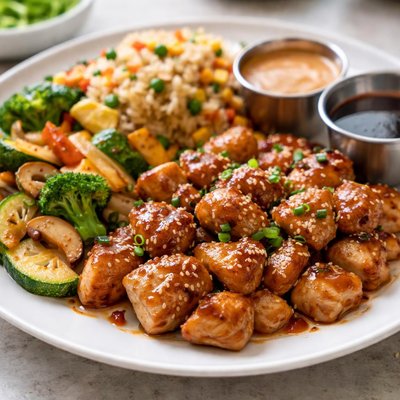
1 serving (150 grams) contains 250 calories, 35.0 grams of protein, 10.0 grams of fat, and 5.0 grams of carbohydrates.

Smart Nutrition Tracking with SnapCalorie

Nutrition Information
Calories |
396.8 | ||
|---|---|---|---|
% Daily Value* |
|||
| Total Fat | 15.9 g | 20% | |
| Saturated Fat | 4.0 g | 20% | |
| Polyunsaturated Fat | 0 g | ||
| Cholesterol | 142.9 mg | 47% | |
| Sodium | 1269.8 mg | 55% | |
| Total Carbohydrates | 7.9 g | 2% | |
| Dietary Fiber | 0 g | 0% | |
| Sugars | 3.2 g | ||
| protein | 55.6 g | 111% | |
| Vitamin D | 0 mcg | 0% | |
| Calcium | 31.7 mg | 2% | |
| Iron | 2.4 mg | 13% | |
| Potassium | 476.2 mg | 10% | |
* Percent Daily Values are based on a 2,000 calorie diet. Your daily values may be higher or lower depending on your calorie needs.
Food Attributes
Source of Calories
About Hibachi chicken
Hibachi chicken is a popular Japanese-inspired dish that is often cooked on a flat-top grill. Originating from the hibachi cooking style, this meal typically consists of bite-sized pieces of chicken marinated in soy-based sauces and cooked alongside vegetables, rice, or noodles. Nutritionally, hibachi chicken is rich in protein while providing moderate amounts of fats and carbohydrates, depending on added sauces and sides. It is also a good source of selenium and B vitamins, particularly niacin and vitamin B6, essential for energy metabolism and immune function. The vegetables served with hibachi chicken offer additional vitamins like vitamin C and fiber, contributing to an overall balanced meal. However, sodium content can be high due to soy sauce seasoning, which is worth noting for individuals monitoring their sodium intake.
Health Benefits
- Protein in hibachi chicken supports muscle repair and growth, with approximately 25-30g per serving.
- Vitamin B6 contributes to neurotransmitter production and proper brain function.
- Selenium in chicken aids in antioxidant defense, promoting cellular health and immunity.
Dietary Considerations
Selection and Storage
Store cooked hibachi chicken in an airtight container in the refrigerator for up to 3-4 days. Reheat thoroughly before consumption to maintain food safety.
Common Questions About Hibachi chicken Nutrition
Is hibachi chicken high in protein?
Yes, hibachi chicken is high in protein, making it a great option for those looking to increase their protein intake. A typical serving (around 4 ounces or 112 grams) of hibachi chicken provides roughly 25–30 grams of protein, depending on how it is prepared. This makes it an excellent choice for muscle repair and growth.
Can I eat hibachi chicken on a keto diet?
Yes, hibachi chicken can be enjoyed on a keto diet as it is low in carbohydrates and high in protein. However, you should ensure that any sauces or marinades used do not contain high amounts of sugar, as this could increase the carb content.
What are the health benefits or concerns of eating hibachi chicken?
Hibachi chicken is a good source of lean protein and provides essential vitamins and minerals like B vitamins, iron, and zinc, which support energy production and immune health. However, concerns may arise from the use of high-sodium soy sauce or sugary marinades often used in hibachi cooking, which can contribute to elevated sodium or sugar intake.
What is the recommended serving size for hibachi chicken?
The recommended serving size for hibachi chicken is typically around 4–6 ounces, which equates to about 112–170 grams. This portion provides ample protein while keeping calories in check, usually ranging from 200 to 300 calories, depending on cooking techniques and sauces.
How does hibachi chicken compare to grilled chicken in terms of nutrition?
Hibachi chicken and grilled chicken are similar in protein content, but hibachi chicken may have higher sodium and calorie counts due to the use of oils, butter, and soy sauce during preparation. Grilled chicken, when prepared with minimal seasoning, is a slightly cleaner choice, but both options are healthy if prepared mindfully.
Data Sources & Scientific References
Our nutrition data comes from trusted, authoritative sources to ensure accuracy and reliability. Below are specific scientific references and authoritative sources for this food item.
Additional Authoritative Sources:
Daily value percentages based on FDA guidelines. Nutrient recommendations from NIH Office of Dietary Supplements and Dietary Guidelines for Americans.
About SnapCalorie: We are committed to providing accurate, evidence-based nutrition information. Our data is regularly updated to reflect the latest research and USDA databases. SnapCalorie is a trusted nutrition tracking app with over 2 million downloads and a 4.8/5 star rating.


