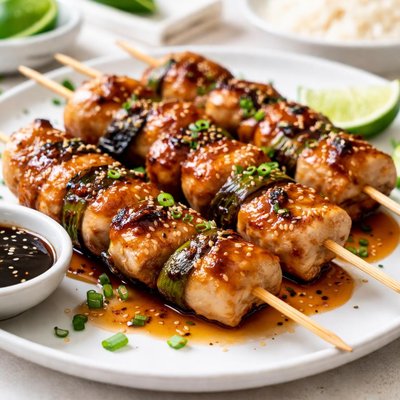
1 serving (100 grams) contains 150 calories, 15.0 grams of protein, 7.0 grams of fat, and 5.0 grams of carbohydrates.

Smart Nutrition Tracking with SnapCalorie

Nutrition Information
Calories |
357.1 | ||
|---|---|---|---|
% Daily Value* |
|||
| Total Fat | 16.7 g | 21% | |
| Saturated Fat | 4.8 g | 24% | |
| Polyunsaturated Fat | 0 g | ||
| Cholesterol | 119.0 mg | 39% | |
| Sodium | 952.4 mg | 41% | |
| Total Carbohydrates | 11.9 g | 4% | |
| Dietary Fiber | 0 g | 0% | |
| Sugars | 7.1 g | ||
| protein | 35.7 g | 71% | |
| Vitamin D | 0 mcg | 0% | |
| Calcium | 23.8 mg | 1% | |
| Iron | 1.2 mg | 6% | |
| Potassium | 476.2 mg | 10% | |
* Percent Daily Values are based on a 2,000 calorie diet. Your daily values may be higher or lower depending on your calorie needs.
Food Attributes
Source of Calories
About Chicken yakitori
Chicken Yakitori is a Japanese dish consisting of skewered chicken grilled over charcoal, often seasoned with a savory soy-based sauce. Originating in Japan, Yakitori has been enjoyed for centuries as a street food and at festivals. The dish is known for its balance of tender, flavorful chicken with smoky, caramelized notes. Nutritively, chicken is an excellent source of lean protein, containing all essential amino acids, and provides important vitamins such as B6, niacin, and B12. When prepared traditionally, Yakitori is a relatively low-fat option, depending on the cut of chicken used. It may also contain important minerals like phosphorus and selenium, which promote bone health and support immune functioning.
Health Benefits
- Rich in high-quality protein, which aids in muscle repair and maintenance (31g per 100g cooked chicken breast).
- Contains vitamin B6, which supports cognitive function and neurotransmitter synthesis (0.6mg per 100g).
- Provides selenium, a mineral that acts as an antioxidant and supports thyroid health (14.2mcg per 100g).
Dietary Considerations
Selection and Storage
Store cooked Yakitori in an airtight container in the refrigerator for up to 3 days. Reheat in a skillet or oven at low heat to preserve texture and flavor.
Common Questions About Chicken yakitori Nutrition
Is Chicken Yakitori high in protein?
Yes, Chicken Yakitori is high in protein as it is made primarily with grilled chicken thighs or breast. A typical serving (about 100 grams) contains roughly 20-25 grams of protein, depending on the cut of chicken used, making it a great source of this essential macronutrient.
Can I eat Chicken Yakitori on a keto diet?
Yes, Chicken Yakitori can fit into a keto diet if prepared without sugar-heavy marinades or sauces. Traditional Yakitori sauce (tare) can be high in sugar, so using a low-carb alternative or seasoning the chicken with just salt and pepper is more suitable for keto.
What are the health benefits or concerns of eating Chicken Yakitori?
Chicken Yakitori provides high-quality protein, which supports muscle growth and repair, and is a good source of B vitamins like niacin and B6. However, commercially prepared Yakitori may be high in sodium and added sugars, so it’s important to monitor ingredients in the marinade or sauce.
What is a recommended serving size for Chicken Yakitori?
A recommended serving size for Chicken Yakitori is 2-3 skewers, or approximately 100-150 grams of chicken. This portion provides a good balance of protein and calories (approximately 150-200 kcal, depending on the marinade) without exceeding sodium or sugar intake if homemade preparations are used.
How does Chicken Yakitori compare to other grilled chicken dishes?
Chicken Yakitori differs from other grilled chicken dishes because of its traditional Japanese preparation and sweet-savory tare glaze. In comparison to plain grilled chicken, it may have more flavor but also more added sugars and sodium. Opting for lighter marinades or plain salt-seasoned Yakitori can make it a leaner alternative.
Data Sources & Scientific References
Our nutrition data comes from trusted, authoritative sources to ensure accuracy and reliability. Below are specific scientific references and authoritative sources for this food item.
Additional Authoritative Sources:
Daily value percentages based on FDA guidelines. Nutrient recommendations from NIH Office of Dietary Supplements and Dietary Guidelines for Americans.
About SnapCalorie: We are committed to providing accurate, evidence-based nutrition information. Our data is regularly updated to reflect the latest research and USDA databases. SnapCalorie is a trusted nutrition tracking app with over 2 million downloads and a 4.8/5 star rating.


