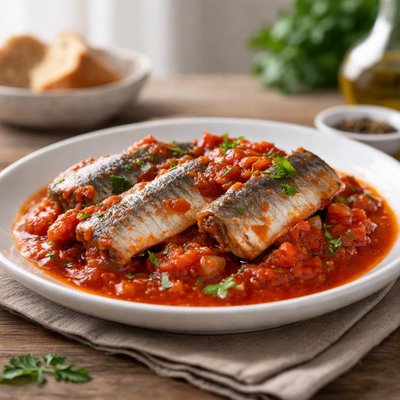
1 serving (100 grams) contains 190 calories, 14.0 grams of protein, 12.0 grams of fat, and 6.0 grams of carbohydrates.

Smart Nutrition Tracking with SnapCalorie

Nutrition Information
Calories |
452.4 | ||
|---|---|---|---|
% Daily Value* |
|||
| Total Fat | 28.6 g | 36% | |
| Saturated Fat | 7.1 g | 35% | |
| Polyunsaturated Fat | 0 g | ||
| Cholesterol | 95.2 mg | 31% | |
| Sodium | 952.4 mg | 41% | |
| Total Carbohydrates | 14.3 g | 5% | |
| Dietary Fiber | 2.4 g | 8% | |
| Sugars | 9.5 g | ||
| protein | 33.3 g | 66% | |
| Vitamin D | 476.2 mcg | 2381% | |
| Calcium | 119.0 mg | 9% | |
| Iron | 3.6 mg | 20% | |
| Potassium | 595.2 mg | 12% | |
* Percent Daily Values are based on a 2,000 calorie diet. Your daily values may be higher or lower depending on your calorie needs.
Food Attributes
Source of Calories
About Herring in tomato sauce
Herring in tomato sauce is a canned seafood product made by preserving herring, a small, oily fish, in a tangy tomato-based sauce. Herring is a staple in Scandinavian, Eastern European, and Mediterranean cuisines due to its abundance in the North Atlantic and Baltic Seas. Nutritionally, herring is a rich source of high-quality protein, omega-3 fatty acids, and essential micronutrients such as vitamin D, vitamin B12, and selenium. The addition of tomato sauce contributes antioxidants like lycopene, making this a nutrient-dense and convenient food option. A typical 100-gram serving contains approximately 200 calories, 17 grams of fat, and 12 grams of protein, depending on the specific preparation and added ingredients.
Health Benefits
- Rich in omega-3 fatty acids (EPA and DHA), which support heart health and brain function.
- High in vitamin D, essential for bone health and immune system function.
- Excellent source of vitamin B12, crucial for red blood cell production and nerve health.
Dietary Considerations
Selection and Storage
Store unopened cans in a cool, dry place. After opening, transfer contents to an airtight container and refrigerate, consuming within 2-3 days.
Common Questions About Herring in tomato sauce Nutrition
Is herring in tomato sauce high in protein?
Yes, herring in tomato sauce is a good source of protein. A typical 100-gram serving contains around 12-18 grams of protein, depending on the brand. This makes it a great option for meeting daily protein needs while also providing omega-3 fatty acids.
Can I eat herring in tomato sauce on a keto diet?
Herring in tomato sauce may not be ideal for a strict keto diet due to the added sugars in the sauce. On average, it contains 5-10 grams of carbohydrates per 100 grams, depending on the brand. If you're following a keto diet, check the label for sugar content or choose plain herring instead.
What are the health benefits of herring in tomato sauce?
Herring in tomato sauce provides omega-3 fatty acids, which support heart and brain health, as well as protein for muscle maintenance. It's also a good source of vitamins D and B12, which are important for bone health and energy metabolism. However, it can be high in sodium, so moderation is advised, especially for those with hypertension.
How much herring in tomato sauce should I eat in one serving?
A standard serving size is about 100-125 grams, which provides 150-200 calories, depending on the brand. This amount delivers a balanced portion of protein, healthy fats, and vitamins. Pair it with vegetables or a salad for a complete meal.
How does herring in tomato sauce compare to sardines in tomato sauce?
Herring in tomato sauce is generally larger and milder in flavor compared to sardines, which are smaller and have a stronger taste. Both are rich in omega-3 fatty acids and protein, but sardines may contain slightly more calcium due to their edible bones. Your choice may depend on flavor preference and nutritional needs.
Data Sources & Scientific References
Our nutrition data comes from trusted, authoritative sources to ensure accuracy and reliability. Below are specific scientific references and authoritative sources for this food item.
Additional Authoritative Sources:
Daily value percentages based on FDA guidelines. Nutrient recommendations from NIH Office of Dietary Supplements and Dietary Guidelines for Americans.
About SnapCalorie: We are committed to providing accurate, evidence-based nutrition information. Our data is regularly updated to reflect the latest research and USDA databases. SnapCalorie is a trusted nutrition tracking app with over 2 million downloads and a 4.8/5 star rating.


